Why the Ford Explorer Police Interceptor Utility Dominates American Police Fleets
A patrol SUV is engineered around requirements a family crossover never has to meet: hours of idling, then sudden pursuit-grade performance.
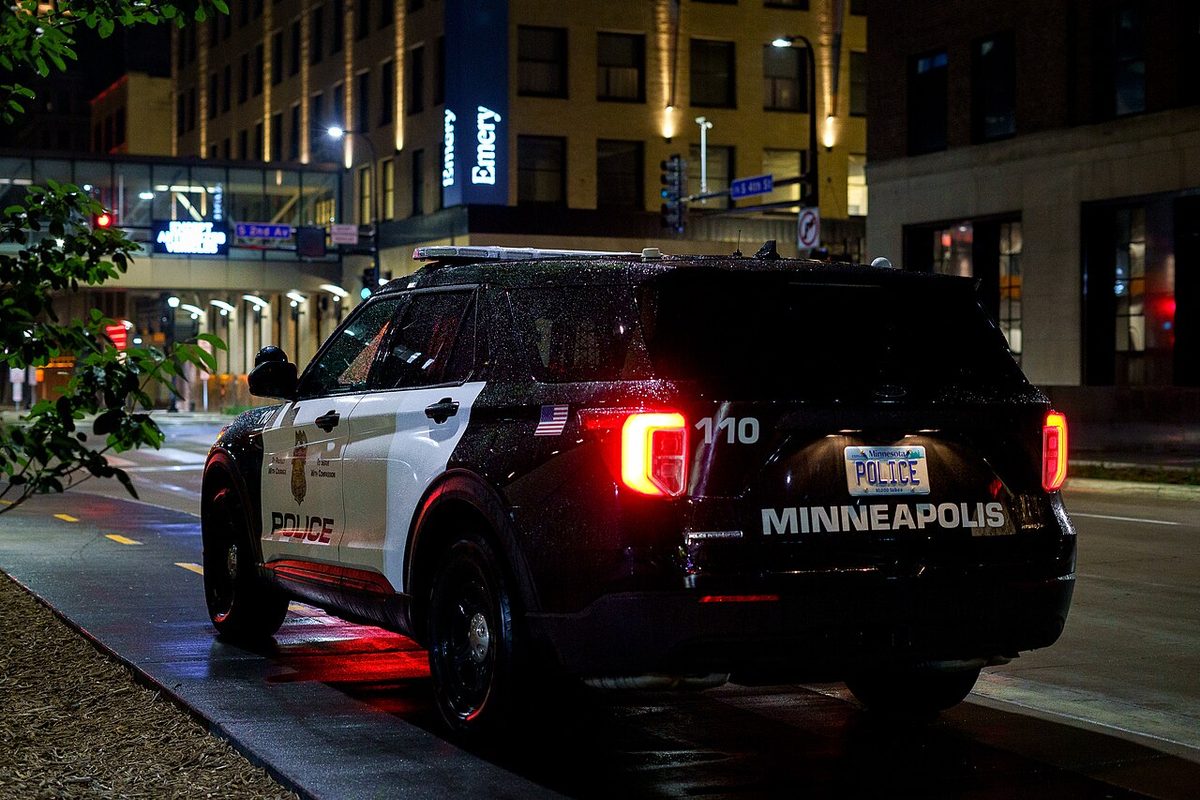
See a black-and-white SUV in the mirror in the United States and there is a good chance it is a Ford Explorer, specifically the Police Interceptor Utility, which Ford says is the best-selling police vehicle in the country. That did not happen by accident or through sales relationships alone. The vehicle is engineered around requirements a normal family crossover never has to meet.
Ford has built police cars for decades. In a 1961 survey, 58 percent of police cars in America's 50 largest cities were Fords. The Crown Victoria then held the role for a generation and at one point accounted for 85 percent of police pursuit-vehicle sales in the US and Canada. When it ended production after the 2011 model year, Ford needed a successor, and the Explorer-based Police Interceptor Utility arrived for 2013, designed around law-enforcement duty cycles rather than adapted from a civilian SUV after the fact.
The central engineering problem is unusual. A patrol vehicle spends long stretches of a shift idling at the curb with radios, computers, light bars and air conditioning drawing power, and then must suddenly accelerate, brake and maneuver hard. Earlier Ford documentation estimated that police vehicles idle for roughly 61 percent of an eight-hour shift, which a conventional gas engine handles inefficiently. That is why hybridization matters here for practical reasons. The current hybrid Police Interceptor Utility can run onboard equipment from the battery with the engine off and restart only to recharge. Ford estimates the saving at up to 838 gallons of fuel a year, and says the figure depends on how a particular vehicle is used.
The standard equipment list reads like a checklist from departments: full-time intelligent all-wheel drive, a police-tuned suspension and a heavy-duty electrical system, with gas versions able to carry a 250-amp alternator so radios, cameras and lights do not drain the battery. The 3.0-liter EcoBoost option makes 400 horsepower and 415 lb-ft of torque, and in Michigan State Police's 2025 testing that version posted the quickest average lap among the vehicles evaluated and reached a top speed of 148 mph. Ford also says the Interceptor is tested to a 75 mph rear-impact standard for fuel and battery system integrity, a pursuit-specific requirement beyond what a retail Explorer is built to meet.
Packaging matters as much as power. Departments need room for laptops, radios, medical gear and weapons on top of the officers themselves. The hybrid configuration offers 118 cubic feet of passenger volume and 52.3 cubic feet of cargo space behind the second row, which is more than most competing options in this class.
The Explorer does not win by default. Officers comparing the Police Interceptor Utility with the Chevrolet Tahoe PPV describe those two as essentially the last major choices after the Dodge Charger PPV was discontinued, and they cite all-wheel drive, ground clearance, cargo space and a choice of powertrains as the reasons the Explorer-based option keeps coming out ahead in practice. Those comments come from online discussions, so they show what users say rather than a controlled test.
The pattern is a design brief quite different from what sells a family SUV: survive long idle periods without wasting fuel, deliver pursuit-grade performance on demand, and carry more gear and a heavier electrical load than a civilian sibling ever will. The Crown Victoria dominated the sedan era of American policing, and the Police Interceptor Utility has done the same for the SUV era that followed.
Related cars
Related articles
- Towing Capacity, Payload and GVWR Explained (2026): Why the Trailer Rating in the Ad Is Rarely the Limit That Stops You
- Jeep Grand Cherokee L vs Ford Explorer: Which Is Better? The Explorer Starts $4,500 Cheaper and Tops Out at 400 Horsepower, the Jeep Counters With Composure
- 2026 Ford Explorer vs Toyota Highlander: Which Is Better? The Explorer Has the Safer Crash Results, the Highlander a 35-mpg Hybrid
- Ford Recalls Nearly 80,000 Explorer and Aviator SUVs Because the Driver's Seat Can Recline on Its Own