2026 Ford Explorer vs Toyota Highlander: Which Is Better? The Explorer Has the Safer Crash Results, the Highlander a 35-mpg Hybrid
The gas Highlander is heading toward an electric replacement. Until then, the 2026 Explorer is cheaper, quicker and better in crash tests; the Highlander offers standard AWD, a hybrid and free maintenance.
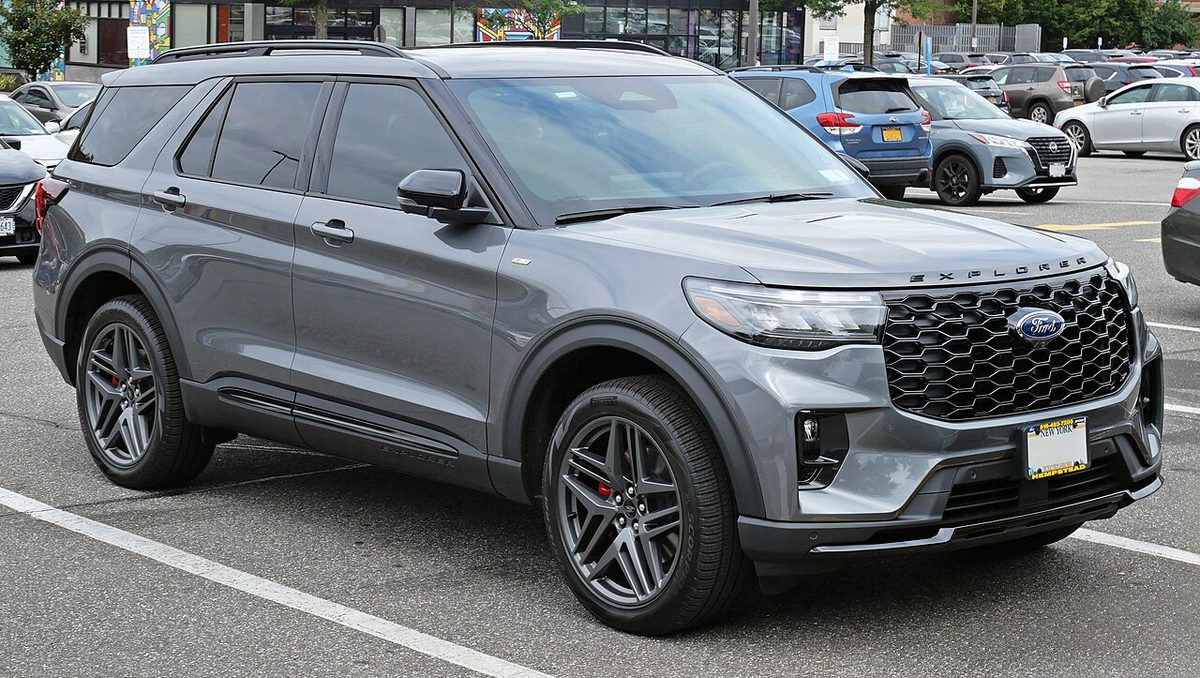
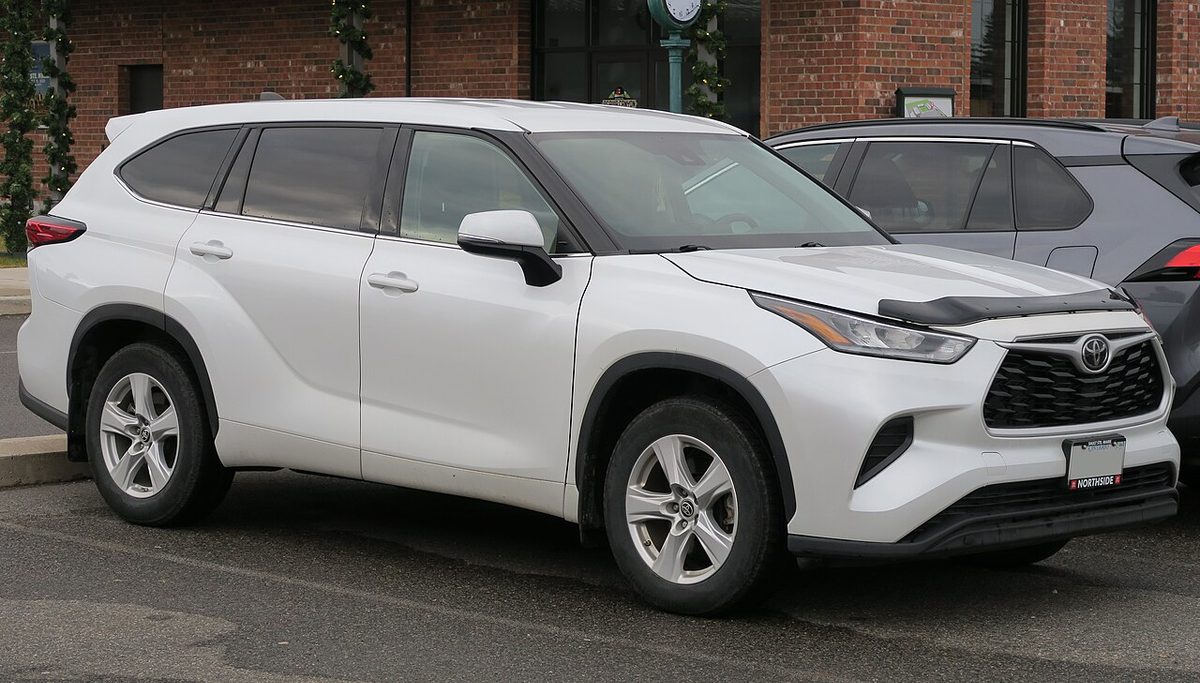
Toyota is changing what a Highlander is, and that shapes how to read this comparison. The redesigned 2027 Highlander is a battery-electric three-row SUV, and Car and Driver's page for it estimates a price of $54,000 to $60,000. Cars.com reported in February that the new model drops the gas and hybrid powertrains, while the larger Grand Highlander keeps them. The timing is less clear. Electrek reported on September 3 that a Toyota US spokesperson said the electric launch has not moved from 2027, that Nikkei reported 2027 or later, and that Toyota will keep building the current gas and hybrid Highlander, which should stay at dealers well into 2027. We could not find a Toyota press release confirming an end date for the gas model, so we do not claim one. What you can buy today is the 2026 Highlander, and its natural rival is the 2026 Ford Explorer.
Start with price, using Car and Driver's figures. The 2026 Explorer runs from $40,260 to $58,700. The 2026 Highlander runs from $47,865 to $55,520, because Toyota dropped the base LE trim and made all-wheel drive standard for 2026. That puts the cheapest Highlander $7,605 above the cheapest Explorer. The gap closes at the top: the Explorer's range climbs more than $3,000 higher than the Highlander's. Car and Driver rates the Explorer 8 out of 10 and ranks it eighth among mid-size three-row SUVs. It gives the Highlander 7.5 and ranks it fourteenth, and notes that the Grand Highlander starts at $43,855 and costs less than the Highlander in every trim except the top Platinum.
The engines are the clearest difference. Every Explorer except the ST uses a turbocharged 2.3-liter four-cylinder with 300 horsepower and 310 pound-feet, paired with a 10-speed automatic and rear-wheel drive, with all-wheel drive optional. The ST and, optionally, the Platinum use a twin-turbo 3.0-liter V-6 with 400 horsepower and 415 pound-feet, and Ford's power figures depend on premium fuel. The Highlander has a turbocharged 2.4-liter four-cylinder with 265 horsepower and 310 pound-feet, an eight-speed automatic and standard all-wheel drive. That is 35 horsepower less than the base Explorer, and the Highlander's torque is identical on paper.
The track results show the same direction, with a caveat on dates. Car and Driver measured 7.2 seconds to 60 mph in a 2023 Highlander Platinum. The Explorer's four-cylinder reached 60 in 6.0 seconds in a 2022 Timberline, a trim that no longer exists, and an Explorer ST with the V-6 did it in 5.1 seconds. Neither of these is a 2026 test, but both vehicles have kept the same powertrains, so the gap is real. Braking is almost a draw: 170 feet from 70 mph for the Highlander and 172 feet for the ST on 21-inch all-season tires. If you tow, the two are level. Both are rated at 5,000 pounds, and Ford makes the Class III towing package, with hitch and wiring, standard on every Explorer.
Fuel economy favors Toyota once you consider the hybrid. The EPA rates the gas Highlander at 21 mpg city, 28 highway and 24 combined, and the Explorer's four-cylinder at 20, 29 and 24 combined with rear-wheel drive. With all-wheel drive the Explorer falls to 27 highway and 23 combined. The V-6 is rated 21 combined with rear drive and 20 with all-wheel drive, and the new Tremor trim is rated 21 combined with the four-cylinder and 19 with the V-6. The EPA's 2026 list shows no hybrid Explorer. The Highlander Hybrid is rated 35 mpg combined in every version. Our own arithmetic for 15,000 miles a year: a 24-mpg gas Highlander burns about 625 gallons, the hybrid about 429, a saving of roughly 196 gallons, or about $690 a year at $3.50 a gallon. We did not verify the hybrid's 2026 price, so we cannot say how many years it takes to pay off.
Real-world numbers are close. On Car and Driver's 75-mph highway loop a four-cylinder all-wheel-drive Explorer returned 28 mpg, one better than its rating, and a Highlander XSE returned 30 mpg. The magazine's observed overall economy was 21 mpg in the Highlander it tested and 16 in the V-6 ST, which tells you what the V-6 costs at the pump. For most families the sensible gas Explorer and the gas Highlander will cost about the same to fuel, and the hybrid is where Toyota pulls ahead.
Space matters most in this class, and the answer depends on which row you mean. Car and Driver's spec tables list 16 cubic feet behind the third row in both SUVs. The Explorer is the longer vehicle, with a 119.1-inch wheelbase against the Highlander's 112.2, and its table shows 36 cubic feet of rear passenger volume against 31. Yet the magazine is not kind to either third row. It says taller kids and adults will find the Explorer's seat too close to the floor, and it calls the Highlander's third row kids-only. Luggage tests are mixed: the Highlander held five carry-on suitcases behind the third row, the Explorer four. With every seat folded the Explorer held 31 and the Highlander 26. Note that the spec tables come from a 2025 Explorer ST and a 2023 Highlander Platinum.
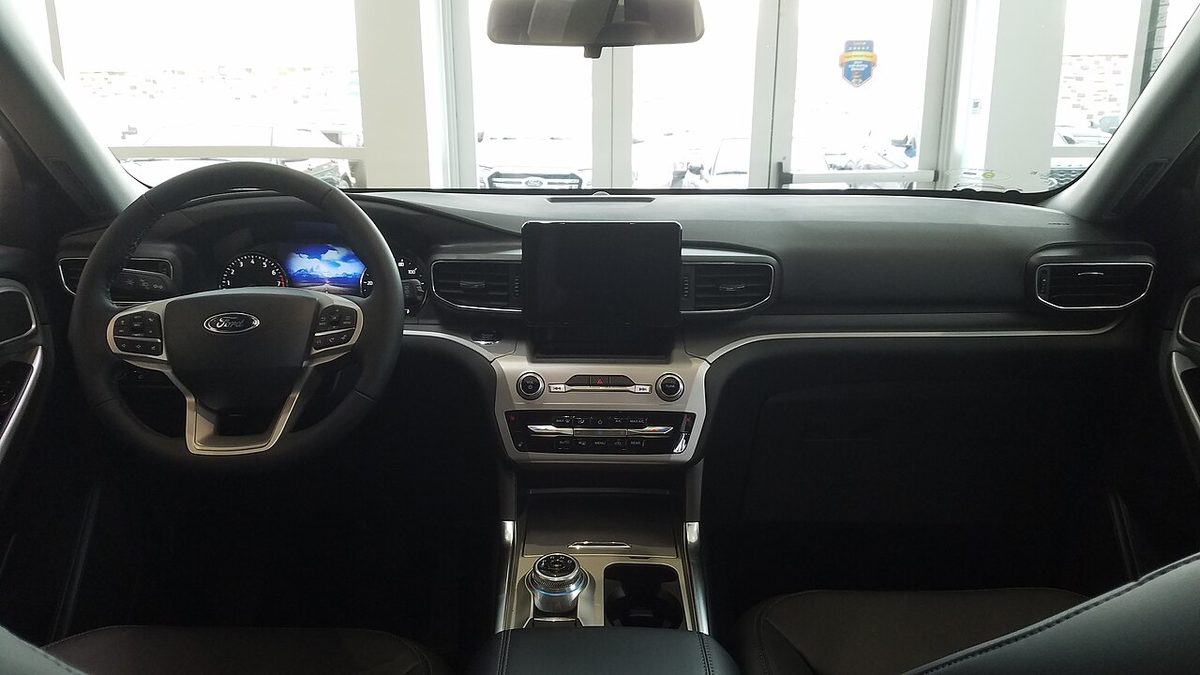
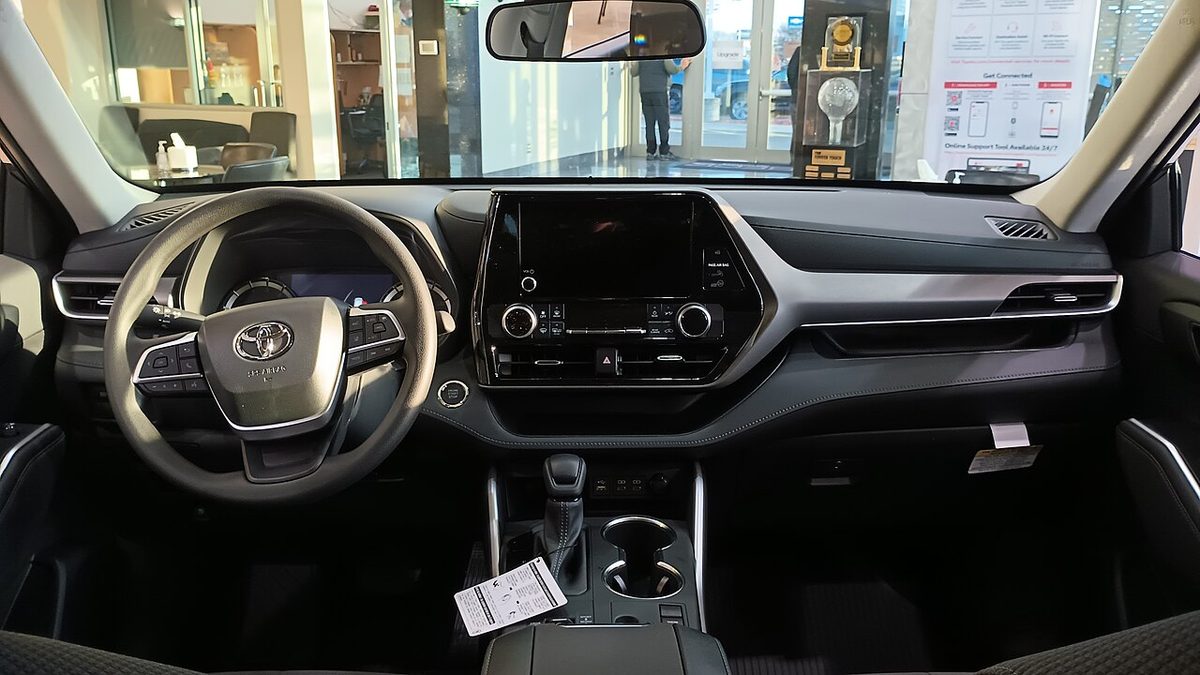
Inside, the Explorer is the more connected of the two. A 13.2-inch touchscreen is standard, running Ford's software with Google and Amazon apps, with Apple CarPlay and Android Auto, eight USB ports including two for the third row, and a 12-speaker Bang and Olufsen stereo on every trim except the base Active. Car and Driver adds that last year's refresh brought softer materials, and that the wireless charging pad was removed for 2026. The Highlander is plainer and more physical. Its standard screen is 8.0 inches, with a 12.3-inch screen on the Limited and Platinum and optional elsewhere, plus wireless smartphone mirroring and a wireless charger. Second-row buyers get a choice: the XLE and Limited can swap captain's chairs for a bench and seat eight. The magazine calls the Highlander's cabin quiet and well organized and lists comfort, a long standard-features list and a smooth ride among its highs.
Crash-test results favor the Ford, with one exception. The Insurance Institute for Highway Safety rates the 2026 Explorer Good in the small overlap front test, the updated moderate overlap front test and the updated side test, and Good for pedestrian crash prevention. The institute's page carries a Top Safety Pick badge for it. The moderate overlap result still shows an Acceptable sub-rating for rear passenger head and neck and restraints, and the small overlap rating applies to models built after May 2020. Headlights are Good on every Explorer variation, though the Platinum's low beams create some glare. The weak point is child-seat anchors, which the IIHS rates Acceptable.
The Highlander has one clear problem. It earns Good in the small overlap and side tests and Good for pedestrian crash prevention, but only Marginal in the updated moderate overlap front test, the second-lowest rating on the scale. It carries no award on its page. Its headlights are Good only on the Platinum and Hybrid Platinum and Acceptable on the other trims. Toyota's advantage is the LATCH child-seat anchors, which the IIHS rates Good, against the Explorer's Acceptable. Parents installing car seats every week will appreciate that, but the Marginal moderate overlap rating is the larger difference. The IIHS tested the Highlander in 2022, and the rating applies to 2022 to 2026 models.
Ownership terms are almost identical. Both brands offer a three-year, 36,000-mile limited warranty and a five-year, 60,000-mile powertrain warranty. The real difference is maintenance: Toyota includes two years or 25,000 miles of scheduled service, while Ford offers none. On trims, the Explorer has more range. It now has a Tremor off-road version with a lifted suspension, a limited-slip rear differential, all-terrain tires and 18-inch wheels, and an ST with 400 horsepower. The Highlander has no off-road or performance version. We did not verify reliability scores, recall counts or resale values from sources we could read, so this comparison does not rank the two on those points.
So which should you buy? Choose the Explorer if you want more power, the better IIHS result and the more modern cabin, and if the lower starting price matters, since the Explorer undercuts the Highlander by $7,605 at the bottom of each range. Accept that its third row is only workable for children, that Car and Driver ranks it eighth in its class, and that it has no hybrid. Choose the Highlander if you want standard all-wheel drive, a hybrid rated 35 mpg and two years of free maintenance, and you accept the Marginal moderate overlap rating and slower acceleration. If you are tempted by the new electric Highlander, treat it as a different car: 221 or 338 horsepower, a claimed 270 to 320 miles of range and a 77.0 or 95.8 kilowatt-hour battery, with pricing and timing still to be confirmed. And before you pay $47,865 or more for the gas model, check what the Grand Highlander offers, since Car and Driver says it is larger and cheaper in most trims.
| 2026 Ford Explorer | 2026 Toyota Highlander | |
|---|---|---|
| Price range (Car and Driver) | $40,260-$58,700 | $47,865-$55,520 |
| Standard engine | 2.3L turbo four, 300 hp, 310 lb-ft, 10-speed automatic | 2.4L turbo four, 265 hp, 310 lb-ft, 8-speed automatic |
| Other engines | 3.0L twin-turbo V-6, 400 hp (ST, optional on Platinum) | 2.5L hybrid, 35 mpg combined (EPA) |
| Drive | RWD standard, AWD optional | AWD standard |
| 0-60 mph (Car and Driver) | 6.0 s four-cylinder (2022); 5.1 s ST | 7.2 s (2023 Platinum) |
| EPA combined mpg, gas | 24 RWD; 23 AWD (four-cylinder); 21/20 (V-6) | 24 |
| Max towing | 5,000 lb | 5,000 lb |
| Carry-ons behind third row / all seats folded | 4 / 31 | 5 / 26 |
| Standard touchscreen | 13.2 in | 8.0 in (12.3 in optional) |
| Free scheduled maintenance | None | 2 yr / 25,000 mi |
| IIHS moderate overlap front, updated | Good | Marginal |
| IIHS pedestrian crash prevention | Good | Good |
| IIHS headlights | Good (all variations) | Good (Platinum); Acceptable (other trims) |
| IIHS child-seat anchors (LATCH) | Acceptable | Good |
| IIHS Top Safety Pick badge on 2026 page | Yes | No |
| Car and Driver rating / rank | 8/10, #8 mid-size 3-row SUV | 7.5/10, #14 mid-size 3-row SUV |
Related cars
Related articles
- Kia Telluride vs Hyundai Palisade: Which 3-Row SUV to Buy? The Telluride Wins the Numbers, Edmunds Still Picked the Palisade
- 2026 Toyota Highlander vs Honda Pilot: Which Is Better? The Last Highlander With an Engine Meets a Roomier Rival
- 2026 Hyundai Tucson vs Honda CR-V: Which Is Better? The Tucson Wins on Crash Tests and Warranty, the CR-V on Space and Mileage
- Jeep Grand Cherokee L vs Ford Explorer: Which Is Better? The Explorer Starts $4,500 Cheaper and Tops Out at 400 Horsepower, the Jeep Counters With Composure
Sources
- Car and Driver: 2026 Ford Explorer review, pricing and test results
- Car and Driver: 2026 Toyota Highlander review, pricing and test results
- Car and Driver: 2027 Toyota Highlander (electric) overview
- IIHS: 2026 Ford Explorer 4-door SUV ratings
- IIHS: 2026 Toyota Highlander 4-door SUV ratings
- FuelEconomy.gov: 2026 Ford Explorer
- FuelEconomy.gov: 2026 Toyota Highlander
- Cars.com: 2027 Toyota Highlander reinvented as an all-electric three-row SUV
- Electrek: Toyota denies it is delaying the Highlander EV again