Towing Capacity, Payload and GVWR Explained (2026): Why the Trailer Rating in the Ad Is Rarely the Limit That Stops You
Figures checked as of October 2026 from Ford, Ram and GM sources and Car and Driver spec pages: how the six towing numbers differ and which one runs out first.
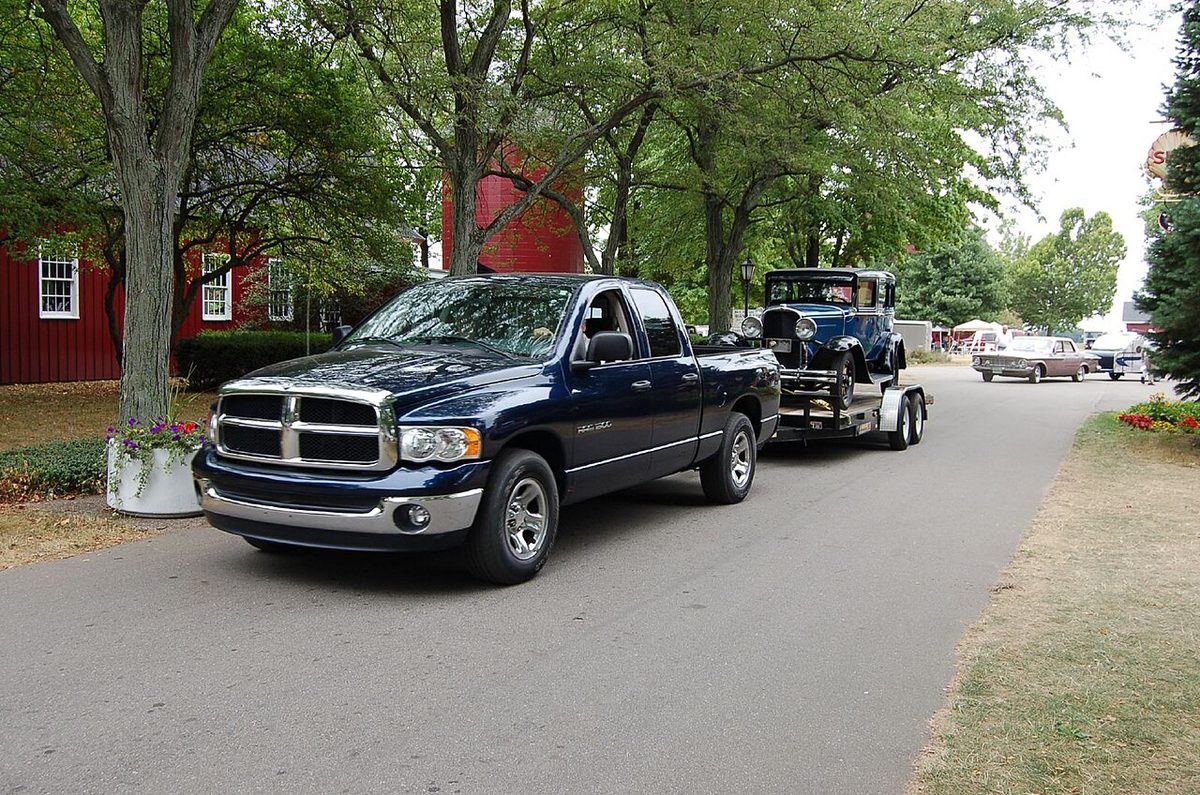
Chevrolet has just reshuffled the tow chart for the 2027 Silverado 1500, and the result is a useful lesson in how towing numbers really work. In GM's own launch table the new 5.7-liter V8 is rated to tow 13,700 pounds, while the bigger and more powerful 6.6-liter V8, with 481 horsepower, is rated at only 9,700. The 6.6 also carries the lowest payload rating of the lineup, 1,510 pounds. GM's footnotes say the maximum ratings are for comparison only and that the label on the door jamb governs a specific truck. That is the point of this guide: a truck has several different weight limits, each answers a different question, and the one printed in the ad is rarely the one that limits you.
Start with the vocabulary, using Ford's own definitions. Curb weight is the truck with a full tank of fuel and all installed equipment, but no passengers or cargo. GVWR, the gross vehicle weight rating, is the maximum allowable weight of the fully loaded truck, including people and cargo. Payload is GVWR minus base curb weight, which makes it the combined weight of everything you put in or on the truck. GCWR, the gross combination weight rating, is the maximum allowed weight of the truck and the loaded trailer together. Towing capacity is the trailer weight the maker allows, and it comes out of the GCWR. Tongue weight is the downward force the trailer coupler puts on the hitch ball. Ford adds that the tow vehicle's brakes are rated for operation at GVWR, not GCWR, which is a reason not to treat the combined rating as a target.
The arithmetic is simple, and it is worth doing once with real figures. Car and Driver lists the base 2026 Ford F-150 XL regular cab, a 2WD truck with the 5.0-liter V8, at a GVWR of 6,250 pounds and a base curb weight of 4,410. Subtract the second from the first and you get a payload of 1,840 pounds, which matches the magazine's payload line. The same page lists a maximum towing capacity of 9,000 pounds. Those two numbers sit side by side on a spec sheet, but they are not stacked on top of each other: payload is what the truck itself carries, including the tongue weight of whatever it pulls.
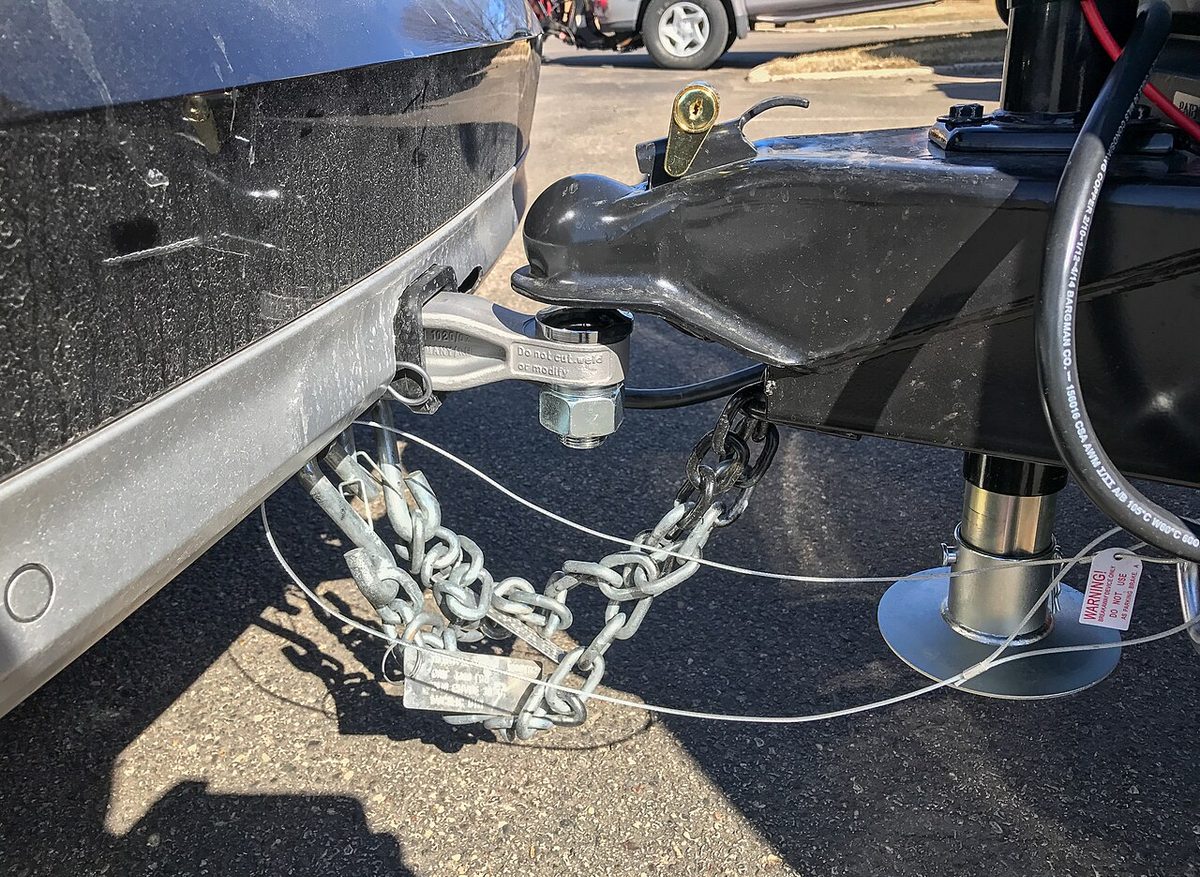
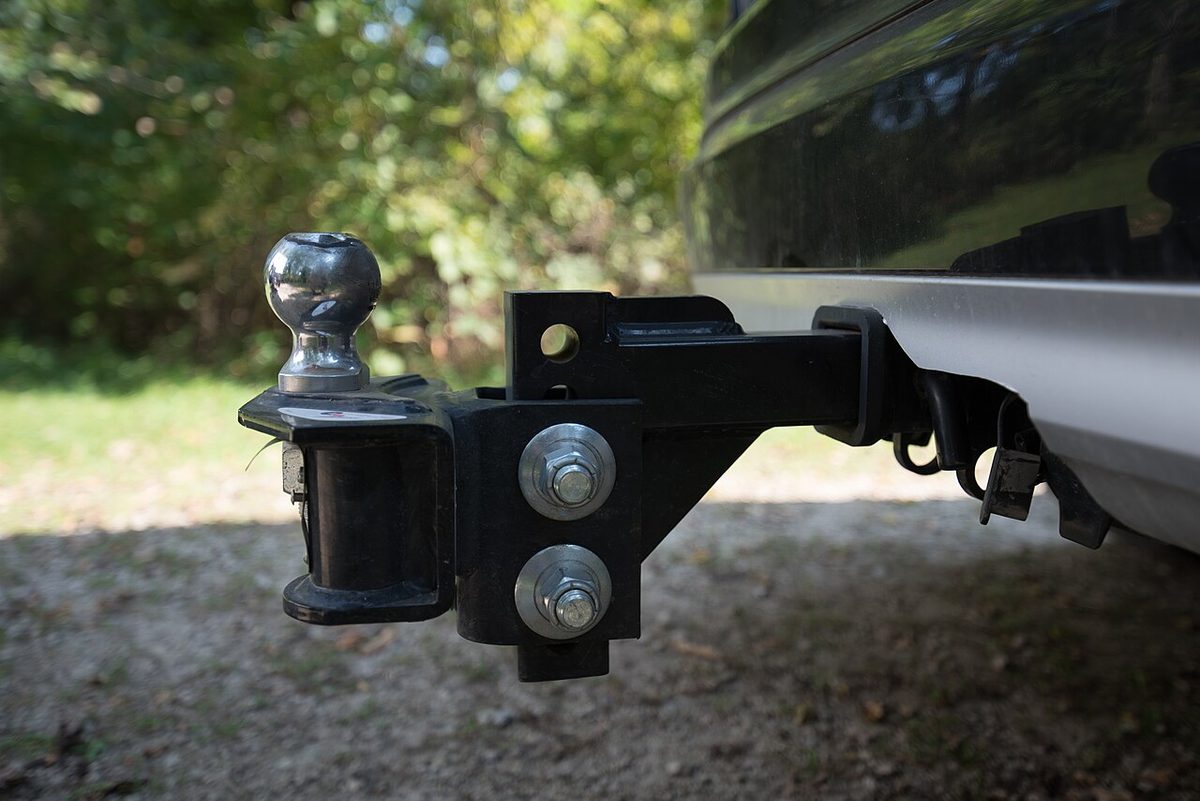
Tongue weight is where payload quietly disappears. Ford's towing guide says the trailer tongue load should be 10 percent of the total loaded trailer weight for conventional trailers, and Ford's towing dictionary counts tongue weight as part of payload. Car and Driver's data for that F-150 shows the same ratio: 500 pounds of tongue weight at 5,000 pounds with a plain hitch, and 900 pounds at 9,000 pounds with a weight-distributing hitch. So pulling the full 9,000 pounds puts about 900 pounds onto a truck that has 1,840 to give. Add three adults at an assumed 180 pounds each and 300 pounds of gear, and the load is 900 plus 540 plus 300, or 1,740 pounds. The truck is inside its payload by just 100 pounds, and a fourth person, a full cooler or a toolbox would push it over.
The same exercise on the other two big pickups shows how similar the base numbers are. Car and Driver lists the 2026 Ram 1500 Tradesman 4x2 Quad Cab with the 3.6-liter V6 at a GVWR of 7,200 pounds and a curb weight of about 4,835, for a payload of 2,365. Its towing limit is 7,660 pounds with a weight-distributing hitch, and the tongue weight limit shown is 766 pounds, again 10 percent. The 2026 Chevrolet Silverado 1500 Work Truck regular cab with the 2.7-liter turbo four lists a GVWR of 6,700, a curb weight of 4,288 and a payload of 2,412, with a 9,100-pound towing limit and a 910-pound tongue limit. The pattern is the same in every case: payload is a few thousand pounds, tongue weight takes a large bite out of it, and the numbers shift with the truck's cab, bed, drive and engine.
That is why the headline figures need careful reading. Ford's 2026 F-150 guide lists the 3.5-liter EcoBoost at 13,500 pounds of towing and 2,440 pounds of payload, the 5.0-liter V8 at 12,800 and 2,235, the PowerBoost hybrid at 12,400 and 1,740, and the 2.7-liter V6 at 8,400 and 1,775. Ford's own note says towing and payload are independent and may not be achieved simultaneously, and the footnotes tie the 13,500 figure to the Tow/Haul Package and the Max Tow Axle upgrade. Ram's engine pages show the same split. The 3.0-liter Hurricane is rated at 11,610 pounds of towing and 1,930 of payload on a 4x2 truck, and 11,370 and 1,910 on a 4x4. The high-output Hurricane drops to 10,000 and 1,490, and the 3.6-liter V6 tows only 8,130 pounds but is rated for 2,360 pounds of payload. The truck that tows the most is usually not the one that carries the most.
Now look at GCWR, which is the number most buyers never see. In Ford's chart the 13,500-pound rating for the 3.5-liter EcoBoost appears next to a GCWR of 19,400 pounds. Subtract the trailer and 5,900 pounds remains for the truck, its driver, passengers, cargo and tongue weight. If the truck and its load weigh more than that, the trailer rating no longer applies in full, which is why the maximum number is a ceiling for one specific configuration and not a promise for every truck with that engine. Ford's guide also says that at altitude you should reduce gross vehicle and gross combination weight by 2 percent per 1,000 feet of elevation. At 5,000 feet that is a 10 percent cut, which turns a 19,400-pound GCWR into about 17,460.
Next, learn to read the door. Ford's guide says the Safety Compliance Certification Label sits on the left front door lock facing or the door latch post pillar, and that it carries the axle code under the bar code, along with the weight ratings that limit your load. Ford's definitions say the same label carries GVWR along with tire, rim size and inflation data, and both Ford and GM tell you to use the label on your own truck for carrying capacity. The practical sequence is short. Find the payload figure on the placard, subtract what you carry, subtract the tongue weight, and compare the result with the GVWR and the rear axle rating on the certification label. Ford notes that these ratings cannot be exceeded by the combined tongue and cargo weight. If you have never weighed your truck, a public scale takes a few minutes and settles the question. Ford says that taking an unloaded vehicle to a commercial scale is the most accurate way to find curb weight.
SUVs follow the same rules with smaller numbers. Car and Driver lists a 2026 Ford Explorer Active with the 100A package and rear-wheel drive at a 5,000-pound towing limit, a 500-pound tongue weight limit and a base curb weight of 4,344 pounds. The magazine shows no payload figure for that trim, so the door label is the only reliable answer for an Explorer. An SUV can run out of capacity quickly, because a family and a rooftop box use up payload before the trailer even arrives. If you tow 5,000 pounds, expect about 500 pounds of that to sit on the hitch.
Electric trucks add a different kind of limit. The Ford F-150 Lightning Pro listed by Car and Driver has a GVWR of 8,250 pounds and a curb weight of 6,015, which is 1,605 pounds more than the regular-cab gas F-150 above, though the two are different cab styles. That leaves a payload of 2,235 pounds and a towing rating of 5,100. The bigger problem is range. In the magazine's test, a Lightning Platinum pulling a 6,100-pound camping trailer dropped to 100 miles at 70 mph, 200 miles short of its unladen EPA estimate, and the review says towing cut range by two-thirds. Ford announced on December 15, 2025 that production of the current Lightning ends and that its successor will be an extended-range electric truck with an estimated range of more than 700 miles. For anyone buying a used Lightning to tow, the arithmetic of charging stops matters more than the towing rating.
The 2027 Silverado shows why you should read the footnotes before you read the headline. GM's footnotes require a Double Cab standard bed 2WD with the Max Trailering Package for the 5.7-liter's 13,700 pounds, a Crew Cab 4WD for the 6.6-liter's 9,700, and a Regular Cab long bed 2WD for the 5.7's 2,170 pounds of payload. The site gm-trucks.com, reading GM's 2026 order guide, reports that last year's 6.2-liter V8 was rated at 13,200 pounds and the 5.3 at 11,300, so the 5.7 gains 2,400 pounds while the top V8 loses about 3,500. GM also says its Super Cruise driver-assistance system with trailering works for towing up to 13,600 pounds, and that the 2027 truck is expected to go on sale at the end of this year. The gm-trucks.com report adds that GM has not said whether the 6.6 will get a max-tow package, and US pricing was not something we verified.
Towing safely comes down to a short list that Ford's guide and the numbers above support. Keep the loaded trailer under the truck's rating, and keep the truck and trailer together under the GCWR. Aim for a tongue weight near 10 percent of the loaded trailer weight. Ford's guide also advises loading about 60 percent of the cargo weight in the front half of the trailer and 40 percent in the rear. Use a weight-distributing hitch where the maker requires one, since Ford and Car and Driver both show the plain-hitch limit at 5,000 pounds. Allow more distance for braking, turn off cruise control on steep grades or in rain, check tire pressure, and stop after about 50 miles to recheck the hitch, lights and wheel nuts.
For a buying decision, work backwards from your trailer. Take its loaded weight, which is the weight at the scale and not the brochure figure, and multiply by 10 percent to get tongue weight. Add the people and gear you actually carry, then check the total against the payload on the door of the exact truck you intend to buy. Then check that the trailer weight is under the truck's towing figure and that the sum of truck and trailer fits the GCWR. If the payload fails first, which is common with heavy trailers and full crews, look at a crew cab with a higher GVWR or a lighter trailer, not a bigger engine. If you plan to tow at altitude, in the mountains or with a boxy trailer, buy margin: Ford's own guide says a trailer with a large frontal area adds air drag and that a higher rating is wise. A truck rated for 9,000 pounds that you load to 9,000 pounds is a truck with no room left for a bad day.
| Towing (lb) | GVWR (lb) | Curb weight (lb) | Payload (lb) | |
|---|---|---|---|---|
| 2026 F-150 XL 2WD regular cab, 5.0L V8 | 9,000 | 6,250 | 4,410 | 1,840 |
| 2026 Ram 1500 Tradesman 4x2 Quad Cab, 3.6L V6 | 7,660 | 7,200 | about 4,835 | 2,365 |
| 2026 Silverado 1500 Work Truck 2WD regular cab, 2.7L | 9,100 | 6,700 | 4,288 | 2,412 |
| 2025 F-150 Lightning Pro 4WD SuperCrew | 5,100 | 8,250 | 6,015 | 2,235 |
| 2026 Explorer Active 100A RWD | 5,000 | not listed | 4,344 | not listed |
Related articles
- Chevrolet Prices the 2027 Silverado 1500 From $41,395, Makes Super Cruise Standard on Two Trims
- 2026 Ford F-150 vs Ram 1500: Which Truck Is Better? America's Best-Selling Truck Against the One With the Smoother Ride
- 2026 Ford Explorer vs Toyota Highlander: Which Is Better? The Explorer Has the Safer Crash Results, the Highlander a 35-mpg Hybrid
- 2027 Ford F-150 vs Chevy Silverado: Which Truck Is Better? A Freshly Redesigned Silverado Takes On an F-150 That Just Got a New Base Engine and Hands-Free Towing
Sources
- Car and Driver: 2026 Ram 1500 specs, Tradesman 4x2 Quad Cab
- Ford: 2026 F-150 towing information guide (PDF)
- Ford: towing dictionary (GVWR, payload, curb weight, tongue weight)
- Car and Driver: 2026 Ford F-150 specs, XL 2WD regular cab
- Car and Driver: 2026 Chevrolet Silverado 1500 specs, Work Truck regular cab
- Car and Driver: 2025 Ford F-150 Lightning review and specs
- Car and Driver: 2026 Ford Explorer specs
- Ram: 2026 Ram 1500 4x2 engine towing and payload
- Ram: 2026 Ram 1500 4x4 engine towing and payload
- GM: Chevrolet introduces the next-generation 2027 Silverado 1500
- GM-Trucks.com: 2027 Silverado, Sierra 1500 towing and payload by engine
- The Drive: Ford F-150 Lightning EV is dead, next gen will have gas engine backup