Tiguan vs CR-V: Which Should You Buy? (2026) — A Cheaper Turbo SUV With a Big Screen Against Honda's 40-MPG Hybrid and Larger Cargo Hold
The Tiguan costs less and tows more, while the CR-V hybrid saves roughly $545 a year in fuel and carries more.
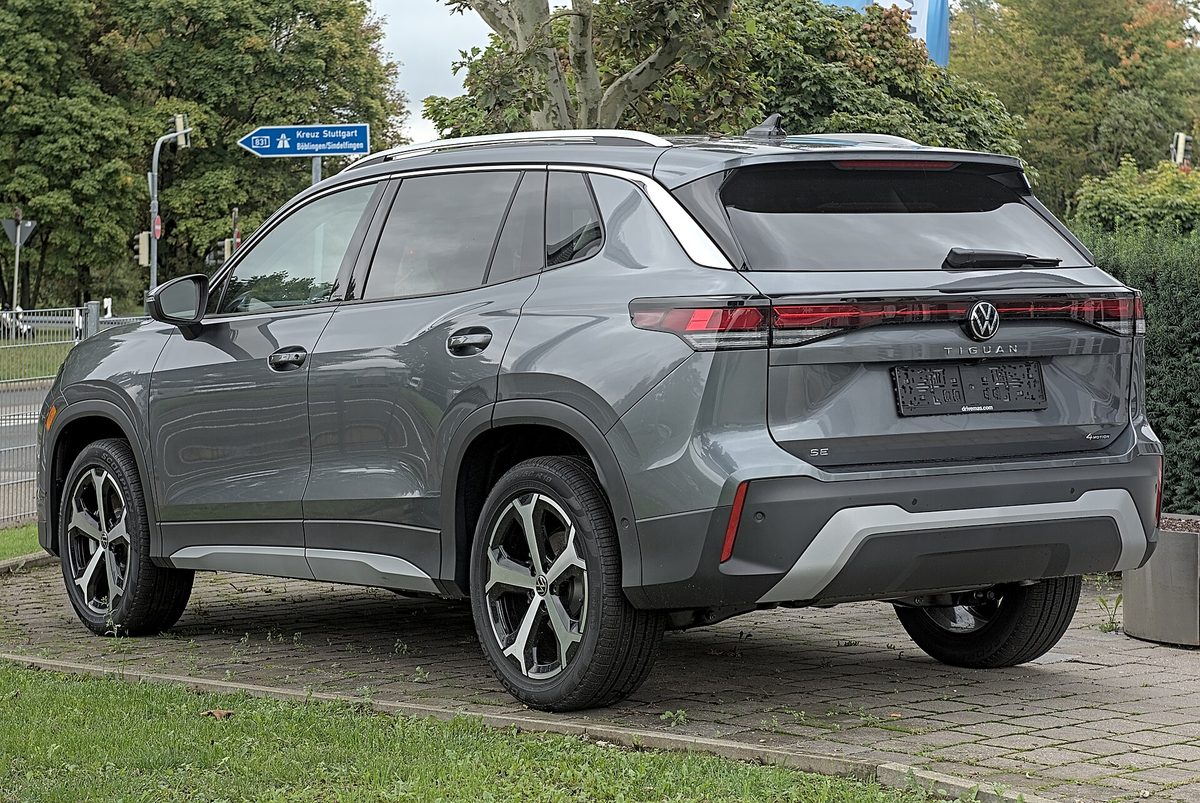
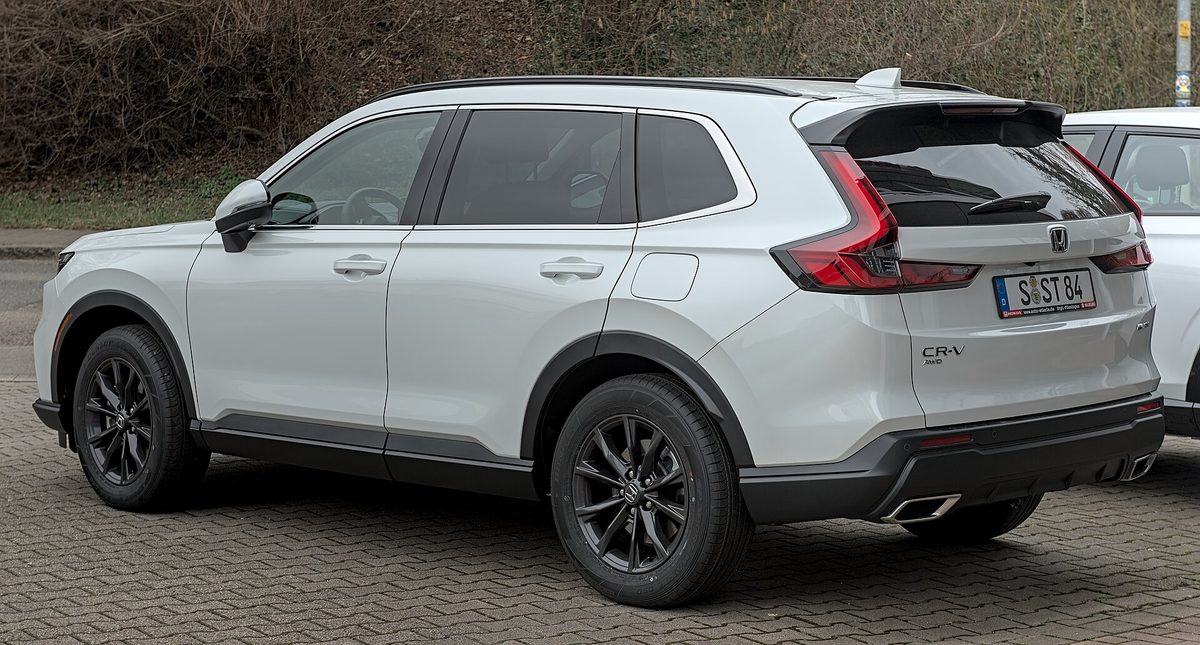
The Volkswagen Tiguan and the Honda CR-V are two of the best-known compact crossovers on the US market, and they take opposite approaches. Volkswagen sells a single turbocharged gas engine with a European-feeling cabin and a big screen. Honda sells a gas turbo and, for most of its buyers' real-world savings, a hybrid. Which one fits depends mostly on how much you drive and what you haul. This comparison uses 2026 model-year figures from Edmunds, the Insurance Institute for Highway Safety (IIHS), Volkswagen and Honda, and flags where a number comes from a different model year.
Price: the Tiguan starts lower, the CR-V hybrid starts much higher
Edmunds lists the 2025 Tiguan S at $31,670 and the 2026 CR-V LX at $32,370, a gap of about $700 in the Honda's disfavor. All-wheel drive adds $1,500 on both. The Tiguan's range tops out at the SEL R-Line at $41,930. Volkswagen's own site now lists the 2027 Tiguan from $31,205, so the cheapest Tiguan has become a little cheaper still.
The CR-V's price picture changes once you add the hybrid. Edmunds puts the Sport Hybrid at $37,080 and the Sport Touring Hybrid at $43,700. That is roughly $5,400 more than the Tiguan S, and it is the price you should compare if fuel economy is why you are shopping a CR-V. The hybrid is the efficient CR-V, but it is not the cheap one.
Powertrains: 201 horsepower against a choice of two
The Tiguan has one engine for the S trims: a turbocharged four-cylinder making 201 horsepower and 207 lb-ft of torque, per Volkswagen. The SEL R-Line Turbo is rated at 268 horsepower and 258 lb-ft. Edmunds measured 8.7 seconds to 60 mph in a Tiguan S, which is adequate rather than quick.
The CR-V offers two powertrains. The gas 1.5-liter turbo makes 190 horsepower per Edmunds. The hybrid pairs a 2.0-liter engine with electric motors for 204 horsepower combined, and Edmunds timed the hybrid at 8.0 seconds to 60 mph, about 0.7 second quicker than the Tiguan S it tested. Electric torque also tends to make the hybrid feel better in stop-and-go traffic, which is a subjective observation, not a measured one.
Fuel economy: the biggest gap in the comparison
Edmunds reports combined EPA ratings of 29 mpg for the front-drive Tiguan and 25 mpg for the all-wheel-drive version. The gas CR-V rates 30 mpg combined with front-wheel drive and 28 mpg with all-wheel drive. The hybrid reaches 40 mpg combined and 37 mpg with all-wheel drive.
That is a gap of 11 to 12 mpg between the hybrid CR-V and an all-wheel-drive Tiguan. At 12,000 miles a year and $3.50 a gallon, 25 mpg burns about 480 gallons, or roughly $1,680, while 37 mpg burns about 324 gallons, or roughly $1,135. That is about $545 a year in the hybrid's favor, using a gas price that is an assumption, not an EPA figure. Over five years that is roughly $2,700, which recovers about half of the hybrid's $5,400 price premium over the Tiguan S before resale values are counted. Front-drive buyers see a smaller gap: 29 mpg against 40 mpg is about 414 gallons against 300 gallons a year.
Space and towing: the gas CR-V wins cargo, the Tiguan wins towing
Volkswagen's brochure lists 33.8 cubic feet behind the second row and 69.8 cubic feet with the seats folded. Honda's specification table gives 39.3 and 76.5 cubic feet for the gas CR-V, and 36.3 and 71.8 for the hybrid, where the battery takes some space. Even the hybrid carries about 2.5 cubic feet more behind the rear seats than the Tiguan, and the gas model about 5.5 cubic feet more.
Towing reverses the order. Volkswagen lists 1,800 pounds braked for the Tiguan. Honda's table lists 1,500 pounds for gas CR-Vs and only 1,000 pounds for the hybrid. None of these are numbers for a boat or a camper trailer, but a small utility trailer is possible with the Tiguan and tight with the hybrid. Edmunds also found 1.5 inches more rear headroom in the Tiguan, so tall rear passengers get a slight edge there.
Cabin and technology
The Tiguan comes with a 12.9-inch touchscreen and a 10.25-inch digital instrument cluster as standard, and a 15-inch screen on the SEL, according to Edmunds. Volkswagen's page lists standard Travel Assist, adaptive cruise control, Front Assist, Park Distance Control and heated front seats. Options include a panoramic sunroof, massage and ventilated front seats, a head-up display and a Harman Kardon audio system. The CR-V has a 9-inch touchscreen in Edmunds' description, noticeably smaller, though plenty of buyers prefer Honda's simpler layout.
Safety: neither earns an IIHS award for 2026
Edmunds wrote that the CR-V earned a Top Safety Pick award. The IIHS page for the 2026 CR-V does not list an overall award, and neither does its page for the Tiguan. Both rate Good in the small overlap front and side tests, and both rate Poor in the updated moderate overlap front test, with the rear passenger restraints and dummy movement as the weak point and the rear passenger chest rated Marginal.
The differences are in crash avoidance. The Tiguan's standard Front Assist rates Good for vehicle-to-vehicle and pedestrian prevention. The CR-V's standard system rates Acceptable on both. Headlights rate Good on the CR-V, and on the Tiguan only on the SEL R trim; the S and SE trims rate Acceptable. The Tiguan's side and small overlap ratings are partly based on tests by Volkswagen and Audi. If rear-seat protection matters because you carry children, that shared Poor rating deserves attention.
Size and shape
The two are close in length. The US-market Tiguan is 184.4 inches long on a 109.9-inch wheelbase and 73.2 inches wide, according to Wikipedia's summary of the current generation. The sixth-generation CR-V is 184.8 to 185.2 inches long on a 106.3-inch wheelbase and 73.5 inches wide. In other words, the Tiguan spends 3.6 inches more on wheelbase, which fits Edmunds' finding of extra rear headroom, while the Honda converts its body into more cargo volume. Neither is a three-row vehicle, so families who need seven seats should look at larger models.
Running the cost over five years
Fuel is only part of ownership, but it is the part you can calculate from EPA ratings. Take a front-wheel-drive Tiguan S at $31,670 and 29 mpg against a front-drive CR-V Sport Hybrid at $37,080 and 40 mpg. At 12,000 miles a year and $3.50 a gallon, the Tiguan uses about 414 gallons (about $1,450) and the hybrid about 300 gallons (about $1,050), a yearly difference near $400. Over five years that is about $2,000 against a $5,410 price difference, so the hybrid does not pay for itself on fuel alone in that case. Add all-wheel drive, which widens the mpg gap to 12 mpg, or drive 18,000 miles a year, and the gap closes faster. Resale value, insurance and repair costs are not included because we have no verified figures for them in this comparison.
The takeaway is that the CR-V hybrid is a convenience and efficiency purchase more than a pure money-saver. If your yearly mileage is low, the cheaper Tiguan S or the gas CR-V LX will usually cost you less over a typical ownership period.
What changed for the newest model years
Honda added a TrailSport trim for 2026, which uses the hybrid system and Honda's Real Time AWD, with 18-inch wheels, all-terrain tires and skid plates. It adds a rugged option, but it is still a hybrid with the same 1,000-pound tow rating listed above, and we did not find a verified price for it. Volkswagen's 2027 Tiguan keeps the 201-horsepower base engine and lowers the starting price slightly to $31,205. Prices and options change by model year, so check current dealer listings before you commit to any number in this article.
Quick spec table
The table below summarizes the figures above. Prices are MSRP and exclude destination charges unless the source says otherwise.
Who should buy which
Buy the Tiguan if you want the lowest entry price, a larger screen and richer standard tech, stronger crash-prevention ratings, and a 1,800-pound tow rating, and you drive modest miles. Choose front-wheel drive to keep fuel economy near 29 mpg.
Buy the CR-V hybrid if you drive a lot, live where gas is expensive, want the quicker car in Edmunds' testing and the best fuel economy, and can accept a higher price and a 1,000-pound tow rating. Buy the gas CR-V if cargo space matters most and you want a lower price than the hybrid, though it saves little over the Tiguan at the pump.
For buyers who put the most weight on safety, the honest answer is a tie on crash protection and a Tiguan edge on crash prevention. Edmunds concluded that the Tiguan edges out the CR-V for overall value, while the CR-V's main reason to exist is its hybrid. The numbers above agree with both statements.
| Volkswagen Tiguan | Honda CR-V | |
|---|---|---|
| Starting price | $31,670 (S); 2027 from $31,205 | $32,370 (LX); hybrid from $37,080 |
| Top trim price | $41,930 (SEL R-Line) | $43,700 (Sport Touring Hybrid) |
| Engine / power | Turbo 4-cyl, 201 hp (268 hp SEL R-Line Turbo) | Turbo 4-cyl 190 hp; hybrid 204 hp |
| 0-60 mph (Edmunds) | 8.7 s (Tiguan S) | 8.0 s (hybrid) |
| Combined mpg | 29 FWD / 25 AWD | Gas 30 / 28; hybrid 40 / 37 |
| Cargo behind 2nd row | 33.8 cu ft | 39.3 gas; 36.3 hybrid |
| Cargo, seats folded | 69.8 cu ft | 76.5 gas; 71.8 hybrid |
| Braked towing | 1,800 lb | 1,500 lb gas; 1,000 lb hybrid |
| IIHS moderate overlap | Poor | Poor |
| IIHS front crash prevention (V2V) | Good | Acceptable |
Related cars
Related articles
- 2026 Toyota RAV4 vs Honda CR-V Hybrid: Which Is Better? The RAV4 Wins on Price, Fuel and Warranty, the CR-V on Ride and Rear-Seat Room
- 2026 Hyundai Tucson vs Honda CR-V: Which Is Better? The Tucson Wins on Crash Tests and Warranty, the CR-V on Space and Mileage
- Is the Volkswagen ID.4 Worth It in 2026? A Buyer's Guide — VW Just Killed US Production and Is Discounting Leftover Stock Up to $12,500
- 2027 Nissan Rogue Hybrid vs Honda CR-V Hybrid: Which Wins? A $2,000 AWD Price Gap Against a Proven Hybrid