2026 Hyundai Tucson vs Honda CR-V: Which Is Better? The Tucson Wins on Crash Tests and Warranty, the CR-V on Space and Mileage
With the redesigned 2027 Tucson still months away, the 2026 model faces the class champion. Hyundai is cheaper, quieter and safer in the back seat; Honda carries more and burns less.
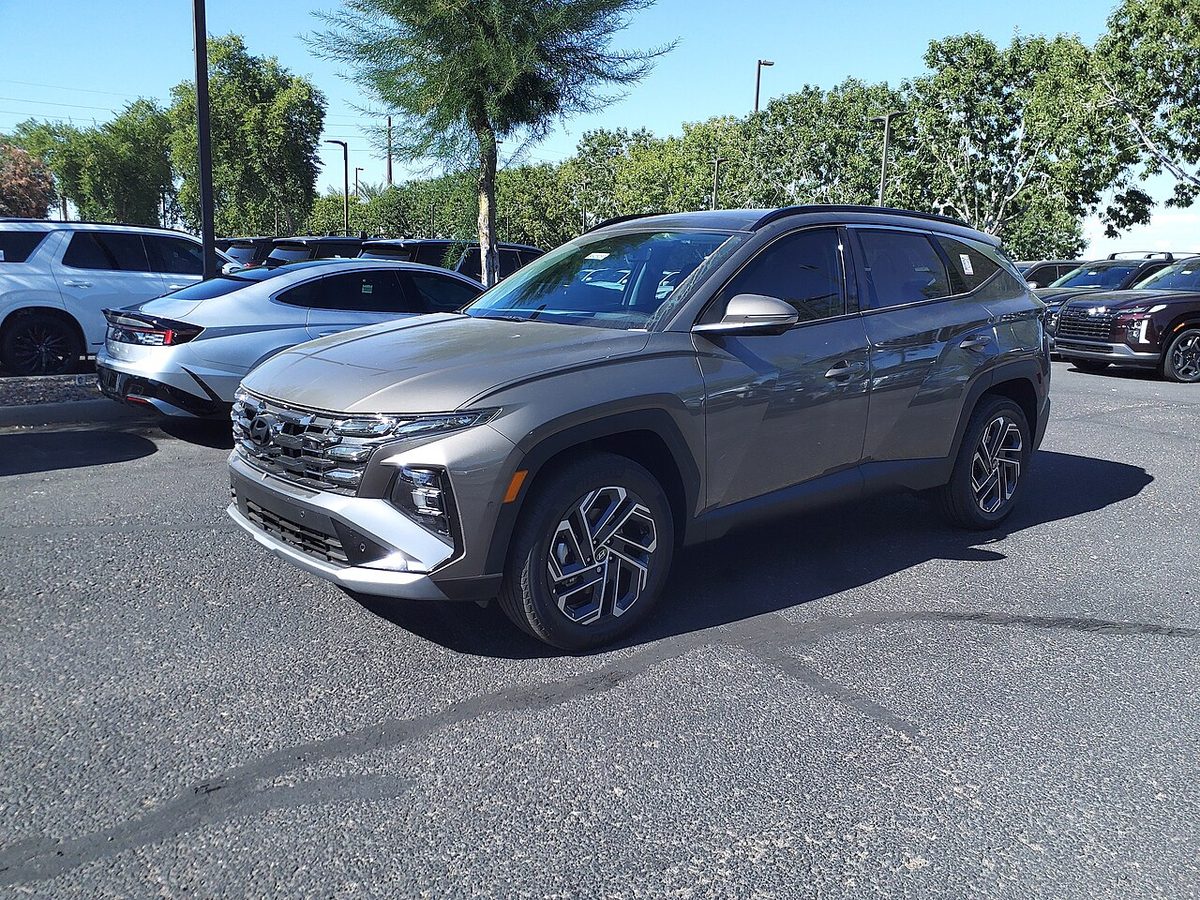
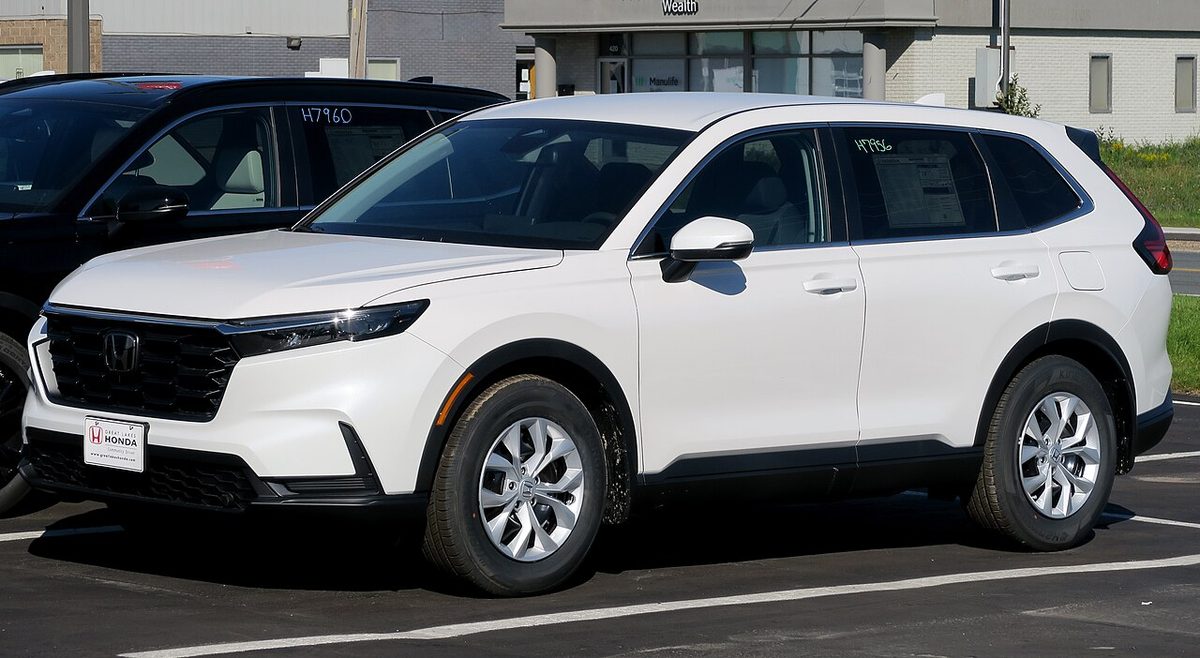
Hyundai has just shown the next Tucson, and that changes the timing of this decision more than its content. The fifth-generation SUV was revealed on October 1, goes on sale in Korea first and reaches North America in 2027, with no US pricing yet. It also drops the plug-in hybrid for the American market. So the Tucson you can actually buy this month is the 2026 model, and the Honda CR-V it has to beat is the one that Car and Driver ranks first among compact SUVs with a 10 out of 10. The Tucson scores 8 and sits eighth. On paper that should settle it. It does not, because the two cars win in different places.
Start with price, using Car and Driver's figures. The 2026 Tucson starts at $31,350 for the SE and climbs to $41,325 for the Limited, with all-wheel drive available on every trim; the magazine recommends the SEL Premium at $35,700. The CR-V LX starts at $32,470 with front-wheel drive. The hybrids matter more than the gas cars here, because most buyers in this class now choose one. The Tucson Hybrid starts at $32,950, while the CR-V Hybrid starts at $35,630 before destination charges, so the Hyundai is at least $2,600 cheaper at the entry point of the hybrid range.
The gas versions are close in power and far apart in character. The Tucson uses a 187-horsepower 2.5-liter four-cylinder with an eight-speed automatic. The CR-V uses a 190-horsepower turbocharged 1.5-liter with a continuously variable transmission. Car and Driver's Tucson, a Limited with all-wheel drive from the 2022 model year that has the same engine, needed 8.8 seconds to reach 60 mph, and the magazine says it offers nothing more than adequate pep. A CR-V EX-L took 8.1. Neither is quick. What the Tucson offers instead is quiet: Car and Driver calls it strikingly quiet and refined at a cruise, with a sense of luxury that is rare in the class, and rates its steering reasonably crisp and its ride agreeable.
Fuel economy favors Honda, though not by much on the gas cars. The EPA rates the front-wheel-drive Tucson at 28 mpg combined and the all-wheel-drive one at 26; the CR-V's turbo engine is rated 30 and 29. Car and Driver also recorded only 26 mpg for a Tucson XRT on its 75-mph highway loop. Over 15,000 miles, 28 mpg versus 30 is a difference of about 36 gallons a year, which is small money. The hybrids tell a similar story.
Both hybrids are efficient, and the ratings are nearly a tie. The Tucson Hybrid pairs a turbocharged 1.6-liter four with an electric motor for 231 horsepower and 258 pound-feet through a six-speed automatic. The EPA rates the Hybrid Blue version at 38 mpg combined and the regular Hybrid at 36. The CR-V Hybrid makes 204 horsepower and is rated at 40 mpg combined with front-wheel drive and 37 with all-wheel drive. Over 15,000 miles, the best CR-V hybrid saves about 20 gallons a year over the Tucson's best, roughly $70 at $3.50 a gallon. That will not cover the gap in purchase price for a very long time. Real-world numbers are less kind to Hyundai: on Car and Driver's highway loop a Tucson Hybrid returned 28 mpg, 10 below its rating.
The Hyundai has the stronger hybrid. The Tucson Hybrid makes 27 more horsepower than the CR-V Hybrid, and Car and Driver measured 7.1 seconds to 60 mph for a 2022 Limited Hybrid, 1.7 seconds quicker than the gas model and ahead of the 7.3 seconds it recorded for the Toyota RAV4 Hybrid. Braking goes to Honda on the numbers we have: the magazine measured 163 feet to stop from 70 mph in a CR-V, against 178 for the Tucson Limited it tested, which wore 19-inch all-season tires.
Space is closer than the spec sheets suggest. Hyundai quotes 41.2 cubic feet behind the Tucson's rear seat; Car and Driver lists 39, the same as the CR-V. In the magazine's luggage test the Tucson held nine carry-on suitcases behind the back seat and 22 with the seats folded, while the CR-V held 12 behind its rear seat, which is two more than a RAV4 manages. For a family that travels with a stroller, the Honda is simply better at using its space. The Tucson answers with a rear seat and cargo area that Car and Driver says are larger than many rivals', and a higher towing rating: every Tucson is rated at 2,000 pounds, against 1,500 for the CR-V.
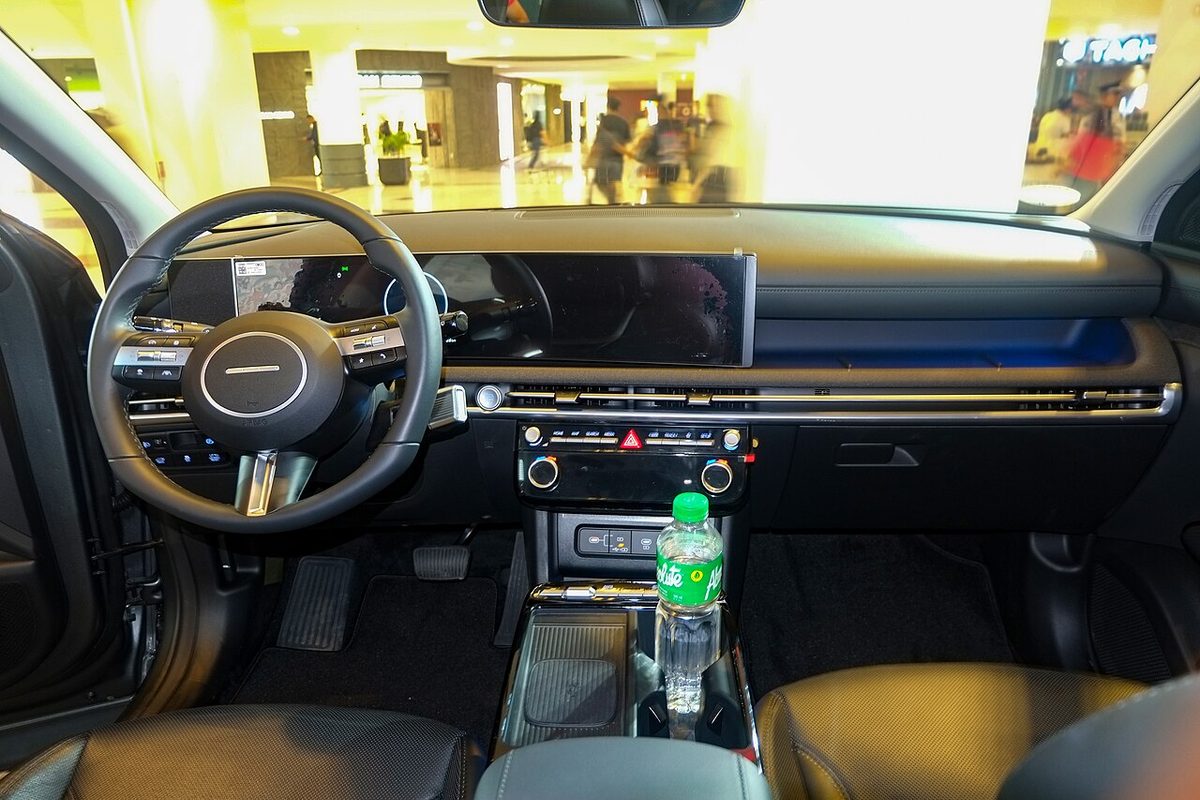
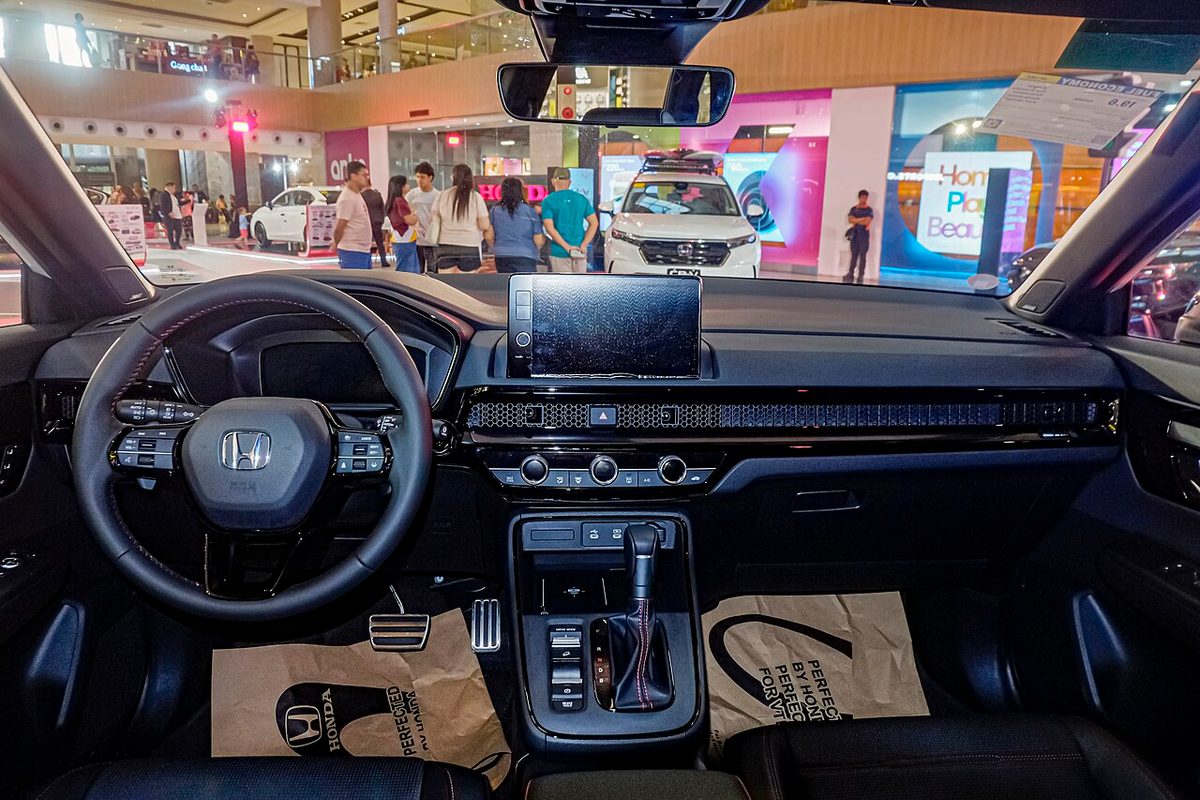
Inside, the two take different routes to the same goal, which is a screen you can live with. The Tucson has a 12.3-inch infotainment screen as standard and an optional 12.3-inch digital gauge cluster, wireless Apple CarPlay and Android Auto on every model, and real buttons for climate and volume. The CR-V's screen is a 9.0-inch unit with wireless smartphone mirroring, a wireless charging pad on every trim and physical knobs for temperature and volume. The Hyundai looks more modern and offers more tech; the Honda is plainer. Car and Driver praises the Tucson's materials and says the Hyundai's recent interiors have set a new standard for the brand.
Safety is where the Tucson pulls away. The Insurance Institute for Highway Safety rates the 2026 Tucson Good in the small overlap front, updated moderate overlap front and updated side tests, and Good for both vehicle-to-vehicle and pedestrian crash prevention. The institute's page carries a Top Safety Pick+ badge for it. One condition applies: the moderate overlap rating covers models built after March 2024, when Hyundai added rear seat belt pretensioners and load limiters, and the build date is printed on the certification label in the driver's door area.
The CR-V, in ratings that apply to 2023 through 2027 models, earns Good in the small overlap and updated side tests but Poor in the updated moderate overlap front test, and only Acceptable for both kinds of crash prevention. It holds no award. The Poor rating comes from the rear passenger's restraints and dummy motion, so it is about the back seat rather than the driver, and that is exactly the seat where children and adults ride. The Honda does keep an advantage in lighting: its headlights rate Good on every trim, while the Tucson's rate Good only on the Limited and Acceptable on the SE, SEL and XRT. Both SUVs earn Acceptable for child-seat anchor access.
Ownership costs also tip toward Hyundai. The Tucson comes with a five-year, 60,000-mile limited warranty, ten years or 100,000 miles on the powertrain and three years or 36,000 miles of complimentary scheduled maintenance. The CR-V has three years and 36,000 miles of basic cover, five years and 60,000 on the powertrain and one year or 12,000 miles of free maintenance. Car and Driver notes that only the Kia Sportage matches the Tucson's warranty in the class.
So which one to buy? If your priority is a safe back seat, a long warranty and a lower entry price, particularly for the hybrid, the Tucson is the better answer. Choose the CR-V if you need to haul luggage, want the best fuel economy in the class or simply trust the car that Car and Driver's editors rank first. A buyer thinking of waiting for the 2027 Tucson should expect a 233-horsepower hybrid with a 42-mpg target and no plug-in version in the US, but without prices or EPA numbers there is nothing to compare yet, and the 2026 model is already a proven, well-reviewed car.
| 2026 Hyundai Tucson | 2026 Honda CR-V | |
|---|---|---|
| Starting price | $31,350 (SE); Hybrid from $32,950 | $32,470 (LX); Hybrid from $35,630 before destination |
| Gas engine | 2.5L four, 187 hp, 8-speed automatic | 1.5L turbo four, 190 hp, CVT |
| Hybrid engine | 1.6L turbo four + motor, 231 hp, 6-speed automatic | 2.0L four + motors, 204 hp |
| 0-60 mph (Car and Driver) | 8.8 s gas; 7.1 s hybrid (2022 tests) | 8.1 s (EX-L) |
| EPA combined mpg, gas | 28 (FWD); 26 (AWD) | 30 (FWD); 29 (AWD) |
| EPA combined mpg, hybrid | 38 (Hybrid Blue); 36 (Hybrid) | 40 (FWD); 37 (AWD) |
| Cargo behind rear seats | 39 cu ft (Car and Driver); 41.2 (Hyundai) | 39 cu ft |
| Carry-on suitcases behind rear seats | 9 | 12 |
| Towing | 2,000 lb | 1,500 lb |
| Infotainment screen | 12.3 in | 9.0 in |
| Powertrain warranty | 10 yr / 100,000 mi | 5 yr / 60,000 mi |
| Free scheduled maintenance | 3 yr / 36,000 mi | 1 yr / 12,000 mi |
| IIHS moderate overlap front, updated | Good (built after March 2024) | Poor |
| IIHS front crash prevention, vehicle / pedestrian | Good / Good | Acceptable / Acceptable |
| IIHS headlights | Good (Limited); Acceptable (other trims) | Good (all trims) |
| IIHS award (2026) | Top Safety Pick+ | None |
| Car and Driver rating / rank | 8/10, #8 compact SUV | 10/10, #1 compact SUV |
Related cars
Related articles
- 2026 Toyota RAV4 vs Honda CR-V Hybrid: Which Is Better? The RAV4 Wins on Price, Fuel and Warranty, the CR-V on Ride and Rear-Seat Room
- 2026 Honda CR-V vs Mazda CX-5: Which Is Better? The CR-V Carries More and Burns Less, the CX-5 Holds the Top Crash-Test Award
- 2027 Hyundai Tucson: Bigger, 42-MPG Hybrid, No US Plug-In — What the Redesign Changes for American Buyers
- 2027 Nissan Rogue Hybrid vs Honda CR-V Hybrid: Which Wins? A $2,000 AWD Price Gap Against a Proven Hybrid
Sources
- Car and Driver: 2026 Hyundai Tucson review, pricing and test results
- Car and Driver: 2026 Hyundai Tucson Hybrid review, pricing and test results
- Car and Driver: 2026 Honda CR-V review, pricing and test results
- IIHS: 2026 Hyundai Tucson 4-door SUV ratings
- IIHS: 2026 Honda CR-V 4-door SUV ratings
- FuelEconomy.gov: 2026 Hyundai Tucson
- FuelEconomy.gov: 2026 Honda CR-V