Is the Volkswagen ID.4 Worth It in 2026? A Buyer's Guide — VW Just Killed US Production and Is Discounting Leftover Stock Up to $12,500
VW stopped building the ID.4 in Chattanooga in April 2026 and is now discounting leftover inventory by as much as $12,500, which changes the buying calculus more than any spec sheet number does.
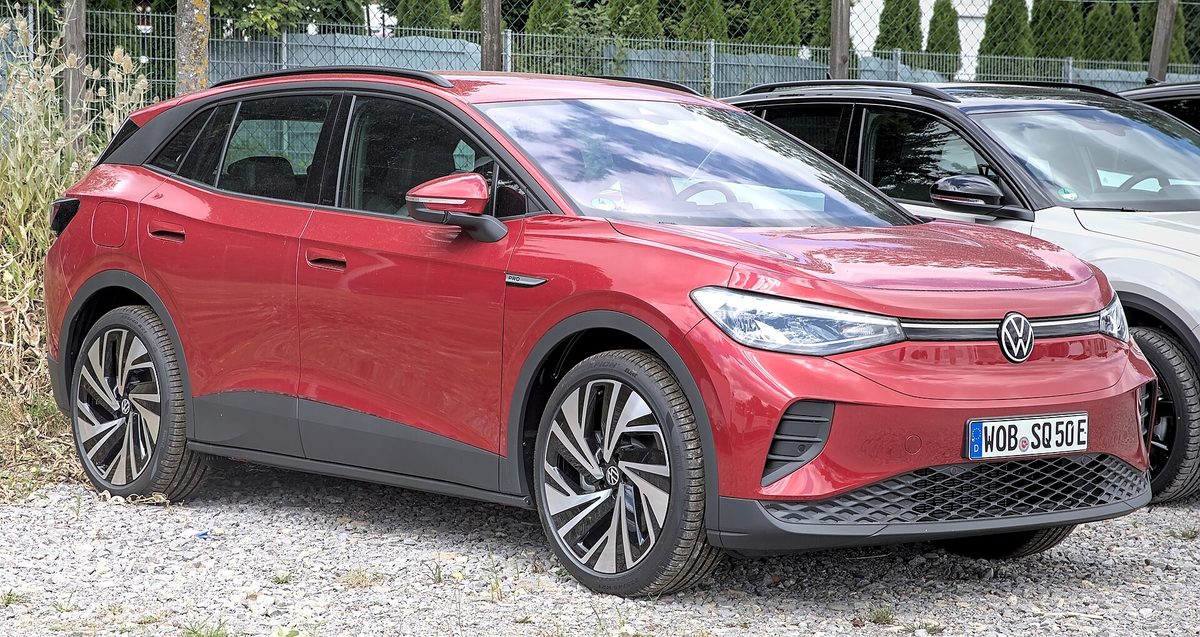
The Volkswagen ID.4 has quietly been one of the more practical electric SUVs sold in the US since 2021 — roomy, reasonably priced, and backed by a dealer network most EV startups can't match. But the calculus around buying one in 2026 is unusual: Volkswagen ended ID.4 assembly at its Chattanooga, Tennessee plant in mid-April 2026, reallocating that capacity to the redesigned Atlas, and is now clearing out remaining 2026 model-year inventory with discounts of up to $12,500 off sticker. That's a real, current situation, not a hypothetical — here's what the data says about whether it's worth buying one now.
Pricing and trims
The 2026 ID.4 lineup starts at $45,095 (before a $1,475 destination charge) for the entry Pro with rear-wheel drive and a 91-kWh battery rated for up to 291 miles of EPA range. Step up to all-wheel drive and the lineup runs AWD Pro at $48,995, Pro S RWD at $50,195, AWD Pro S at $54,095, and the range-topping AWD Pro S Plus at $57,655. Dual-motor AWD trims trade some range for a 335-horsepower powertrain and an EPA estimate of 263 miles, versus 282 horsepower and the longer 291-mile range on the single-motor RWD Pro. Edmunds' own recommendation lands on the base Pro: it already includes heated front seats, a wireless charging pad, a 12.9-inch touchscreen, and a full suite of driver-assist features standard, so climbing the trim ladder buys more battery and motor rather than fundamentally different equipment.
That list pricing is close to academic right now. With production stopped and dealers working through leftover stock, TrueCar's transaction data on recent sales shows buyers averaging about 5.5% below MSRP, with the base model going for roughly $44,023 against its $46,570 with-destination sticker — and some regional offers, per Electrek and Carscoops reporting in September and October 2026, have reached $10,000-$12,500 in combined customer bonuses on specific trims. Anyone cross-shopping an ID.4 in 2026 should treat the sticker price as a starting point for negotiation, not the number that matters.
The production-ending wrinkle buyers actually need to weigh
Volkswagen has been explicit that this isn't a mid-generation pause: ID.4 assembly at Chattanooga ended in April 2026, with that plant's capacity redirected to the new-generation Atlas and Atlas Cross Sport for the 2027 model year. VW says existing 2026 ID.4 inventory is expected to carry US demand into 2027, and the automaker has stated a future ID.4 for North America remains planned, but without a firm date. In practice, that means a 2026 ID.4 bought today is closer to buying the last units of a gap year than a brand-new, ongoing nameplate — not unlike buying a redesigned model's final outgoing generation. That's not disqualifying, but it affects resale expectations and means a buyer should actually like the deep discount on the table rather than assume showroom pricing will hold or that next year's ID.4 will simply be a continuation with running changes.
Safety: strong marks, no Top Safety Pick
NHTSA gave the 2026 ID.4 a five-star overall rating, with five stars in both frontal and side crash tests and four stars for rollover resistance. The IIHS separately rated the 2026 ID.4 Good — its top rating — on both the small overlap frontal test (driver and passenger sides) and the updated side-impact test, the two most demanding assessments in its current protocol. What the 2026 ID.4 does not currently hold is a Top Safety Pick or Top Safety Pick+ award from IIHS, a step down from the 2024 model year, which did earn Top Safety Pick (though not the higher Plus tier). Buyers should not read the missing 2026 award as a safety downgrade in the crash tests themselves — it typically reflects a gap in a specific secondary criterion like headlight performance or standard availability of certain crash-prevention tech across trims — but it's a real difference from what the nameplate achieved two years earlier, and worth confirming against IIHS's own published 2026 ratings page before assuming the badge carries over.
Reliability: the actual weak point
This is where the ID.4's case gets more complicated. J.D. Power's data puts the ID.4's Quality & Reliability score at 54 out of 100 and its overall score at 68 — both landing in J.D. Power's "Fair" and below-average bands. Consumer Reports' independent assessment similarly predicts the 2026 ID.4 will be less reliable than the average new car. That sits in tension with raw owner sentiment: consumer ratings on sites like KBB show owners rating their own ID.4's reliability around 4.5 out of 5, meaningfully more positive than the institutional data. The honest read is that early-generation VW software and electrical gremlins — not powertrain failures — are driving most of the complaints, and VW's own infotainment overhaul has drawn specific criticism (more below), but buyers should go in expecting more visits for software quirks than a Toyota or Honda EV owner would, and should weight that against the discount being offered.
What the reviews actually like
Edmunds' road test and range evaluation are consistently positive on the fundamentals: the single-motor RWD ID.4 drove 299 miles on Edmunds' own real-world range test, slightly beating its EPA estimate, and the cabin's flat floor plus 64.2 cubic feet of maximum cargo volume (30.3 cubic feet behind the rear seats) genuinely beats most compact SUV rivals, electric or gas. The driving position is roomy, helped by a low center console that frees up knee room, and the standard equipment list — adaptive cruise, lane-keeping, automatic parking on many trims — is generous for the price point U.S. News and Edmunds both note.
What the reviews actually dislike
The complaints are specific and repeated across independent outlets rather than one-off gripes. Consumer Reports flagged VW's newer infotainment system as a real step back from the brand's traditionally simple controls — the touchscreen is slow to respond to common tasks, the climate controls aren't illuminated at night, and there's no dedicated control set for the rear windows. Edmunds separately dinged the capacitive touch sliders as frustrating in daily use and noted the thick front roof pillars create real blind spots on both sides. On the driving side, Edmunds found the ID.4's acceleration isn't matched by sporty handling — it's a comfortable cruiser, not an engaging one — and its 175 kW peak DC fast-charging rate trails rivals like the Hyundai Ioniq 5, which charges at up to 240 kW and adds range meaningfully faster on a road trip.
Ownership costs: no federal tax credit, but a real warranty
The $7,500 federal new-EV tax credit that used to apply to US-built ID.4 trims ended for any vehicle acquired after September 30, 2025, under the 2025 tax law that eliminated Section 30D — so there is no federal credit on a 2026 ID.4 purchase, full stop, regardless of trim or income. That makes the manufacturer discounts described above the only lever buyers have on price, aside from any remaining state-level EV incentives. On the plus side, every new US ID.4 carries VW's 8-year/100,000-mile high-voltage battery warranty, guaranteeing at least 70% retained capacity over that period at no cost to the owner, plus the standard 4-year/50,000-mile bumper-to-bumper coverage and 3-year/36,000-mile roadside assistance — a battery warranty term that's competitive with or ahead of most rivals in this price bracket.
Who it's actually a good fit for
The ID.4 makes the most sense for a buyer who wants a genuinely spacious, well-equipped electric SUV at a real discount off sticker, doesn't fast-charge on road trips often enough for the slower charging rate to matter, and is comfortable buying what is functionally the end of a production run rather than an ongoing model. It's a harder recommendation for anyone who road-trips regularly and needs fast charging stops to stay short, or who wants the reliability track record of a Toyota bZ or RAV4 Hybrid rather than a newer EV platform still working out software issues. Cross-shopped against the Hyundai Ioniq 5 or Kia EV6 — both of which charge faster and carry stronger recent reliability data — the ID.4's case rests almost entirely on cargo space, standard equipment, and whatever the actual negotiated price turns out to be. If that price reflects the $10,000-plus discounts currently being reported, it's a legitimately good deal on a practical EV. At full sticker, it's a harder case to make with a discontinued US production line as the backdrop.
Related cars
Related articles
- Does Cold Weather Really Kill EV Range? A 2026 AAA Test Found a 39% Drop at 20°F — Here's What Actually Causes It
- EV Range Explained: Why the EPA Number Isn't What You Get — How the Sticker Is Built, a 215-Mile Highway Test Against a 259-Mile Rating, and a 63-Mile Spread Inside One Model
- Hyundai Ioniq 5 vs Kia EV6: Which Should You Buy? (2026) — The Ioniq 5 Costs $2,900 Less and Fits More Cargo, While the EV6 Drives Tighter and Edges It on EPA Range
- Is the Rivian R1T Worth It in 2026? A Buyer's Guide — Quad Max Hits 60 MPH in 2.5 Seconds, But the All-Touchscreen Cabin and $123,885 Sticker Are the Real Trade-Offs
Sources
- Edmunds — 2026 Volkswagen ID.4 Trims Comparison
- Edmunds — 2026 Volkswagen ID.4 Prices, Reviews, and Pictures
- Consumer Reports — 2026 Volkswagen ID.4 Ratings & Specs
- IIHS — 2026 Volkswagen ID.4 4-door SUV ratings
- U.S. News — 2026 Volkswagen ID.4 Review, Pricing & Pictures
- U.S. News — 2026 Volkswagen ID.4 Interior, Cargo Space & Seating
- Carscoops — VW Kills The ID.4 For Now, But Something New Is Coming
- CleanTechnica — Volkswagen ID.4 Production Ending in USA
- Carscoops — As VW Kills Off The ID.4, It Launches A $12,500 Discount In The US
- Electrek — Volkswagen is clearing out ID.4 EVs with a $12,500 discount
- Automotive Addicts — 2026 Volkswagen ID.4 Invoice Price, Dealer Cost, and How to Get the Best Deal
- jouleio — EV Tax Credit 2026: What Changed After the $7,500 Credit Ended