Prius vs Civic Hybrid: Which Should You Buy? (2027) — A 55-MPG Hatchback Priced From $28,755 Against Honda's 200-HP Hybrid With More Cargo Room
The Toyota Prius undercuts the Civic Hybrid on price and mpg, while Honda offers more cargo space and a sportier drive.
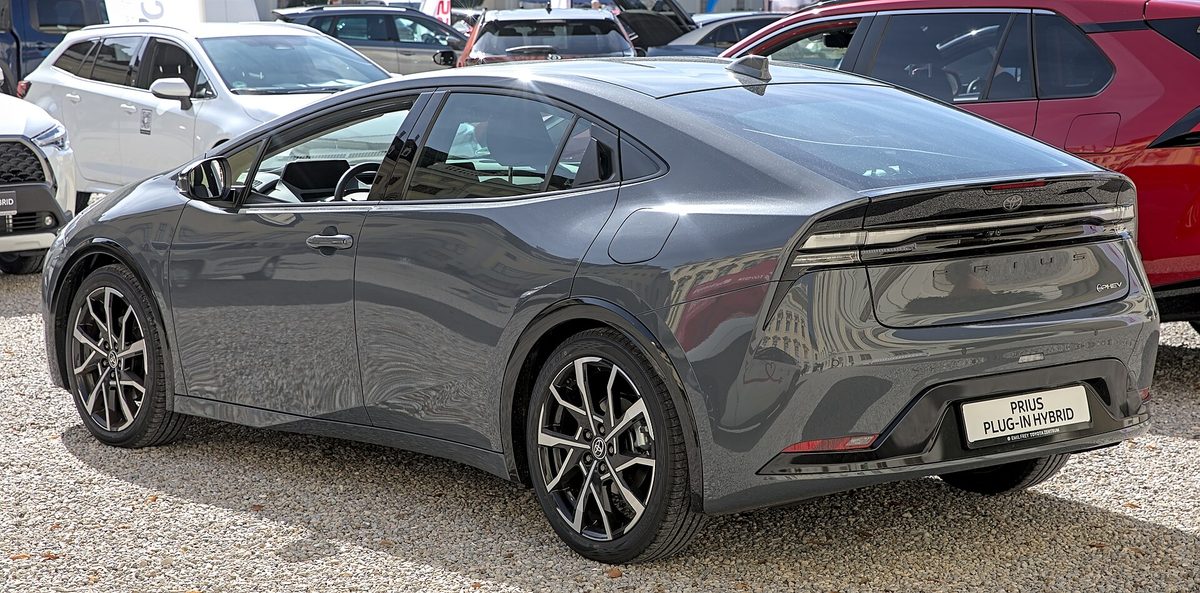
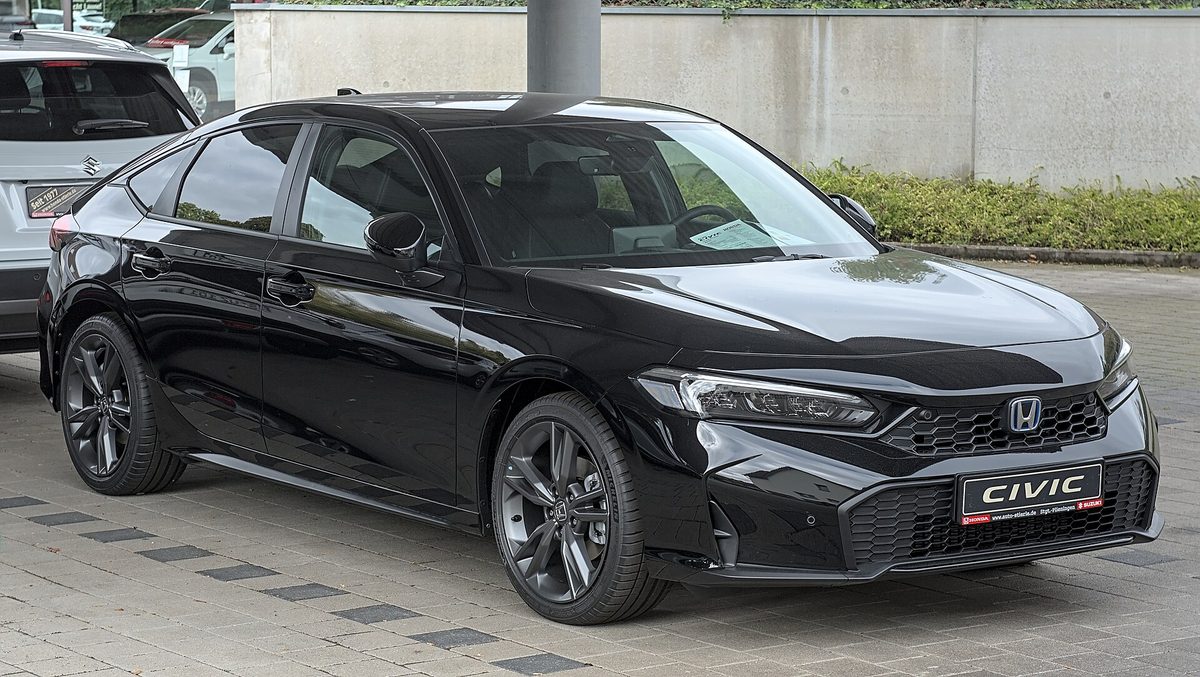
Two compact hatchbacks have spent years as the default answer for a shopper who wants 45-plus miles per gallon without plugging anything in: the Toyota Prius and the Honda Civic Hybrid. For 2026 and 2027 they are closer in price than they have ever been, they sit on opposite ends of the personality scale, and the spec sheets hide a few differences that matter more than the headline fuel-economy number.
The short version: the Prius is the more efficient, more frugal and more extensively equipped car for the money, and its list prices start about $4,800 below the Civic Sport Touring Hybrid. The Civic Hybrid is the sharper, roomier-feeling and more conventional one, with a stronger combined output on paper. Which one is right depends on how you actually drive, so this comparison goes through the numbers that move a buying decision.
Price and trims
Toyota sells the 2027 Prius in four grades, LE, XLE, Nightshade and Limited, each available with front-wheel drive or all-wheel drive. Base MSRP runs from $28,755 for the LE (FWD) to $35,770 for the Limited (FWD); adding AWD costs $1,400 on every grade, taking the range to $30,155 for an AWD LE and $37,170 for an AWD Limited. Toyota lists a $1,295 dealer processing and handling fee on top of those figures. Toyota announced the 2027 model on July 16, 2026, and the only changes it lists from 2026 are dual-zone climate control and a new Inked paint color.
Honda sells the Civic hybrid hatchback in two trims, Sport Hybrid and Sport Touring Hybrid. Honda's own consumer page puts the Sport Touring Hybrid hatchback at about $33,595 before destination, while third-party listings that include a destination charge show figures in the mid-$30,000s; the exact number depends on the destination fee and the model year, so check a current window sticker. Compare like with like: a Civic Sport Touring Hybrid at about $33,600 lands close to a Prius Nightshade FWD at $33,005 or an XLE AWD at $33,600, while the Prius range reaches both lower, at $28,755, and higher, at $37,170 for an AWD Limited.
There is also a sedan version of the Civic Hybrid for 2026, with a lower starting price than the hatchback; this article compares the hatchback because it is the body style that competes directly with the Prius.
Powertrain and fuel economy
The Prius uses a 2.0-liter four-cylinder with two motor-generators in Toyota's fifth-generation hybrid system. Toyota quotes 194 net combined horsepower for front-wheel drive and 196 for AWD, which uses a separate rear electric motor. Toyota's estimated 0-60 mph time is 7.2 seconds for FWD and 7.0 seconds for AWD. EPA combined economy is 55 mpg for the LE with front-wheel drive and 53 mpg for the LE with AWD. Toyota's press release gives no combined figure for the XLE, Nightshade or Limited, and bigger wheels typically cost a few mpg on those trims, so look at fueleconomy.gov for the exact grade you are considering.
The Civic Hybrid pairs a 2.0-liter Atkinson-cycle four-cylinder (141 hp, 134 lb-ft) with an electric motor rated at 181 hp and 232 lb-ft, which Honda lists as 200 hp combined. EPA ratings for the hatchback are 50 mpg city, 45 highway and 48 combined. The Civic's high-torque motor gives it strong off-the-line response, and Honda tunes it to feel like a conventional car with a more natural steering and chassis feel than the Prius.
On efficiency the gap is clear: 55 mpg against 48 mpg combined. At 12,000 miles a year and $3.50 per gallon, that is about 218 gallons for the Prius LE and about 250 gallons for the Civic, a difference of roughly $110 a year. It is real, but small. Nobody should pay $2,000 more up front for the extra mpg alone, which is why the sticker-price gap between the two matters as much as the EPA number. (The Prius 55 mpg figure is for the LE; higher grades will be lower.)
Space and practicality
Honda lists the Civic hatchback hybrid with 24.5 cubic feet of cargo space behind the rear seats and 96.6 cubic feet of passenger volume. J.D. Power reports that Toyota's figures for the Prius are 23.8 cubic feet behind the back seat in the LE and 20.3 cubic feet in the other trims. Toyota does not publish a rear-seats-down figure for the hybrid. In practice that makes the Civic the better load-carrier unless you buy the Prius LE.
The Civic has the more upright, conventional cabin; the Prius has a lower roofline, a sharply raked windshield and a rear window that is steeply sloped, and taller rear passengers notice less headroom. Both are five-seaters in name and four-seaters in comfort. The Prius is built at Toyota's Tsutsumi plant in Japan.
Safety
The Prius earns an IIHS Top Safety Pick+ designation, with Good ratings in the small overlap, updated moderate overlap and updated side tests, Good ratings for both vehicle-to-vehicle and pedestrian front crash prevention, and Acceptable headlights. Toyota Safety Sense 3.0 is standard on every grade, with pre-collision braking with pedestrian detection, full-speed adaptive cruise control, lane tracing assist, road sign assist and proactive driving assist, plus blind-spot monitoring, rear cross-traffic alert and safe exit alert.
The Civic hatchback is an IIHS Top Safety Pick, the tier below the Plus award, with Good ratings in the small overlap, moderate overlap and side tests. IIHS lists its crash ratings as based on a 2022 Civic and applying to 2022 to 2026 models, and its headlights are rated Marginal in the IIHS class summary. Honda's own materials claim a five-star NHTSA overall score; we could not confirm that on NHTSA's site, so treat it as a manufacturer claim. On the numbers IIHS publishes, the Prius has the stronger safety record.
What it costs to run
Fuel is the clearest running-cost difference, so it helps to do the sums rather than quote mpg alone. At 12,000 miles a year, a Prius LE at 55 mpg burns about 218 gallons; a Civic Hybrid hatchback at 48 mpg burns about 250 gallons. At $3.00 a gallon the gap is about $96 a year, at $3.50 about $112, and at $4.50 about $144. Over a typical five-year ownership period that is somewhere between $480 and $720, assuming mileage stays the same and the Prius really delivers the LE's rating.
That saving is smaller than the price difference between the cars. If you compare a Prius LE at $28,755 with a Civic Sport Touring Hybrid at about $33,595, you are looking at roughly $4,840 in sticker savings before you count fuel, which is several times the five-year fuel advantage. The picture changes if you compare a Prius XLE at $32,200 with the Civic: the sticker gap shrinks to about $1,400, and the fuel savings cover about half of it, because the XLE's wheels and equipment pull its mpg down from the LE's 55 figure.
Insurance, tires and maintenance are harder to pin down, since they depend on your state, age and driving record, so get quotes on both cars before deciding. Both are mainstream hybrids with conventional brake and tire wear and no plug-in charging hardware to maintain, and both manufacturers' dealer networks are large. Depreciation is the other big cost; neither maker publishes resale forecasts, so look at current used listings for three-year-old examples of each as a rough guide.
Warranty and ownership
Toyota's warranty is 36 months/36,000 miles basic, 60 months/60,000 miles powertrain and 60 months of corrosion coverage with no mileage limit, plus ToyotaCare scheduled maintenance for one year or 10,000 miles and two years of roadside assistance. Five-year trials of Safety Connect, Service Connect and Remote Connect are included. Honda's warranty terms and hybrid-battery coverage were not on the specification pages we reviewed, so confirm them with a dealer; federal rules require hybrid batteries to be covered for at least eight years or 100,000 miles in most states (ten years or 150,000 miles in California-rule states).
Technology
The Prius has an 8-inch touchscreen on the LE, XLE and Nightshade and a 12.3-inch screen on the Limited (optional on the Nightshade), an 8-speaker JBL system on the Limited, and an optional Advanced Park and Panoramic View Monitor package on the Limited. Honda's equipment details were not available to us from a source we could open, so check the current Sport Hybrid and Sport Touring Hybrid feature lists on Honda's site before comparing infotainment line by line. On Toyota's side, the key point is that every Prius grade gets the full safety suite, so the base car is not a stripped-down one.
Which should you buy?
Buy the Prius if the lowest running cost matters most, if you want the best published crash-test record in this pairing, or if you want AWD in a small hatchback; Toyota offers it on every grade for $1,400. Buy the Prius LE if you also want the most cargo room it offers.
Buy the Civic Hybrid if you drive on twisty roads, want conventional styling and a more spacious cabin, or are shopping Honda for its resale and dealer network. Expect to pay more for the equivalent equipment and accept about 7 mpg less in EPA terms.
Buy neither without cross-shopping a sedan: the Civic sedan Hybrid and the Toyota Corolla Hybrid cost less than either hatchback, and for many commuters the cheaper car saves more than the mpg gap does.
Bottom line
For most American buyers the Prius is the better-value hybrid in 2026-27: lower starting price, higher mpg, AWD choice and a top IIHS award. The Civic Hybrid wins on space, driving feel and familiarity. Test-drive both before deciding, because the one you enjoy for 50,000 miles will cost you less in the long run than the one that wins a spreadsheet.
| Toyota Prius (2027) | Honda Civic Hybrid hatchback (2026) | |
|---|---|---|
| Base price (before fees) | $28,755 (LE FWD) | about $33,595 (Sport Touring Hybrid) |
| Powertrain | 2.0L 4-cyl hybrid, FWD or AWD | 2.0L 4-cyl hybrid, FWD |
| Combined output | 194 hp FWD / 196 hp AWD | 200 hp |
| EPA combined | 55 mpg (LE FWD) | 48 mpg |
| Cargo behind rear seats | 23.8 cu ft (LE) / 20.3 cu ft (others) | 24.5 cu ft |
| IIHS award | Top Safety Pick+ | Top Safety Pick |
| Powertrain warranty | 5 yr / 60,000 mi | Check with dealer |
Related cars
Related articles
- 2027 Crown Signia Price: From $44,890, Limited $51,155 — The Limited Costs $2,065 More Because the Tech Package Is Now Standard
- Hyundai Ioniq 5 vs Kia EV6: Which Should You Buy? (2026) — The Ioniq 5 Costs $2,900 Less and Fits More Cargo, While the EV6 Drives Tighter and Edges It on EPA Range
- Tesla Model 3 vs Toyota Corolla: Which Costs Less? (2026) — A $14,265 Sticker Gap Against Fuel Savings of About $977 a Year, Before Depreciation Is Counted
- Elantra vs Civic: Which Should You Buy? (2026) — A Cheaper Hybrid That Beats the Civic on MPG Against the Compact Car Reviewers Still Call More Fun to Drive