Elantra vs Civic: Which Should You Buy? (2026) — A Cheaper Hybrid That Beats the Civic on MPG Against the Compact Car Reviewers Still Call More Fun to Drive
Both compacts now earn IIHS's Top Safety Pick, so the real split is between Hyundai's cheaper, thriftier hybrid and Honda's more engaging, slightly more spacious gas and hybrid cars.
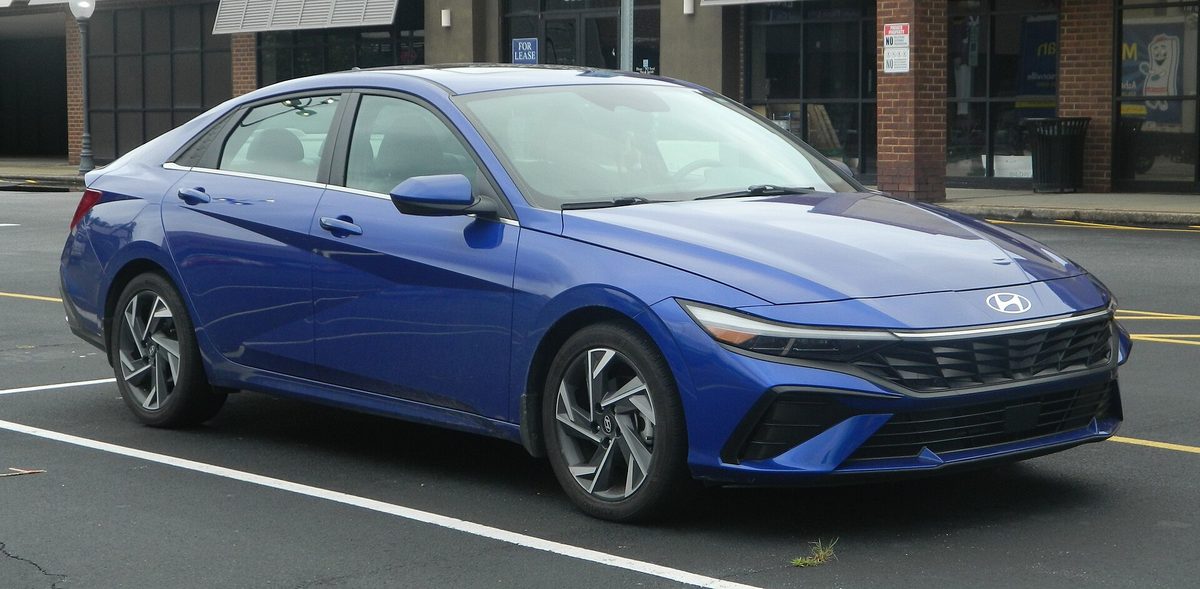
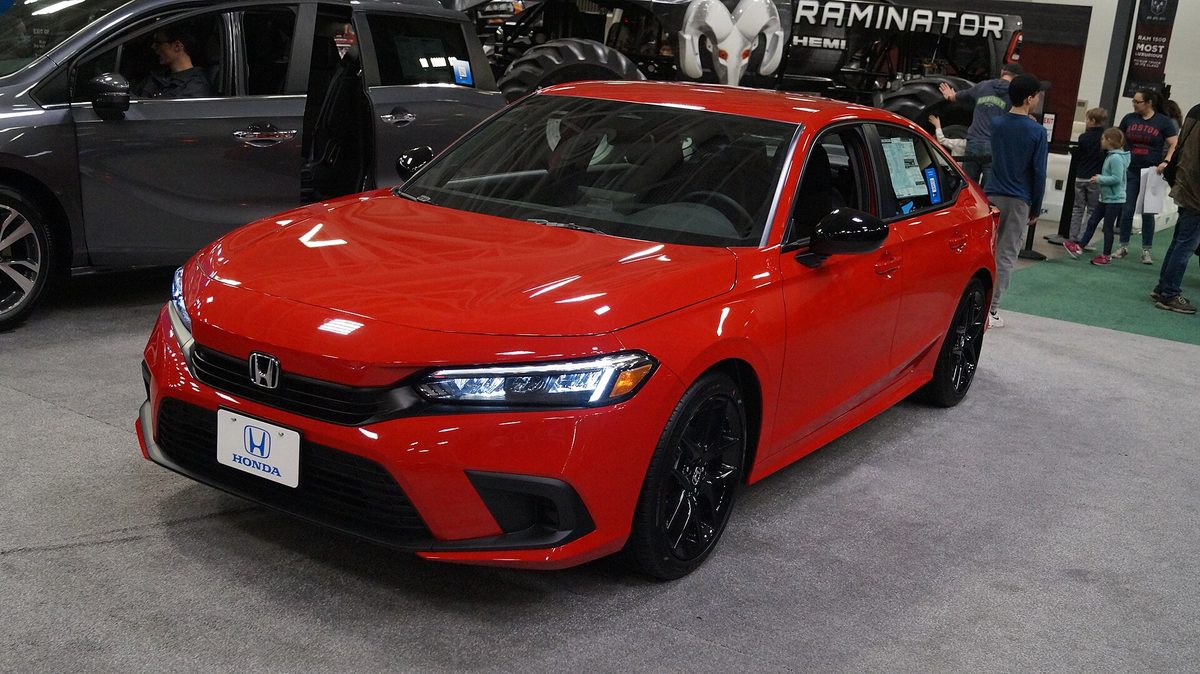
The compact sedan class has quietly turned into a hybrid fight. Hyundai's 2026 Elantra and Honda's 2026 Civic both now sell a gas model and a hybrid side by side, both carry IIHS's Top Safety Pick award, and both start under $25,000 before destination. The differences that are left are specific rather than sweeping: a meaningful price and mileage gap on the hybrids, a reversed gap on interior space, and a driving character split that road testers have described almost identically for a decade — Honda tunes its steering and suspension for a driver who notices, Hyundai tunes for a buyer who mostly wants to get somewhere calmly and cheaply.
Gas models: Hyundai undercuts, Honda matches on mpg
The 2026 Elantra's base SE starts at $23,870 with its 2.0-liter four-cylinder, a Hyundai USA pricing document confirms, rising to $24,995 for the SEL Sport, $26,320 for the SEL Sport Premium, $28,420 for the Limited and $30,645 for the turbocharged N Line, all figures including Hyundai's $1,245 destination charge. The SE is EPA-rated at 31 mpg city, 40 highway and 35 combined.
Honda's gas Civic Sedan starts at $24,595 for the LX and $26,595 for the Sport, per Honda's own pricing and EPA release, plus a $1,195 destination charge that brings the LX to $25,790. That is $675 more than the Elantra SE's $25,115 with destination, for a car EPA rates at 32 city, 41 highway, 36 combined — a single mpg ahead of the Hyundai on paper, not enough to matter at the pump. The Elantra is the cheaper gas car to buy; the two are close to a wash on fuel.
Step up to performance trims and the math is closer. The Elantra N Line's 1.6-liter turbo-four makes 201 horsepower and 195 lb-ft through a 7-speed dual-clutch transmission, rated 28 city/35 highway. The Civic Si, Honda's enthusiast gas trim, makes a similar 200 hp from its own turbo 1.5-liter with a 6-speed manual or CVT. Both land in the low-$30,000s with destination, and both exist specifically for buyers who want a compact sedan that doesn't drive like an appliance.
Hybrids: this is where the Elantra pulls ahead on the window sticker
Hyundai's Elantra Hybrid Blue starts at $25,450 and is EPA-rated at 51 mpg city, 58 highway, 54 mpg combined — the highest combined figure either brand publishes for this class. The SEL Sport and Limited hybrid trims step up to $27,425 and $29,800 and give up a little economy, rated 49 city/52 highway/50 combined, for more equipment.
Honda's Civic Sport Hybrid starts at $29,295 plus the same $1,195 destination, landing at $30,490 — $3,795 more than the Elantra Hybrid Blue's $26,695 with destination included on both. Honda's own release rates the Civic Hybrid 50 city/47 highway/49 combined. The Civic's hybrid system makes more power, around 200 hp combined against the Elantra Hybrid's 139 hp, and reviewers note the extra shove is noticeable around town even though Edmunds clocked the gas Elantra, not the hybrid, as the quicker car to 60 in its own testing. For a buyer whose first question is the sticker price and the fuel bill, the Elantra Hybrid answers both.
Run the numbers over a year of typical driving: 15,000 miles at $3.20 a gallon (our own round assumptions). The Elantra Hybrid Blue's 54 mpg burns about 278 gallons, or $889. The Civic Sport Hybrid's 49 mpg burns about 306 gallons, or $980. That's roughly $91 a year in the Elantra's favor on top of its $3,795 lower starting price — a real, stacking advantage for the Hyundai, not a wash.
Safety: both are Top Safety Pick, but the Elantra's score sheet is cleaner
IIHS tightened its 2026 criteria, requiring a Good rating in the updated moderate overlap front test for either award level, and both cars cleared the bar. Crucially, neither earned the higher Top Safety Pick+ distinction this model year — that requires better-than-Acceptable headlights and crash-prevention scores across the board, and both cars fall just short of that ceiling on at least one measure.
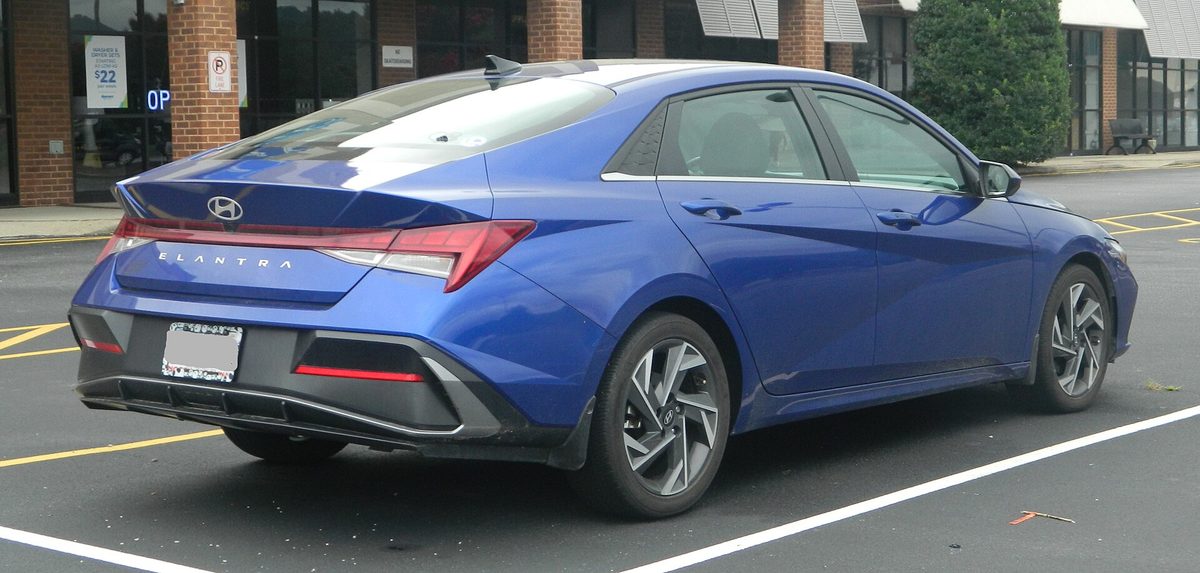
The 2026 Elantra 4-door sedan scores Good on every individual test IIHS publishes for it: small overlap front, the updated moderate overlap front, the updated side test, headlights, and pedestrian front crash prevention. The 2026 Civic 4-door sedan scores Good on small overlap front (both driver and passenger side) and the updated side test, and Good on headlights, but only Acceptable on the updated moderate overlap front test and Acceptable on both vehicle-to-vehicle and pedestrian front crash prevention. Both earned NHTSA's five-star overall rating. On paper, the Elantra's sheet is the more uniformly strong one this year, even though both clear the same named award.
Equipment-wise the two are close. Hyundai's SmartSense suite is standard across the Elantra lineup and includes forward collision assist with pedestrian detection, lane keep assist, driver attention warning, high beam assist and rear occupant alert. Honda Sensing is likewise standard on every Civic trim, with forward collision warning, collision mitigation braking, road departure mitigation, adaptive cruise and lane keeping assist. Neither brand reserves its safety suite for higher trims, which matters more than either individual IIHS test to most families cross-shopping the base cars.
Space, cabin and how each one actually drives
The Civic's trunk measures 14.8 cubic feet to the Elantra's 14.2, and both cars share near-identical front legroom at 42.3 inches. The Elantra claws back the rear seat, though, with 38.0 inches of rear legroom against the Civic's 37.4 — a small but real edge for anyone who regularly carries adults in back.
Road testers describe the two cars almost in opposition. Edmunds, which tested both at its track, calls the Civic nimble, engaging and genuinely fun on a twisty road, crediting light, accurate steering and a suspension tune that soaks up broken pavement without feeling soft. Its recurring knock on the Civic is cabin noise: road roar climbs enough at highway speed that occupants raise their voices, and testers note the interior, while clean and logically laid out, doesn't try to feel premium.
The Elantra reads calmer rather than sportier. Edmunds scored it a middling 6.8 out of 10 overall and clocked the base gas model at 9.4 seconds to 60 mph, slower than enthusiasts want but in line with the class. Its steering is light and short on feedback, and its CVT is tuned for mileage over response, with only a little of the droning most CVTs produce. The hybrid is nearly a second slower to 60 than the gas model despite the added motor, but delivers smoother, more linear power around town. Neither trait is a flaw exactly — it's a sedan built to be unremarkable to drive, which is exactly what a large share of compact-sedan buyers say they want.
Which one to buy
**Buy the Elantra Hybrid if** the lowest combined cost of ownership matters most: it starts $3,795 below the Civic Sport Hybrid with destination included on both, rates 54 mpg against 49, and still carries a clean sweep of Good IIHS scores. It's also the pick if you regularly put adults in the back seat, where its extra 0.6 inches of legroom is a real, measurable gain.
**Buy the Civic if** you want to enjoy the drive, not just tolerate it. Reviewers have preferred the Civic's steering and chassis over nearly every compact-sedan rival for close to a decade, the Sport and Si trims lean into that further, and its 14.8-cubic-foot trunk beats the Elantra's by 0.6 cubic feet. Accept a louder cabin at highway speed and a higher price on the hybrid as the trade-off.
**Either way, confirm trim-specific IIHS scores before you buy** if crash safety is the deciding factor: the Good-versus-Acceptable gap here applies to the 4-door sedan body style IIHS tested, and specific safety-package availability can still vary by trim within each lineup.
| 2026 Hyundai Elantra | 2026 Honda Civic | |
|---|---|---|
| Base MSRP (gas) | $23,870 (SE) | $24,595 (LX) |
| With destination | $25,115 ($1,245) | $25,790 ($1,195) |
| Hybrid base MSRP | $25,450 (Blue) | $29,295 (Sport Hybrid) |
| Hybrid with destination | $26,695 | $30,490 |
| Gas fuel economy (combined) | 35 mpg | 36 mpg |
| Hybrid fuel economy (combined) | 54 mpg (Blue) / 50 mpg (other trims) | 49 mpg |
| Performance trim | N Line, 201 hp turbo | Si, ~200 hp turbo |
| Trunk | 14.2 cu ft | 14.8 cu ft |
| Rear legroom | 38.0 in | 37.4 in |
| IIHS award | Top Safety Pick | Top Safety Pick |
| IIHS moderate overlap front | Good | Acceptable |
| NHTSA overall | 5 stars | 5 stars |
Related cars
Related articles
- Toyota Corolla vs Honda Civic: Which Is Better in 2026? The Cheaper Hybrid Against the Roomier, Quicker One
- 2026 Honda Civic vs Mazda3: Which Is Better? Hybrid Mileage Against All-Wheel Drive and a Nicer Cabin
- Prius vs Civic Hybrid: Which Should You Buy? (2027) — A 55-MPG Hatchback Priced From $28,755 Against Honda's 200-HP Hybrid With More Cargo Room
- Is Certified Pre-Owned Worth It? The Real Math in 2026 — What You Actually Get for a 2-8% Premium Over a Regular Used Car
Sources
- Hyundai USA Media Center — 26MY Elantra Series Pricing
- Honda News — 2026 Honda Civic Sedan Pricing and EPA Ratings
- IIHS — 2026 Hyundai Elantra 4-door sedan ratings
- IIHS — 2026 Honda Civic 4-door sedan ratings
- Edmunds — 2026 Hyundai Elantra Review and Track Test
- Edmunds — 2026 Hyundai Elantra Hybrid Trims and Pricing
- The Drive — 2026 Honda Civic Sport Review
- Edmunds — 2026 Hyundai Elantra Trims Comparison