Lucid Air vs Tesla Model S: Which Is Better in 2026? — The Air Is Still Being Built, While the Model S Is Down to Leftover Stock Priced Near $110,000
Tesla has stopped building the Model S, so the old rivalry is now a choice between a current car and the last leftovers.
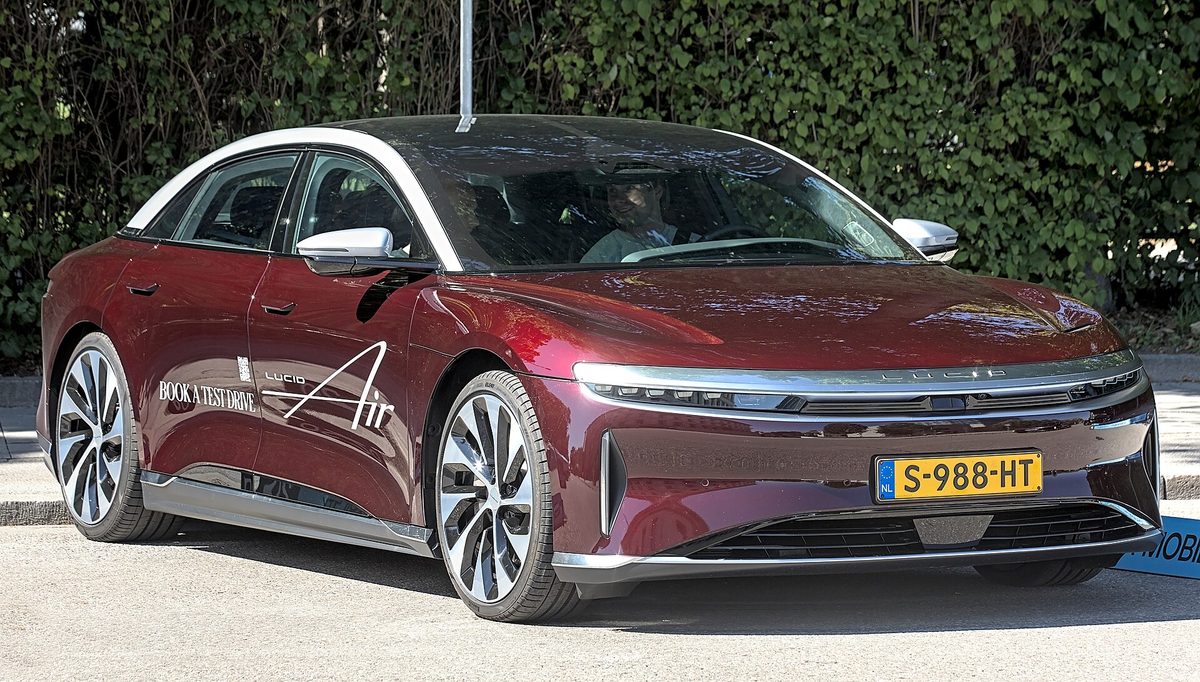
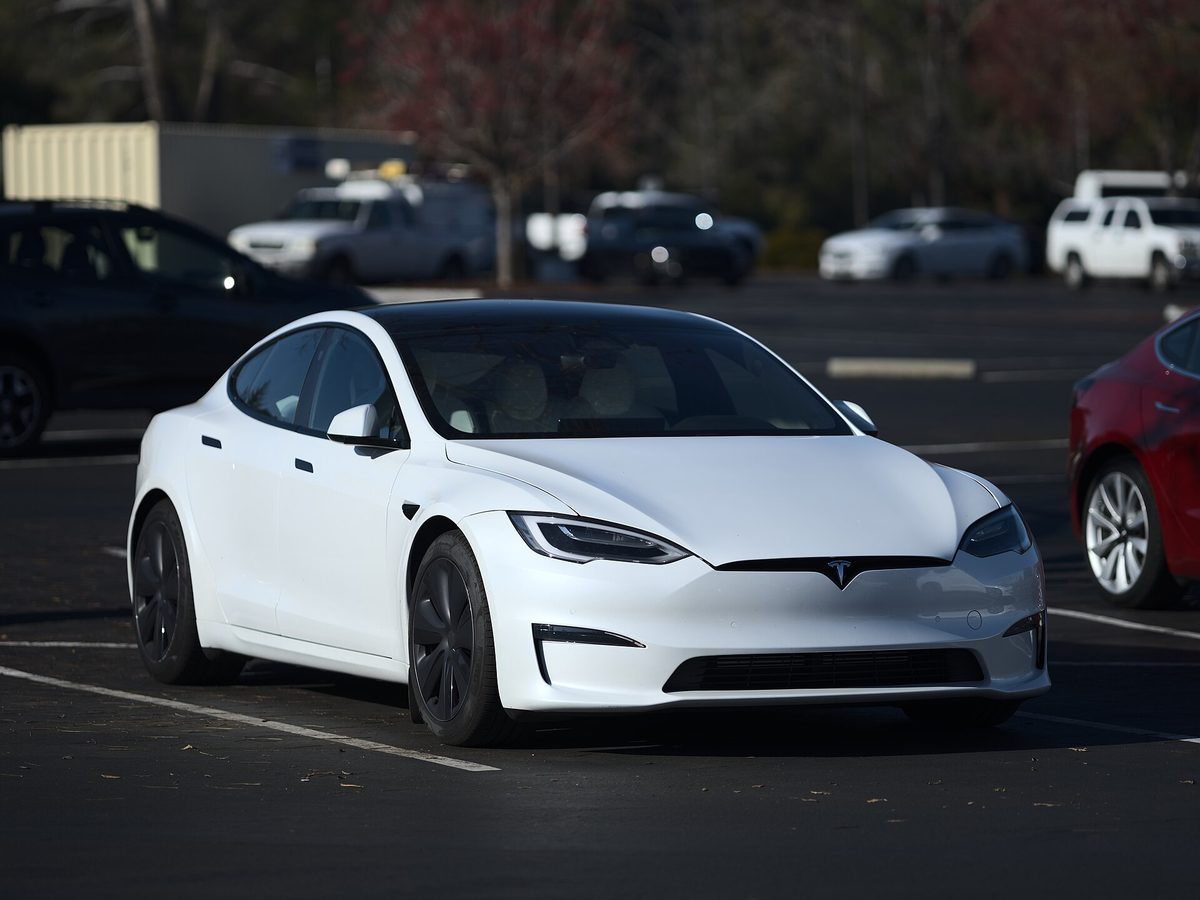
The Tesla Model S that defined the luxury electric sedan is no longer being built, and the car that spent years chasing it is now the only one of the pair you can order new. That changes the question behind Lucid Air vs Tesla Model S. A year ago it was a close fight between two flagship EV sedans. Today it is a choice between a current-production car with a factory warranty path and a discontinued one whose remaining stock is priced like a collector's item.
What actually happened to the Model S
Tesla CEO Elon Musk announced on the company's January 28, 2026 earnings call that Model S and Model X production would end the following quarter, calling it an "honorable discharge" and saying anyone interested in buying should order soon. Fremont's S/X space is being converted to build Tesla's Optimus humanoid robot. By April 1, Musk confirmed that custom orders had ended. Electrek, citing EV-CPO inventory data, counted roughly 295 new Model S and 301 new Model X units left worldwide, nearly all in the US, and none in Canada or Europe.
Electrive reported on May 11, 2026 that Tesla had announced the last Model S and Model X had rolled off the Fremont line after 14 and 11 years of production. The final Model S was black, signed by the production staff. Tesla has said it will support existing owners "for as long as people have the vehicles," which is the line that matters most if you are considering a used or leftover car.
Price: the gap flipped
When Tesla refreshed the Model S in June 2025 it raised prices $5,000, to $84,990 for the Long Range and $99,990 for the Plaid. Then the supply ran short. In early April 2026, InsideEVs reported that Tesla had pushed the price of its last new Model S AWD units to $109,990, with the cheapest former-demo Model S in inventory at about $106,000. The article does not say how many cars remained, and we could not confirm a current stock count for November, so check Tesla's inventory page before assuming any are left.
The Lucid Air, by contrast, is cheaper than the leftover Model S at every trim except the top. Electrek reported on August 19, 2026 that 2027 Air pricing is unchanged: Pure $70,900, Touring $79,900, Grand Touring $114,900 and Sapphire $249,000. Lucid's 2026 prices listed by TFLcar ran about $1,500 higher per trim ($72,400, $81,400, $116,400 and $250,500), which is consistent with destination charges being included in those figures, so confirm which number a dealer or configurator is quoting. Even at the Grand Touring level, you are paying only about $5,000 more than the last Model S AWD, and for a car with far more range.
Range and charging
Range is the Air's clearest win. The Grand Touring is rated at up to 512 miles, which Electrek called the longest range of any EV on sale. TFLcar reported that for 2026 Lucid lifted the Touring from 406 to an estimated 431 miles, and The Drive confirmed 431 miles on 19-inch wheels from a 92-kWh pack in its Touring review. The Drive's reviewer drove it in cold late-November Pennsylvania weather and did not reach that number, which is the usual story with any EPA rating; our explainer on EV range covers why.
The Model S Long Range after the 2025 refresh was billed by Tesla as its longest-range car ever, at up to 660 km (about 410 miles), according to The Driven. That is a strong number, and it is still about 100 miles short of the Grand Touring.
Charging is where the picture is more mixed than the spec sheets suggest. The Drive found that the Air Touring can pull up to 250 kW on a CCS fast charger, but its test charger peaked at about half of its rated 240 kW and reached roughly 80 percent in an hour. On Tesla Superchargers, which all Airs have been able to use since July 31, 2025 with a $220 CCS-to-NACS adapter, Lucid says the car is capped at 50 kW, roughly 200 miles of range per hour. The Model S plugs into Superchargers natively. Electrek noted that the remaining new inventory also came with free DC fast charging at Superchargers and free lifetime Premium Connectivity, a perk that would be hard to match on any new car.
Performance
Neither car is slow, and the difference matters mainly at the top. The Drive lists the Air Touring at 620 hp and 885 lb-ft, with a 0-60 time of 3.4 seconds. Lucid's Sapphire makes 1,234 hp, per TFLcar. The Model S Plaid is rated at 1,020 hp from three motors, with Tesla's claimed 0-60 time of roughly two seconds, according to EVXL, which is faster in a straight line than anything short of the Sapphire. If you want a sedan that embarrasses supercars off the line for around $100,000, the Plaid was built for exactly that, and it is no longer in production.
For ride and daily comfort the reviews lean toward Lucid. The Drive called the Air's coil suspension "sound," though it did not absorb potholes as well as Porsche's Active Ride, and described the Model S as "just too old and out of step" against newer competitors. Tesla's June 2025 refresh added a quieter cabin, revised bushings and suspension, an additional front camera and adaptive driving beams, per The Driven, but the basic car is a 2012 design.
Interior and software
The Air's weak spots are the ones you notice every day. The Drive's reviewer dinged the gray-on-gray interior, the cheap-feeling key fob, an awkward phone holder, and the fact that functions such as the drive-mode selector live only on the lower touchscreen. He also wanted physical mirror controls and a glovebox handle. Those are small things on a $81,400 car, and they are the kind of items that can be fixed with software or small hardware changes, but they have not been fixed yet. The Touring tested at $102,100 with options; the reviewer said he would skip the $6,750 DreamDrive driver-assist package.
The Model S's strength is its ecosystem. It has native Supercharger access, a software platform that owners already know, and a service network that will continue to exist. Tesla's own pledge to support owners for as long as the cars are on the road helps, though it does not mean parts and software will stay cheap or that resale will hold: with production over, the used market is now untested. Early used examples of discontinued luxury cars have gone both ways, and nobody can honestly predict which way this will go.
The collector angle, and why it is a trap for most buyers
Tesla sent the Model S off with a Signature Edition limited to 350 cars (250 Model S and 100 Model X) at $159,420 each, offered only to selected owners, according to electrive; the delivery event planned for May 12, 2026 was postponed at short notice and no new date has been announced. That is the clearest sign of how Tesla sees the car: a finale and not a product line. It also explains the price behavior of the last regular units. When a nameplate ends and supply is a few hundred cars, the sticker stops reflecting what the car is worth to a driver and starts reflecting what the last one is worth to a fan.
The sales numbers explain why the car ended. Tesla no longer reports Model S and Model X separately, lumping them with Cybertruck and Semi as other models, which totaled 50,850 for 2025. Electrek estimated that the S and X alone were around 30,000 that year, against 100,000 units of annual capacity at Fremont. A flagship selling at under a third of the plant's capacity, in a segment where the Lucid Air has already pulled ahead on range, was never going to be rescued by another refresh.
Who should buy which
**Buy the Lucid Air if** you want a new car with a warranty and a company behind it, if range matters (a 431-mile Touring or 512-mile Grand Touring is unmatched), or if you want a quiet, soft-riding flagship. The Touring at $79,900 before destination is the sweet spot of the lineup, and The Drive scored it 9 out of 10, saying it was hard not to recommend it as long as you can afford the entry price. The Pure at $70,900 is the cheapest way in. Test the charging on the networks near you first.
**Buy a leftover Model S if** you want the Plaid's straight-line speed, the Supercharger-native ownership experience, and the free lifetime connectivity, and you can find a new unit at a price you accept. At $109,990 for the AWD, you are paying a premium for the last of a nameplate. Treat it as a collector's purchase and not as a value pick.
**Look elsewhere if** you want something with a long manufacturer commitment in the used market. A used Model S will be cheaper, but it is now a discontinued car from a company that is spending the factory space on robots.
Bottom line
On everything except nostalgia and straight-line speed, the Lucid Air is the better buy in late 2026: more range, a lower price for the equivalent tier, a current-production car, and a nicer place to sit. The Model S earned its reputation, and its last units are now a trophy. If you are buying to drive and not to collect, the Air is the answer.
| Lucid Air (2027) | Tesla Model S (final, 2025-26) | |
|---|---|---|
| Status | In production | Production ended May 2026; leftover stock only |
| Price | $70,900 Pure / $79,900 Touring / $114,900 Grand Touring / $249,000 Sapphire (before destination) | $84,990 Long Range / $99,990 Plaid at the June 2025 refresh; last new AWD units about $109,990 |
| Range | Touring 431 mi; Grand Touring up to 512 mi | Long Range up to about 410 mi (660 km) |
| Power | Touring 620 hp; Sapphire 1,234 hp | Plaid 1,020 hp |
| 0-60 mph | 3.4 s (Touring) | About 2 s (Plaid, Tesla claim) |
| Fast charging | Up to 250 kW CCS; 50 kW at Tesla Superchargers with adapter | Native Tesla Supercharger access |
Related cars
Related articles
- EV Range Explained: Why the EPA Number Isn't What You Get — How the Sticker Is Built, a 215-Mile Highway Test Against a 259-Mile Rating, and a 63-Mile Spread Inside One Model
- Rivian R1T vs Tesla Cybertruck: Which Should You Buy? Tesla Is Winding Cybertruck Production Down in 2027, While Rivian Just Made the R1T Harder to Walk Away From
- Polestar 2 vs Tesla Model 3: Worth Buying the Last One? Tariffs Already Pulled It From Sale, and a 2027 Rule Pushes the Whole Brand Out of the US Next
- Tesla Model 3 vs Toyota Corolla: Which Costs Less? (2026) — A $14,265 Sticker Gap Against Fuel Savings of About $977 a Year, Before Depreciation Is Counted
Sources
- TechCrunch — Tesla is killing off the Model S and Model X (Jan 28, 2026)
- Electrek — Tesla Model S and X production over, only inventory left (Apr 1, 2026)
- electrive — Final Tesla Model S rolls off the production line (May 11, 2026)
- InsideEVs — The last Tesla Model S and Model X got $15,000 more expensive
- The Driven — Tesla refreshes Model S and X with longest range and higher prices (Jun 2025)
- EVXL — Tesla Model S Plaid 2025
- Electrek — 2027 Lucid Air pricing (Aug 19, 2026)
- TFLcar — 2026 Lucid Air updates (Jul 22, 2025)
- The Drive — 2026 Lucid Air Touring review