EV Range Explained: Why the EPA Number Isn't What You Get — How the Sticker Is Built, a 215-Mile Highway Test Against a 259-Mile Rating, and a 63-Mile Spread Inside One Model
A plain-English look at how the number on an EV window sticker is made, and how to turn it into a range you can actually plan around.
Every new EV in the United States wears a range number on its window sticker, and almost every owner eventually notices that the number and the dash display disagree. The gap is not a scam and it is not a defect. It comes from how the number is built, and once you understand that, you can predict your own range far better than the sticker does. This guide walks through where the figure comes from, what a real highway test looks like against it, and how much the choice of trim and wheels moves the number before you drive anywhere.
How the EPA builds the number
The EPA does not drive an EV down a road. According to The Drive's explainer on the process, the car runs on a chassis dynamometer at the agency's National Vehicle and Fuel Emissions Laboratory in Ann Arbor, Michigan. It runs the City cycle and the Highway cycle, each starting from a full charge and continuing until the car can go no further.
Those raw results are then adjusted. The EPA applies a 0.7 multiplier to each range figure, which is meant to approximate the real-world losses it does not test directly, such as climate control and aggressive driving. The adjusted city and highway values are weighted 55% and 45% and added together. That combined figure is the one on the label. The Drive notes that automakers can instead run a larger multi-cycle test, with four city cycles, two highway cycles and two constant-speed cycles, rather than relying on the flat 0.7 factor.
Two things follow from this. First, the label is built from a blend that leans toward city driving, so a driver who spends most of the week on an interstate is not the person the 55/45 weighting describes. Second, the 0.7 factor is a single average applied to everyone. It is a reasonable estimate for a mixed commute in mild weather, and it is not a promise about any particular trip. The Drive's article dates from July 2023, so check the EPA's current procedure if you need exact rules for a specific model year.
A real highway test: the 2026 Nissan Leaf
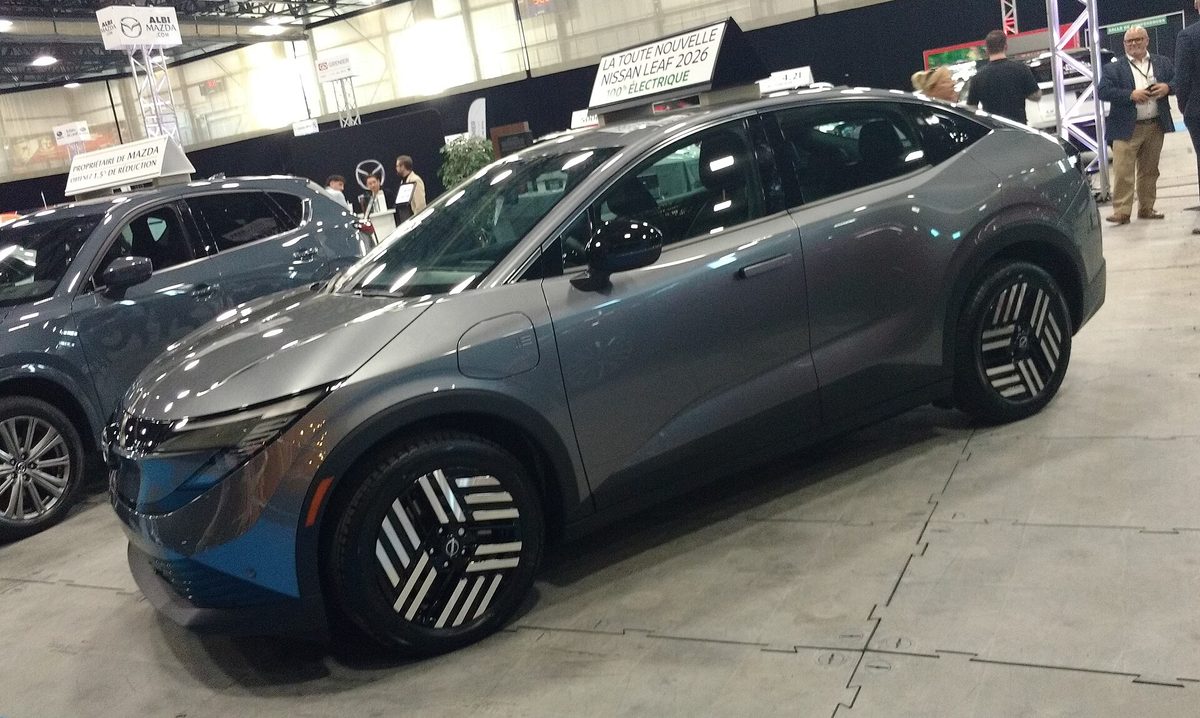
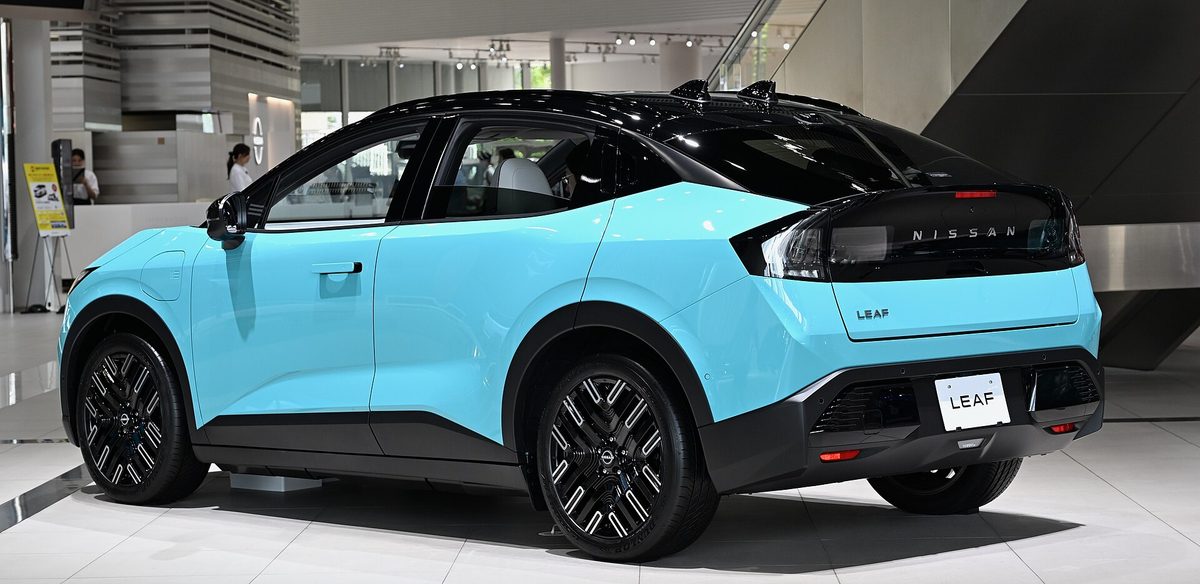
The clearest recent example is a 70 mph highway test of the 2026 Nissan Leaf, reported by InsideEVs in early 2026 from a run by the YouTube channel Out of Spec Testing. The car was a top-trim Leaf Platinum+ with 19-inch wheels, which starts at $40,485. Nissan lists the battery at 75 kWh usable, and the test consumed about 76 kWh. The EPA rating for this trim is 259 miles, and the whole Leaf lineup spans 259 to 303 miles.
At a steady 70 mph and an average ambient temperature of about 38°F, the Leaf covered 215 miles. That is 17% below the EPA figure. InsideEVs notes the car limited its power output as the battery ran low, which is part of how the run ended. For reference, the same article cites an Edmunds range test of the same trim that recorded 310 miles, so one test is not the last word on any car. Test conditions, speed, tires and temperature all move the result.
The efficiency numbers tell a more interesting story than the range number. The Leaf's EPA efficiency is 33 kWh per 100 miles, or about 3.03 miles per kWh. In the test it managed 2.8 miles per kWh, only 7.6% worse. Range fell by 17% but efficiency by less than half of that, and the arithmetic explains why. At 33 kWh per 100 miles, a 259-mile rating implies roughly 85 kWh of energy, which is more than the 75 kWh the battery holds. The label's efficiency figure counts energy drawn from the wall, including charging losses, while the range on the road is limited by what actually sits in the pack. So some of the gap between sticker and road is simply different accounting, not poor driving.
The same model, a 63-mile spread
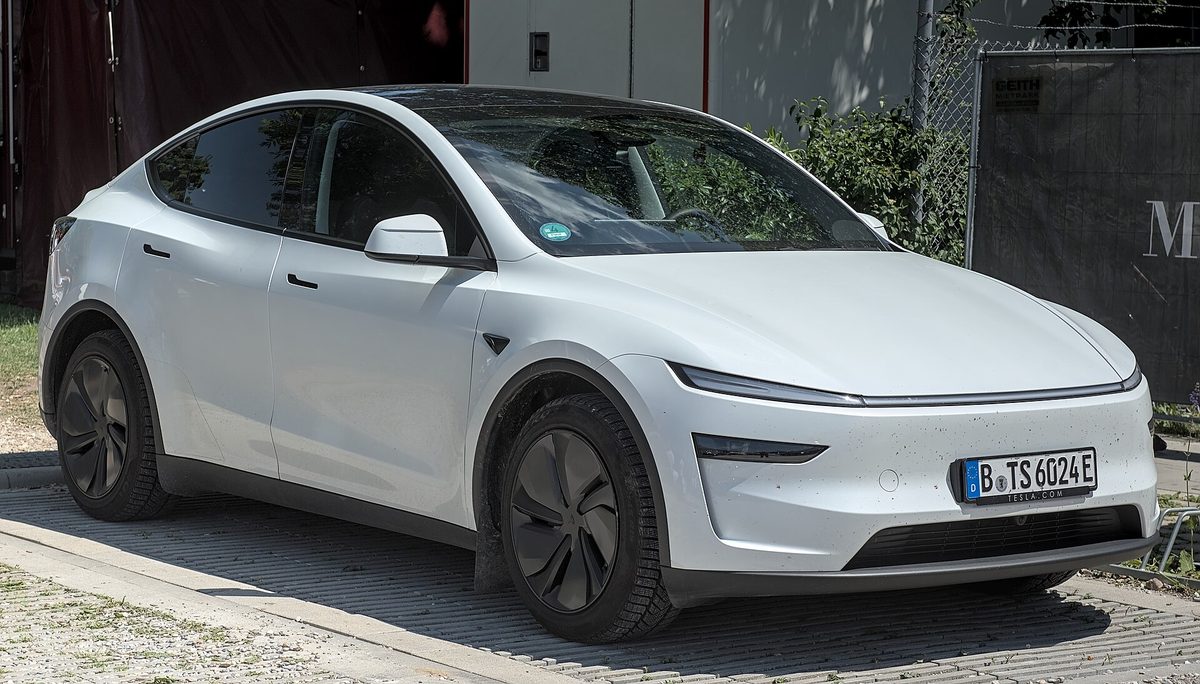
You also change your range when you configure the car. Cars.com's April 2026 rundown of the 2026 Tesla Model Y lists ranges by trim and wheel size. The Premium rear-wheel-drive version is rated at 357 miles with 19-inch wheels and 344 with 20-inch wheels, a loss of 13 miles, or about 3.6%, for the larger wheel. The Premium all-wheel-drive version is rated at 327 miles, about 8% less than the rear-drive car. The base all-wheel-drive Model Y lists 294 miles with 18-inch wheels. From the best configuration to the worst on that list is a 63-mile spread within one nameplate. Cars.com labels only the Premium figures as EPA estimates, so treat the others as the listed values rather than confirmed label numbers.
If you are cross-shopping, compare the exact configuration, not the model name. A headline range figure in an ad is usually the best trim on the best wheels.
What the sticker leaves out
The sticker is a lab result at moderate temperature. Weather is the biggest thing missing from it. AAA's 2026 testing, reported by NPR in May, found that cold weather cut EV range by an average of 39% in its 20°F test, while heat reduced it by an average of 8.5%. AAA ran its tests in a chamber at its Automotive Research Center in Los Angeles using a chassis dynamometer. We covered the causes and the practical fixes separately in our guide to cold-weather range, so we will not repeat them here, but the point for this guide is that the winter number and the sticker number are two different quantities.
Speed is the other piece. The Leaf test above was at a constant 70 mph, which is where aerodynamic drag dominates and where an EV loses the advantage it has in stop-and-go traffic. If your driving is mostly highway, start from the Leaf's 17% shortfall as a sensible warning, not as a rule. One test on one car in cold weather cannot be generalized to every EV.
A practical way to plan
Here is a method that does not require a spreadsheet. Start with the exact trim's EPA range. For a trip at highway speed in mild weather, plan on meaningfully less than the label, and the Leaf test suggests the shortfall can be in the high teens. For a winter trip, plan on a much larger reduction, and use AAA's 39% at 20°F as the order of magnitude for the cold part. Do not simply stack the two penalties together, because the tests overlap in what they measure, but do leave a real buffer.
Then plan around charging stops, not around the last mile of the battery. The Leaf test ended when the car began limiting power, which is a reminder that an EV does not behave the same at 5% as it does at 50%. If a route needs the entire advertised range, it is a route that needs a charger stop. Our guide to NACS and CCS explains which networks you can use.
Questions to ask before you trust a range claim
Whether you are reading a review or standing in a showroom, a few questions sort useful range claims from marketing. Which exact trim and wheel size was it? The Model Y list above shows a 63-mile spread inside one nameplate, so a figure with no trim attached is close to meaningless. Was it the EPA label, a manufacturer estimate or an independent test? The Leaf's 259-mile label and 310-mile Edmunds result sit side by side in the same InsideEVs report, and both can be honest because they measure different things under different conditions.
At what speed and temperature was it measured? A 70 mph run at 38°F, as in the Leaf test, answers a different question than a 55 mph run on a warm day. And what ended the test? A run that stops when the car limits its power tells you about the usable window of the battery, which is the range you will actually want to count on, not the theoretical one.
Finally, ask what you personally need. Most daily driving is a small fraction of any modern EV's rated range, and a car with a smaller battery and a lower sticker number can be the better purchase if you charge at home and take few long trips. Range anxiety is mostly a problem of the rare long journey, and that is exactly the case where the sticker is least reliable and where planning charger stops pays off.
What to take away
The EPA number is a standardized comparison tool. It is good at telling you that one car is more efficient than another under the same rules and poor at predicting your Tuesday commute in January. Read it as a ranking, then adjust: look at the trim and wheels, think about your speeds, and check the temperature where you live. A buyer who does that will rarely be surprised by the dash.
Related cars
Related articles
- How Long Does an EV Battery Really Last? Real Data From 250 Million Miles Says Longer Than the Warranty Implies
- Does Cold Weather Really Kill EV Range? A 2026 AAA Test Found a 39% Drop at 20°F — Here's What Actually Causes It
- NACS vs CCS: Which EV Charging Plug Matters in 2026? Who Can Use Superchargers, What You Need to Carry, and Why a Port Does Not Set Your Charging Speed
- Hybrid vs Plug-In Hybrid vs EV: Which to Buy in 2026? The Math at $4.41 Gas, Without the Tax Credit