Polestar 2 vs Tesla Model 3: Worth Buying the Last One? Tariffs Already Pulled It From Sale, and a 2027 Rule Pushes the Whole Brand Out of the US Next
Tariffs pulled the Polestar 2 from Polestar's US configurator in April 2025, and a Commerce Department rule now ends all new Polestar sales in America after the 2026 model year — here's how the last cars stack up against a Model 3 that isn't going anywhere.
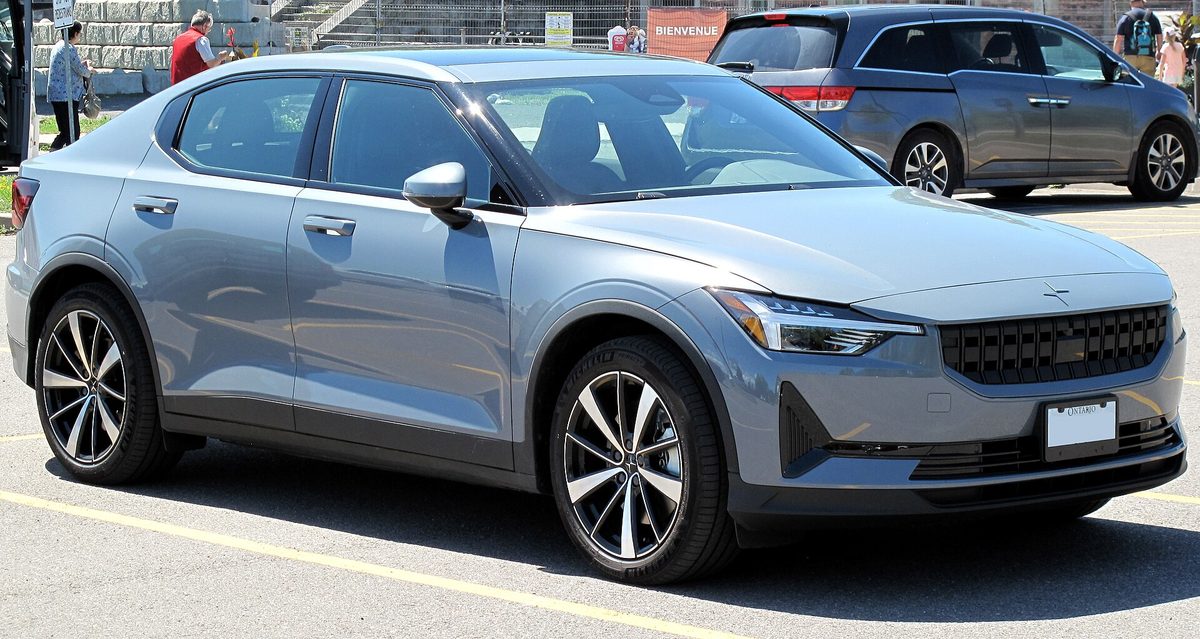
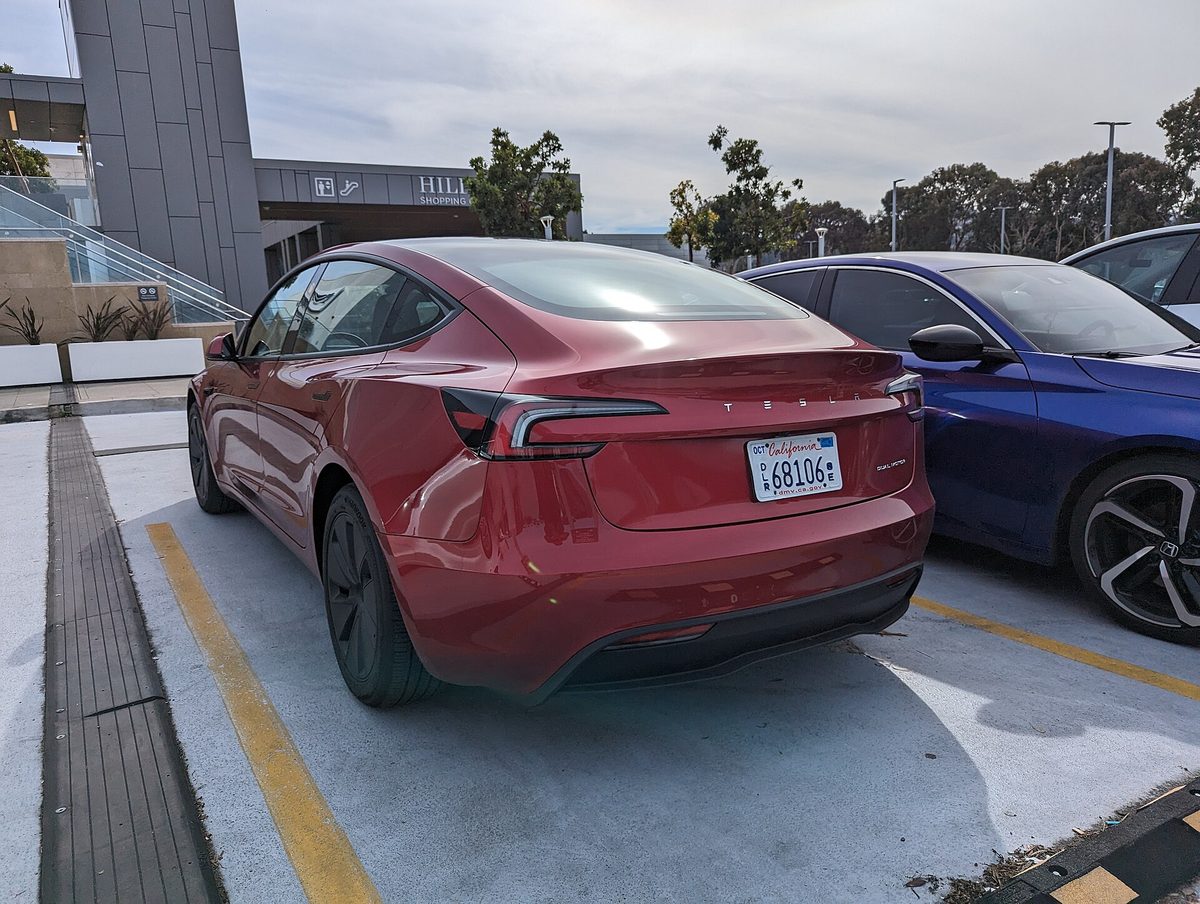
This isn't a typical "which one should you buy new" comparison, because as of this writing you mostly can't buy a new Polestar 2 in the United States at all. Polestar pulled the Chinese-built sedan from its US configurator in April 2025 after tariffs made importing it uneconomical, and the company has since confirmed it will stop selling any new vehicles in the US after the 2026 model year — the Commerce Department denied Polestar's bid to keep selling under the Connected Vehicle Rule, which blocks cars using certain Chinese- or Russian-linked connected technology starting with 2027 models. What's left for American buyers is dealer and certified pre-owned stock of the 2025 Polestar 2, while the Tesla Model 3 keeps rolling off the line in Fremont and Shanghai with no exit date in sight.
The Commerce Department's Bureau of Industry and Security finalized the Connected Vehicle Rule in January 2025 to address national-security concerns about internet-connected cars collecting sensitive data or being remotely accessed through cellular, Wi-Fi, Bluetooth, and driver-assist hardware tied to China or Russia. Polestar is caught by it because Geely, the Chinese automaker that holds a majority stake in Polestar, puts the brand on the wrong side of the rule's ownership test — the Commerce Department told Polestar in June 2026 (decision published July 3) that model-year 2027 and later cars wouldn't be authorized for US sale, and Polestar has said it won't appeal, concluding the odds of winning were too low to bother. Notably, Volvo — Polestar's other corporate parent, majority-owned by Geely as well but structured differently — isn't affected and keeps selling normally in the US, which is part of why this is being read as a Polestar-specific wind-down rather than a broader Geely-brand exodus.
That makes this a genuinely useful comparison for a narrower, real question: if you can still find one of the last Polestar 2s, is it worth buying over a current Model 3 — or is chasing a departing brand's remaining inventory a bad idea no matter the discount? For context, Polestar's other two US models, the 3 and 4 SUVs, keep selling through 2026 with what the company itself has called "hefty price cuts" as dealers clear inventory ahead of the exit; the same dynamic likely applies to any remaining Polestar 2 stock.
Pricing: the 2025 Polestar 2's only US trim, Long Range Dual Motor with the Performance Pack, starts at $64,800 before destination — there's no cheaper Single Motor version in the US lineup anymore, since Polestar trimmed it down to one configuration for its final American model year. The Tesla Model 3 starts at $36,990 for the 2027 base RWD car and tops out at $54,990 for the dual-motor Performance trim — meaning even the quickest, priciest Model 3 variant undercuts the only Polestar 2 you can still buy new by nearly $10,000, before any end-of-line discount a dealer might offer to move a departing brand's stock.
Range and power: the Polestar 2's EPA-rated 254 miles from its 82-kWh pack trails every Model 3 trim, including the base RWD's 322-mile EPA rating; even the quickest Model 3 Performance is rated at 316 miles. On power, Polestar's 469-hp dual-motor setup splits the Model 3 range — more than the 271-hp base RWD and 425-hp Premium AWD, but well short of the Performance trim's 510 hp. The Polestar's claimed 4.0-second 0-60 time sits between the Model 3 Premium AWD and Performance as well.
Charging speed actually favors the Polestar by a hair on paper: newer Polestar 2s DC fast-charge at up to 205 kW, good for a 10-80% top-up in roughly 27 minutes under ideal conditions (real-world sessions run closer to 30-35 minutes once the charge curve tapers past 80%). Tesla quotes a 10-80% Supercharger session for the Model 3 at around 24 minutes — faster, but not by the margin the Model 3's much larger range advantage might suggest. The bigger practical gap is network access: Tesla's Supercharger network is the most extensive fast-charging network in the US by a wide margin, and while Polestar owners can now use an NACS adapter to charge at Superchargers at close to the car's full 205-kW peak, that's still a bolt-on solution next to a Model 3 owner's native access.
Charging and software support are where the Polestar 2's exit actually matters for a buyer, not just as trivia. Polestar has committed to keep honoring warranties, supplying parts, and pushing over-the-air updates to existing US owners through its roughly 32 US service retailers even after sales stop — the same commitment Tesla obviously doesn't need to make, since it isn't leaving. A shrinking service footprint over the life of ownership is a real, if hard-to-price, risk that doesn't show up in a spec sheet, and it compounds with time: a car bought today needs that support for a decade or more, well past whatever transition period Polestar's wind-down actually takes.
Interior and daily livability tilt toward whichever design language you prefer rather than a clear winner: the Polestar 2's Google-built Android Automotive infotainment and more traditional button/dial layout contrasts with the Model 3's touchscreen-only control scheme, including its drive-selector and turn-signal functions folded into the display and steering-wheel buttons. Buyers who specifically dislike Tesla's minimalist interior — no instrument cluster, no physical stalks — are part of the Polestar 2's natural audience, and that preference doesn't go away just because the brand is leaving the US.
If brand loyalty or Polestar's design language is the real draw rather than the Polestar 2 specifically, it's worth noting the 3 and 4 SUVs remain on sale through the end of the 2026 model year with the same steep clearance pricing dynamic as the 2 — a buyer set on a departing-brand EV has more than one model to cross-shop before the whole lineup disappears from US showrooms.
Resale value is the sharpest argument against buying a departing brand's last model year: a car whose manufacturer is exiting a market tends to depreciate faster than one with an active, growing dealer and service network, regardless of how the two compare on paper today. Buyers who plan to keep a car long enough to sell or trade it in should weigh that against any upfront discount on a Polestar 2; buyers planning to run the car into the ground and never sell it face less of that risk. Financing is the other place the exit bites: some lenders and leasing programs price in residual-value risk for an automaker that's leaving a market, which can mean a higher money factor or a lower residual on a lease quote for a Polestar 2 than the raw MSRP comparison above would suggest — worth checking before assuming the sticker price is the whole story.
Federal and state EV incentives are the other line item worth checking before either purchase, since eligibility rules shift by model year, battery sourcing, and assembly location, and a car bought from dealer stock at the end of a model year can fall into different eligibility than the same nameplate did when new. Neither this comparison nor either automaker's own site is a substitute for confirming current incentive eligibility for the specific car and trim in front of you at the time of purchase.
The practical answer: for most buyers cross-shopping these two today, the Model 3 is both cheaper and backed by a brand staying in the US market — a straightforward case on price, range, and long-term support alone, even before accounting for Tesla's larger native Supercharger footprint. The Polestar 2 only makes sense at a genuinely steep discount reflecting its brand's US exit, for a buyer who specifically wants its Android Automotive software or interior layout and is comfortable accepting the resale and long-term-support risk that comes with buying the last of a departing lineup. For anyone who just wants the best EV sedan for the money with no asterisks attached, that's the Model 3.
| Spec | Polestar 2 (2025, US-spec Long Range Dual Motor) | Tesla Model 3 (2027, base RWD / Performance) |
|---|---|---|
| US availability | Sold out of new allocation; dealer/CPO stock only | Currently in production, ordered new |
| Starting price | $64,800 (only trim) | $36,990 (RWD) – $54,990 (Performance) |
| EPA range | 254 miles | 322 miles (RWD) / 316 miles (Performance) |
| Horsepower | 469 hp | 271 hp (RWD) / 510 hp (Performance) |
| 0-60 mph | 4.0 sec | Performance: low-3-second range |
| Battery | 82 kWh | Varies by trim |
Related cars
Related articles
- EV Range Explained: Why the EPA Number Isn't What You Get — How the Sticker Is Built, a 215-Mile Highway Test Against a 259-Mile Rating, and a 63-Mile Spread Inside One Model
- Cybertruck Production Ending Mid-2027, Musk Says — Tesla Gives Up Its Stainless Pickup After Three Years to Make Room for the Cybercab
- Rivian R1T vs Tesla Cybertruck: Which Should You Buy? Tesla Is Winding Cybertruck Production Down in 2027, While Rivian Just Made the R1T Harder to Walk Away From
- Tesla Model 3 vs Toyota Corolla: Which Costs Less? (2026) — A $14,265 Sticker Gap Against Fuel Savings of About $977 a Year, Before Depreciation Is Counted
Sources
- Motor1 — What Polestar Owners Can Expect After the US Sales Ban
- CarBuzz — Polestar No Longer Taking Orders For 2
- Destination Charged — Polestar US exit, Connected Vehicle Rule
- J.D. Power — 2025 Polestar 2 Long Range Dual Motor pricing
- Cars.com — 2027 Tesla Model 3 trims and pricing
- Automotive Logistics — Polestar not authorised to sell vehicles in the US from 2027
- Robb Report — Polestar Won't Appeal U.S. Sales Ban