Jeep Wrangler vs Ford Bronco: Which Is Better Off-Road? Two Genuinely Different Answers to the Same Question
Solid axle against independent front suspension, a lower low-range against sharper approach angles — real off-road testing shows neither one just wins, it depends which terrain and which trade-off you're actually buying for.
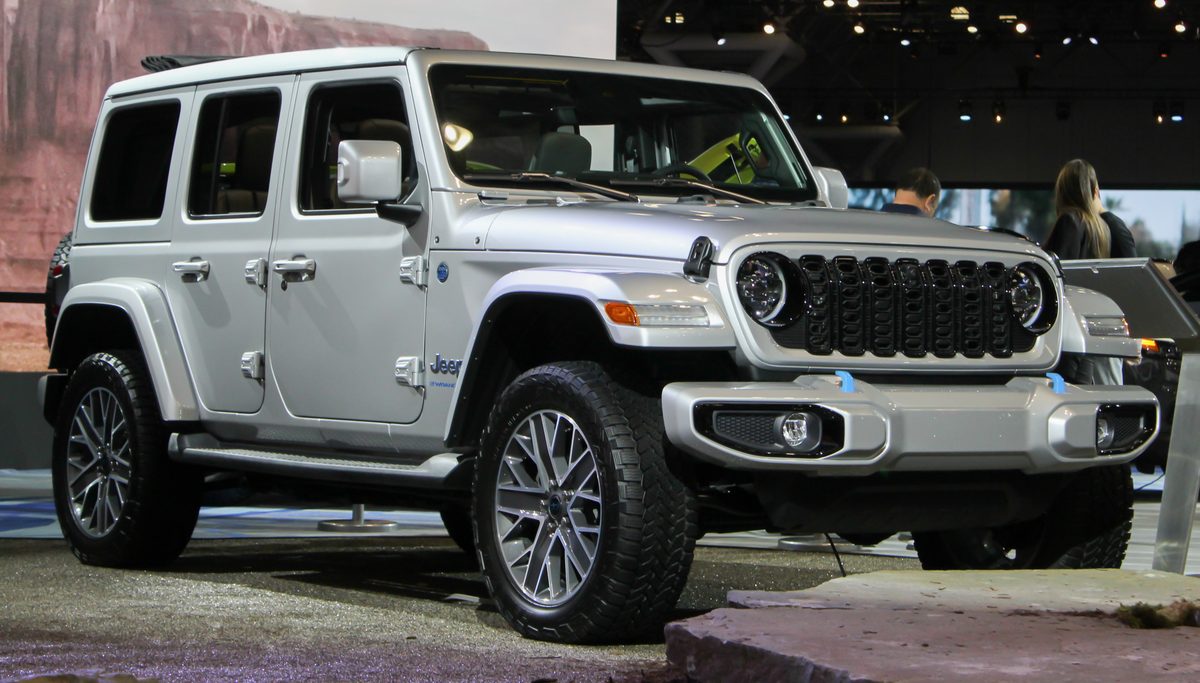
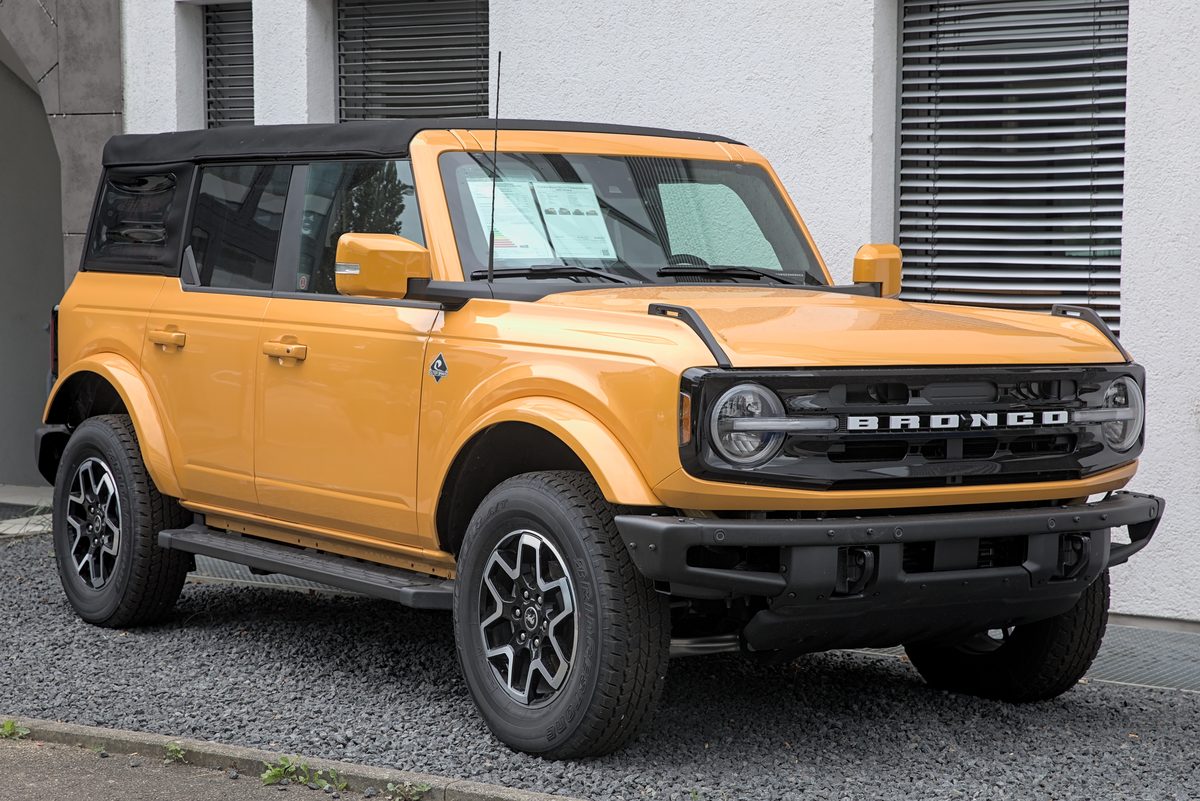
Jeep never left this segment, and Ford brought the Bronco name back specifically to fight in it — which is why this comparison isn't a clone war the way so many crossover match-ups are. The Wrangler and Bronco start from genuinely different engineering answers to the same brief, and real testing shows it: neither one just wins.
The core mechanical split. The Wrangler keeps a solid front axle, the same basic architecture that's defined every Wrangler generation; the Bronco uses an independent front suspension, a genuinely different approach borrowed more from a modern truck than a traditional off-roader. That one decision explains most of what follows — the Wrangler's setup is simpler, more classically capable at extreme articulation, and comes at a real cost in on-road refinement; the Bronco's IFS rides better paved and still holds up rough.
Off-road numbers, measured, not guessed. Edmunds tested a 2024 Wrangler Rubicon 392 against a Bronco Wildtrak head to head. The Wrangler measured 46.7° approach, 24.5° breakover, and 39.8° departure. The 4-door Bronco Wildtrak measured a real range depending on configuration — 35.5-43.2° approach, 20.0-26.3° breakover, 29.7-37.0° departure — meaning a well-equipped Bronco can match the Wrangler's numbers, but the Wrangler's own figures represent a harder floor to beat, not a ceiling either car happens to hit. Both can be optioned with real locking differentials on Dana 44 axles — the Wrangler Rubicon's Tru-Lok system, the Bronco Sasquatch package's front-and-rear e-lockers with a 4.7:1 final drive — and both offer a genuinely low low-range: the Wrangler Rubicon's Rock-Trac transfer case runs a 4:1 ratio, while Sasquatch-equipped Broncos get their own electronically controlled 2-speed transfer case tuned specifically for that package.
In Edmunds' own rock-crawling comparison, the two didn't trade the same way on every obstacle — the Bronco's ground clearance and approach angle kept its skid plates clear of rocks the Wrangler occasionally grazed, while the Wrangler's superior wheel articulation made the same technical section feel almost trivial by comparison. Read that as what it is: two vehicles solving the same problem from different directions, not one outright beating the other.
On pavement, the trade reverses. Multiple road tests describe the Bronco as the noticeably more composed, better-steering vehicle at highway speed — its rack-and-pinion setup centers more naturally and tracks straighter than the Wrangler's recirculating-ball steering, which several reviewers describe as light and comparatively hard to keep centered on the highway. Noise trades differently too: the Bronco's removable hardtop lets in more wind noise at speed, while the Wrangler's solid-axle underpinnings transmit more road noise upward into the cabin — reviewers generally rate the Bronco's cabin as the quieter of the two overall, but neither is a quiet highway cruiser by sedan standards, and neither one is trying to be.
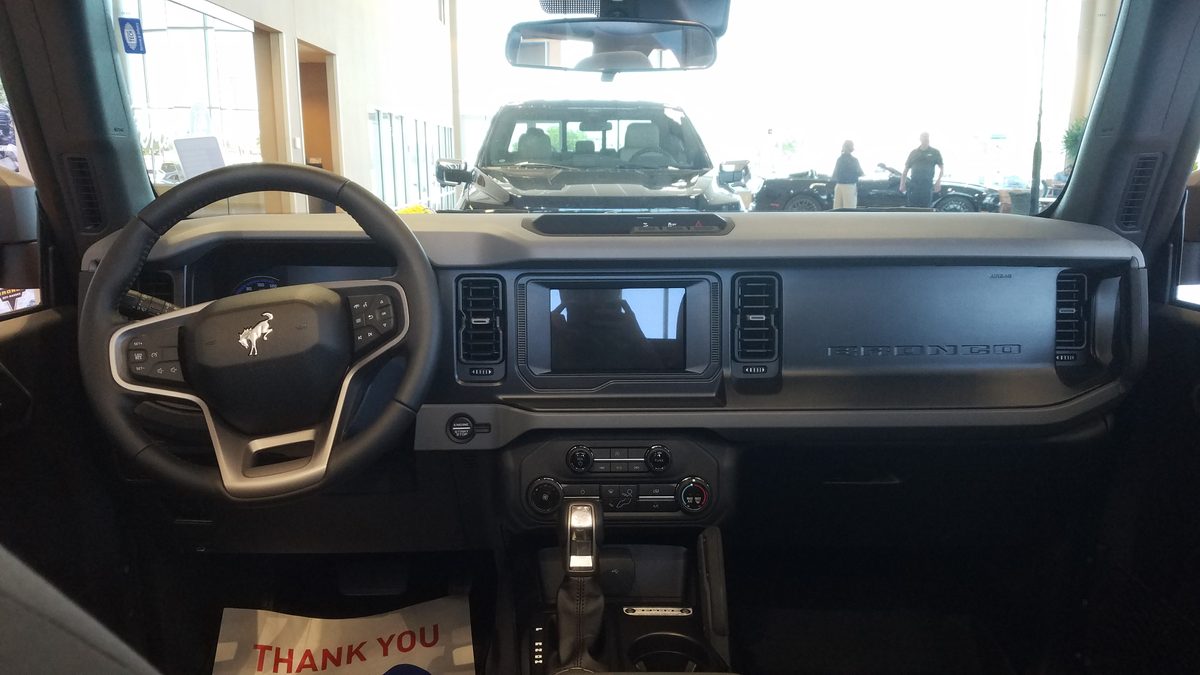
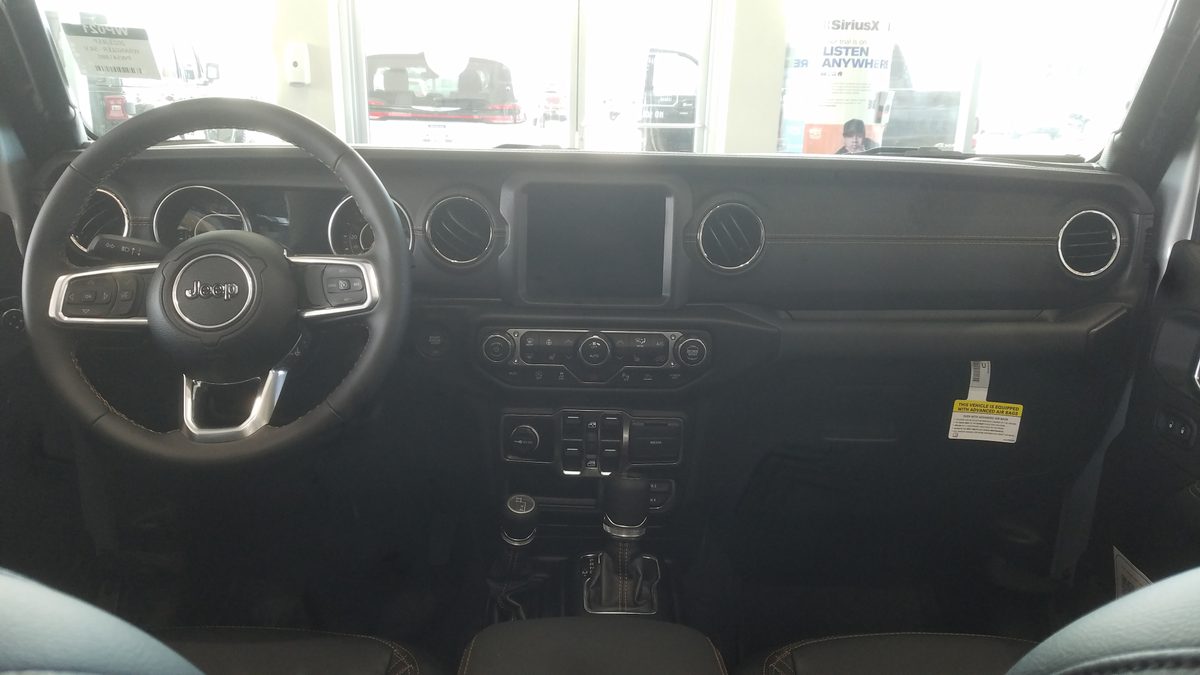
Inside, the real difference is philosophy, not luxury. Ford gives the Bronco marine-grade vinyl on several trims specifically because it wipes clean after a muddy trail day — a real, deliberate material choice, not a cost-cutting one. Jeep's recent Wrangler trims have improved their materials, but the base cloth upholstery still shows real wear against trail dirt and moisture faster than Ford's vinyl does. On tech, the Wrangler's standard 12.3-inch touchscreen is the larger single display; the Bronco pairs a 12-inch touchscreen with a fully digital 12-inch gauge cluster and keeps real physical climate controls below the screen — reviewers consistently praise the Bronco's tactile controls as easier to use by feel, without looking, exactly the kind of detail that matters more off-road than on a showroom floor.
Ownership numbers, for real, not vibes. J.D. Power's own dependability study scores the Wrangler at 80 out of 100 against the Bronco's 77 — a real if modest edge for Jeep. RepairPal rates both brands at an identical 3.5 out of 5 for overall reliability, though Jeep as a brand ranks 15th of 32 manufacturers against Ford's 21st. Estimated annual repair cost splits close: $694 for the Wrangler against $784 for the Bronco. Warranty coverage is comparable on both — 3-year/36,000-mile basic, 5-year/60,000-mile powertrain — Ford doesn't publish a Bronco-specific number that beats its own standard coverage.
So which one. If your real use case is technical rock-crawling and maximum articulation on the hardest trails, the Wrangler's solid-axle setup and its Rubicon's numbers are the real, measured advantage. If your real use case is a mix of daily driving, highway trips, and off-road capability that's still genuinely serious but doesn't need to win a rock-crawling competition, the Bronco's IFS trades a small amount of extreme-terrain ceiling for a meaningfully better everyday experience — quieter, better-steering, more composed at speed. Neither answer is wrong; they're just built for different weeks, not different trails.
Related cars
Related articles
- 2027 Nissan Rogue Hybrid vs Honda CR-V Hybrid: Which Wins? A $2,000 AWD Price Gap Against a Proven Hybrid
- 2026 Subaru Forester vs Toyota RAV4: Which Is Better? Subaru Wins on Safety Ratings and AWD, Toyota on Mileage and Warranty
- 2026 Ford Explorer vs Toyota Highlander: Which Is Better? The Explorer Has the Safer Crash Results, the Highlander a 35-mpg Hybrid
- 2026 Hyundai Tucson vs Honda CR-V: Which Is Better? The Tucson Wins on Crash Tests and Warranty, the CR-V on Space and Mileage