Is the Rivian R1T Worth It in 2026? A Buyer's Guide — Quad Max Hits 60 MPH in 2.5 Seconds, But the All-Touchscreen Cabin and $123,885 Sticker Are the Real Trade-Offs
The R1T's Quad Max trim delivers supercar acceleration in a truck body, but real road tests flag a touchscreen-only interior and a six-figure price as the two things to weigh before ordering one.
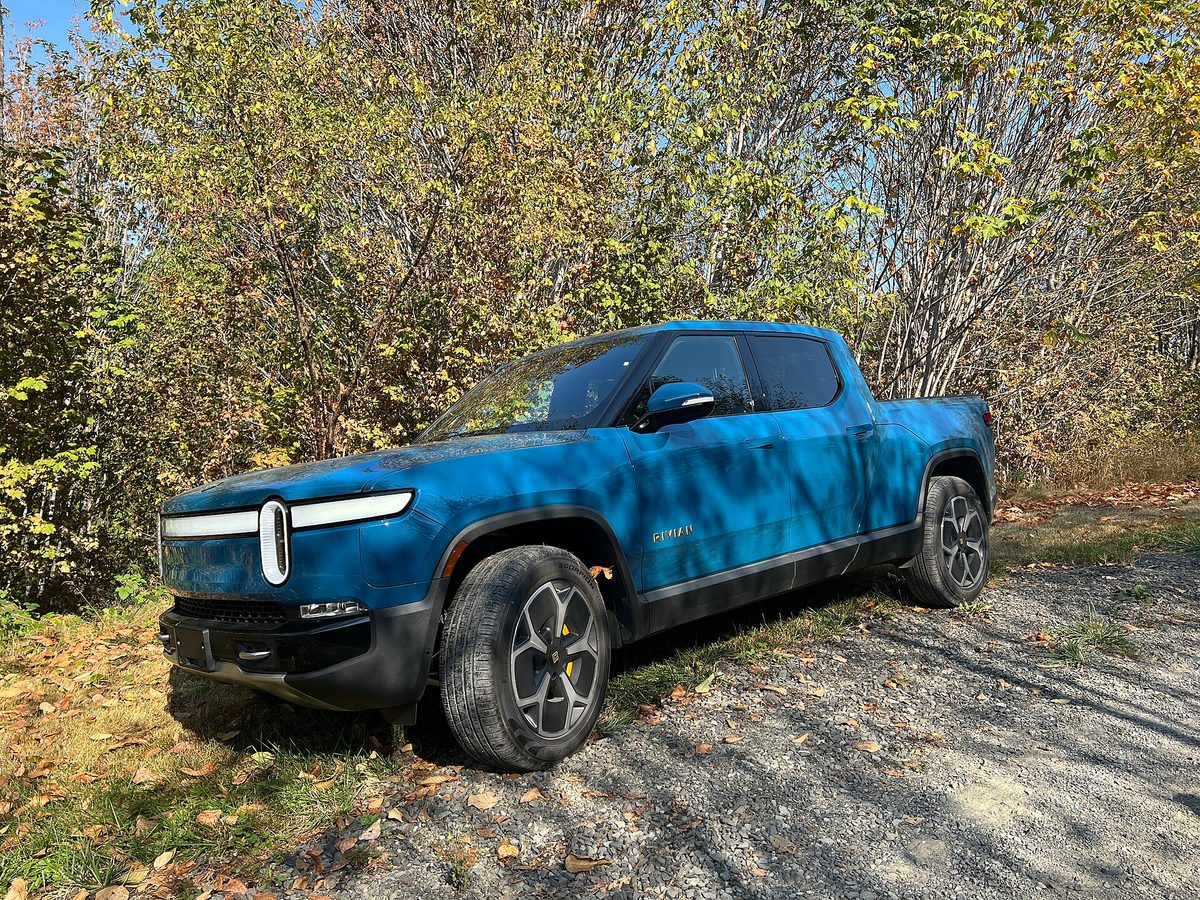
Rivian's R1T has been in production since 2021, but the 2026 model year lineup — from the Dual Standard up through the range-topping Quad Max — is different enough in output and pricing that the buying decision looks different than it did at launch. Here's what the real numbers and road tests say about who it actually suits.
Start with the trim that gets the headlines: Quad Max. Four motors, 1,025 combined horsepower, 1,198 lb-ft of torque, and a 0-60 mph time of 2.5 seconds — numbers that would be remarkable in a sports car, let alone a five-passenger pickup with a real bed. AutoGuide's road test of the 2026 Quad Max called it "blindingly quick" and noted it holds its own in corners in a way few trucks can. EPA-estimated range sits at 375 miles, stretching past 400 in Conserve mode on paper, though AutoGuide's real-world testing in cold weather came in under that figure — a reminder that EV range numbers, like any EPA rating, compress in winter regardless of brand.
That performance isn't free: Quad Max starts at $123,885, which puts it in direct competition with high-end trims of the GMC Hummer EV and Tesla Cybertruck rather than with mainstream trucks at all. Reviewers consistently point out that the lower Dual-Motor trims — starting closer to $71,700 for Dual Standard — deliver the bulk of what makes an R1T appealing (off-road capability, build quality, the interior) without paying for performance most owners will rarely use on public roads.
The interior is where opinion splits hardest. Yahoo's dedicated interior review and AutoGuide's road test both independently praised the cabin's materials and design — walnut trim, a panoramic glass roof, perforated vegan leather, and what AutoGuide called a "silky" sound system, with Yahoo comparing the overall fit and finish to a high-end Volvo. But both reviews raise the identical specific complaint: there are no physical buttons for anything, including basic audio controls. AutoGuide's reviewer described having to "dive through a couple of screens to change the radio and adjust the volume" — a real usability cost that shows up repeatedly across independent road tests, not a one-off gripe.
For buyers cross-shopping, the comparison that matters most is the R1T against the Tesla Cybertruck, since both sit in the same six-figure-capable EV-truck bracket (pitcompare's own head-to-head piece on that pairing goes deeper on specs). The short version: the R1T leans into genuine off-road engineering — tank turn, adjustable air suspension, real approach/departure angles — while Cybertruck leans into unconventional design and Tesla's charging network. Neither is a value pick next to a gas F-150 or Tundra; both are closer to lifestyle purchases than fleet trucks.
Charging is a practical strength, not just a spec-sheet number. Rivian's own Adventure Network and growing access to Tesla's Supercharger network (via the NACS adapter most 2025-2026 R1Ts ship with) mean road-trip charging stops are less of a planning exercise than they were at the R1T's 2021 launch — AutoGuide's reviewer specifically called charging stops "comfortable and efficient" during a real road test, which matters more than a theoretical range number for anyone actually planning to drive one cross-country.
Trim walk, because the spread is wider than it looks at a glance: Dual Standard opens the lineup around $70,990-$72,990 depending on the reporting source and current incentives, moving up through Dual Large (~$77,990) and Dual Max (~$84,990) before Tri Max (~$100,990) and finally Quad Max (~$117,885-$123,885, with a Launch Edition at the top). Each step up mostly buys battery size and motor count, not fundamentally different equipment — the panoramic glass roof, air suspension, and interior materials AutoGuide and Yahoo praised are shared across the range, which is the real argument for not stretching to Quad Max just for the badge.
Towing and payload are genuine truck numbers, not EV afterthoughts: properly equipped, the R1T is rated up to roughly 11,000 lbs of towing capacity and over 1,700 lbs of payload depending on trim and battery pack — competitive with, if not ahead of, Ford's F-150 Lightning on paper, though as with any EV, towing at or near the max rating cuts range sharply enough that long highway tows need real charging-stop planning, not just a glance at the window sticker.
Against the F-150 Lightning specifically, the practical difference is less about capability than character: Ford's truck is built on F-150 bones with a more traditional cabin and button layout, a trade some buyers will prefer precisely because it avoids the R1T's touchscreen-only control scheme, while the R1T counters with sharper off-road hardware (tank turn, more aggressive approach/departure geometry) and the more distinctive interior both AutoGuide and Yahoo singled out. Neither is the cheaper or more practical choice outright — it comes down to whether off-road ability or Ford-dealer-network familiarity matters more to the buyer.
Service network maturity is the part buyers of an established brand never have to think about but should factor in here: Rivian hit its 100th North American service center in early 2026 and is targeting over 150 by the end of 2027, backed by a mobile-service fleet the company says it's expanding 50% this year specifically to cover owners outside easy driving distance of a physical location — a real, measured response to the "what happens when it breaks and the nearest Rivian center is hours away" concern that dogged the brand in its early years, though it's still a thinner network than Ford's or Toyota's dealer footprint.
Resale value is the honest caveat: iSeeCars puts the R1T's 5-year value retention at 44.9%, while Jalopnik's reporting puts it closer to 42% — sources disagree on the exact number, but both land in the same range, and both are weaker than a comparable gas F-150's typical resale. That's a real cost of buying into a newer EV brand without a decade of resale history, not a reason to avoid the R1T outright, but it belongs in the total cost of ownership math alongside the sticker price.
Bottom line for 2026: if the goal is the fastest, most capable electric truck money can buy and the price is genuinely not a constraint, Quad Max delivers on that promise and nothing else on sale matches its combination of power and off-road hardware. For most other buyers, the Dual-Motor trims get the real-world appeal — the interior, the build quality, the off-road capability — at a price that at least competes with, rather than dwarfs, its nearest EV-truck rivals. Either way, go in expecting to relearn basic controls through a touchscreen; that part isn't trim-dependent.
Related cars
Related articles
- EV Range Explained: Why the EPA Number Isn't What You Get — How the Sticker Is Built, a 215-Mile Highway Test Against a 259-Mile Rating, and a 63-Mile Spread Inside One Model
- Cybertruck Production Ending Mid-2027, Musk Says — Tesla Gives Up Its Stainless Pickup After Three Years to Make Room for the Cybercab
- Rivian R1T vs Tesla Cybertruck: Which Should You Buy? Tesla Is Winding Cybertruck Production Down in 2027, While Rivian Just Made the R1T Harder to Walk Away From
- Rivian Recalls Nearly 99,000 Vehicles Over a Bug That's Already Fixed for Most Owners
Sources
- AutoGuide — 2026 Rivian R1T Quad Max Road Test Review
- Yahoo/Autos — 2026 Rivian R1T Interior Review
- U.S. News — 2026 Rivian R1T Review, Pricing & Pictures
- Edmunds — 2026 Rivian R1T Prices, Reviews, and Pictures
- Electrek — 2026 Rivian R1 trim pricing
- TowingSpecs — Rivian R1T towing capacity
- AutoGuide — Rivian expanding service network ahead of R2 launch
- iSeeCars — Rivian resale value
- Jalopnik — How well do Rivians hold their value