2026 Honda CR-V vs Mazda CX-5: Which Is Better? The CR-V Carries More and Burns Less, the CX-5 Holds the Top Crash-Test Award
The class favorite and the redesigned challenger cost almost the same. Honda wins on cargo room, fuel economy and a hybrid option; Mazda wins on standard all-wheel drive, cabin quality and rear-seat crash protection.
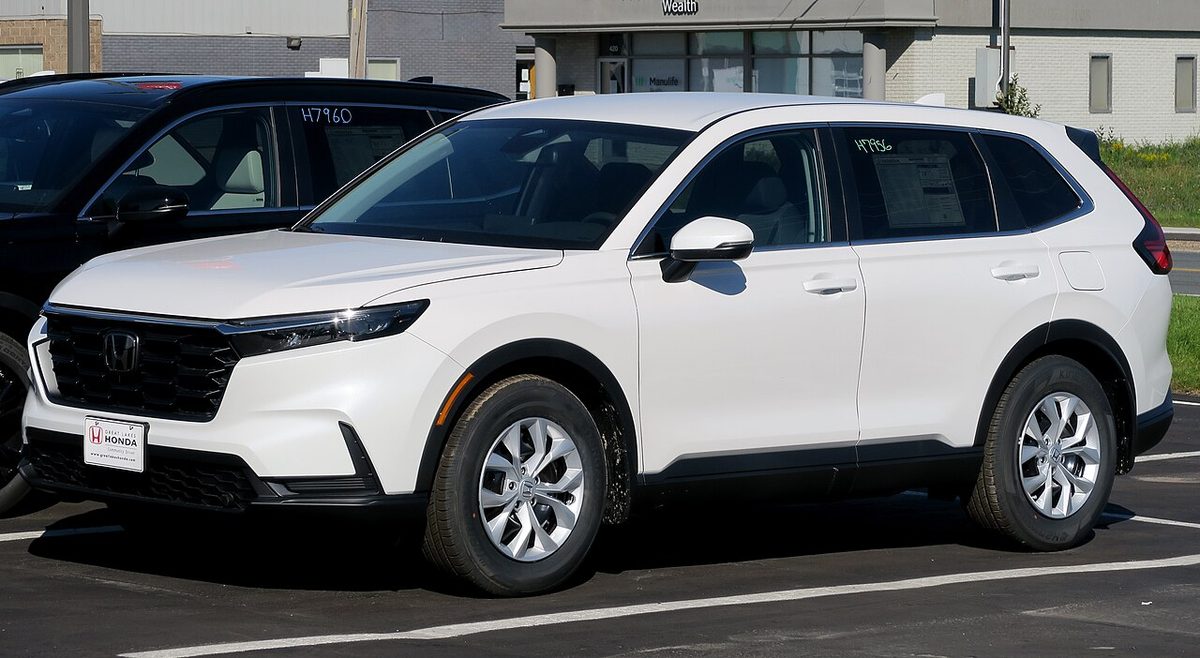
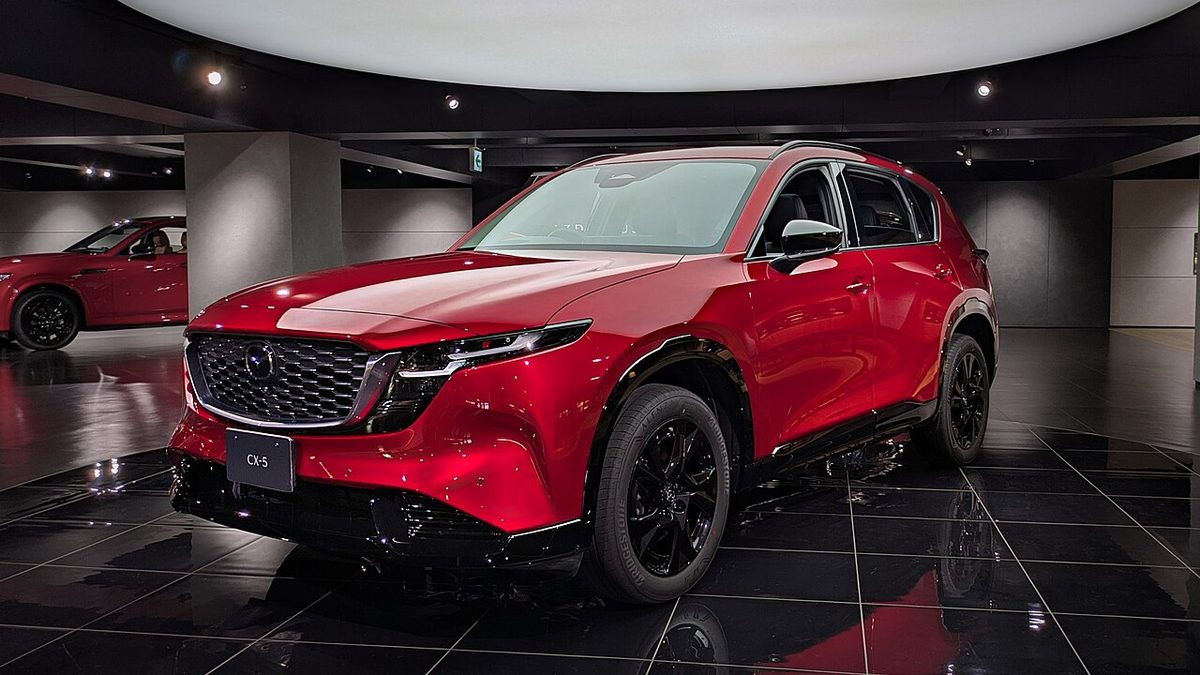
On reputation alone this should not be close. Car and Driver ranks the Honda CR-V first among compact SUVs with a perfect score and put it on its 2026 10Best list; the redesigned Mazda CX-5 sits sixth in the same ranking. Yet the two results that matter most to a family point the other way. The 2026 CX-5 holds the Insurance Institute for Highway Safety's highest award, and the CR-V rates Poor in one of the institute's main crash tests. Both are five-seat crossovers of almost identical length, sold to the same buyers at nearly the same price, so the differences between them are specific enough to decide on.
Price first, with destination charges included. The CX-5 starts at $31,485 and every version has all-wheel drive. The CR-V LX starts at $32,470 with front-wheel drive, the EX at $34,700 and the EX-L at $36,950, and all-wheel drive costs extra on each. A buyer in a snow state who wants four driven wheels will pay noticeably less for the Mazda; a buyer in Arizona who does not is comparing cars about $1,000 apart. At the top of the range the CX-5 S Premium Plus that Car and Driver tested cost $40,485.
The two engines reach the same result by different routes. Honda uses a turbocharged 1.5-liter four-cylinder with 190 horsepower and a continuously variable transmission. Mazda uses a larger 2.5-liter engine without a turbocharger, 187 horsepower, and a conventional six-speed automatic. In Car and Driver's testing the CX-5 reached 60 mph in 8.0 seconds and a CR-V EX-L in 8.1. Neither is quick, and the magazine warns that merging onto a fast highway in the Mazda takes some planning. Where they differ is in how they sound and respond. The Honda's transmission holds the engine at high revs under hard acceleration, which testers describe as a noisy drone. The Mazda's power builds evenly with speed and its gearbox shifts in distinct steps, which most drivers find more natural. Passing from 50 to 70 mph took the CX-5 5.5 seconds and the CR-V 5.8.
One option has disappeared. The old CX-5 could be ordered with a turbocharged engine that made it one of the quicker cars in the class, and the 2026 model cannot. Mazda has said a hybrid version will follow for the 2027 model year. Anyone who wants more than 187 horsepower from a CX-5 today has no way to buy it.
Fuel economy is the CX-5's clearest weakness. The EPA rates it at 24 mpg in the city, 30 on the highway and 26 combined, which is 2 mpg worse than the model it replaced, and Car and Driver averaged 24 mpg over its test. The gas CR-V is rated at 28 city and 33 highway with front-wheel drive and 27 and 31 with all-wheel drive, and an all-wheel-drive EX-L returned 31 mpg on the magazine's 75-mph highway loop, enough for about 430 miles on a tank. Comparing all-wheel-drive versions, the Honda's 29 mpg combined against the Mazda's 26 comes to about 48 gallons a year over 12,000 miles, or roughly $170 at $3.50 a gallon.
The gap widens sharply if a hybrid is on the table, and with Honda it is. The CR-V Hybrid, which starts at $35,630 before destination, produces 204 horsepower and is rated at 40 mpg combined with front-wheel drive and 37 with all-wheel drive. Against the CX-5's 26 mpg, the all-wheel-drive hybrid saves about 137 gallons a year at the same mileage, close to $480. Car and Driver recommends the hybrid trims over the gas ones, and until Mazda's own hybrid arrives there is no CX-5 that competes with them.
On the road the two are closer than their reputations suggest. The CX-5 has long been the driver's choice in this class, and Car and Driver says the new one keeps the same pleasant, responsive handling while its suspension absorbs rough pavement well. Of the CR-V the same magazine says it lacks the handling thrills of the best in the segment but rides smoothly and has enough spirit not to be dull. The test numbers back up how small the difference has become: 0.83 g on the skidpad for the Mazda against 0.82 for the Honda. In braking the CR-V is ahead, stopping from 70 mph in 163 feet to the CX-5's 173. Part of the reason is weight. The CX-5, with all-wheel drive standard, weighed 3,881 pounds on the magazine's scales, 267 more than the CR-V.
Space used to be the CX-5's problem, and the redesign was aimed directly at it. Mazda lengthened the wheelbase by 4.5 inches to 110.8, and reviewers now describe rear leg, knee and headroom as generous for two adults. Passenger volume is 53 cubic feet in front in both cars and 50 in the rear of the Mazda against 51 in the Honda, so the back seats are effectively equal. One small catch: rear air vents on the CX-5 only arrive with the Select trim.
Cargo is a different story, and the Honda wins it clearly. The CR-V holds 39 cubic feet behind the rear seats and 77 with them folded; the CX-5 holds 34 and 67. Car and Driver fit 12 carry-on suitcases behind the CR-V's back seat, two more than a Toyota RAV4 manages. For a family that travels with a stroller and luggage, or anyone who regularly folds the seats to carry furniture, 10 cubic feet is a large difference in two cars of the same length.
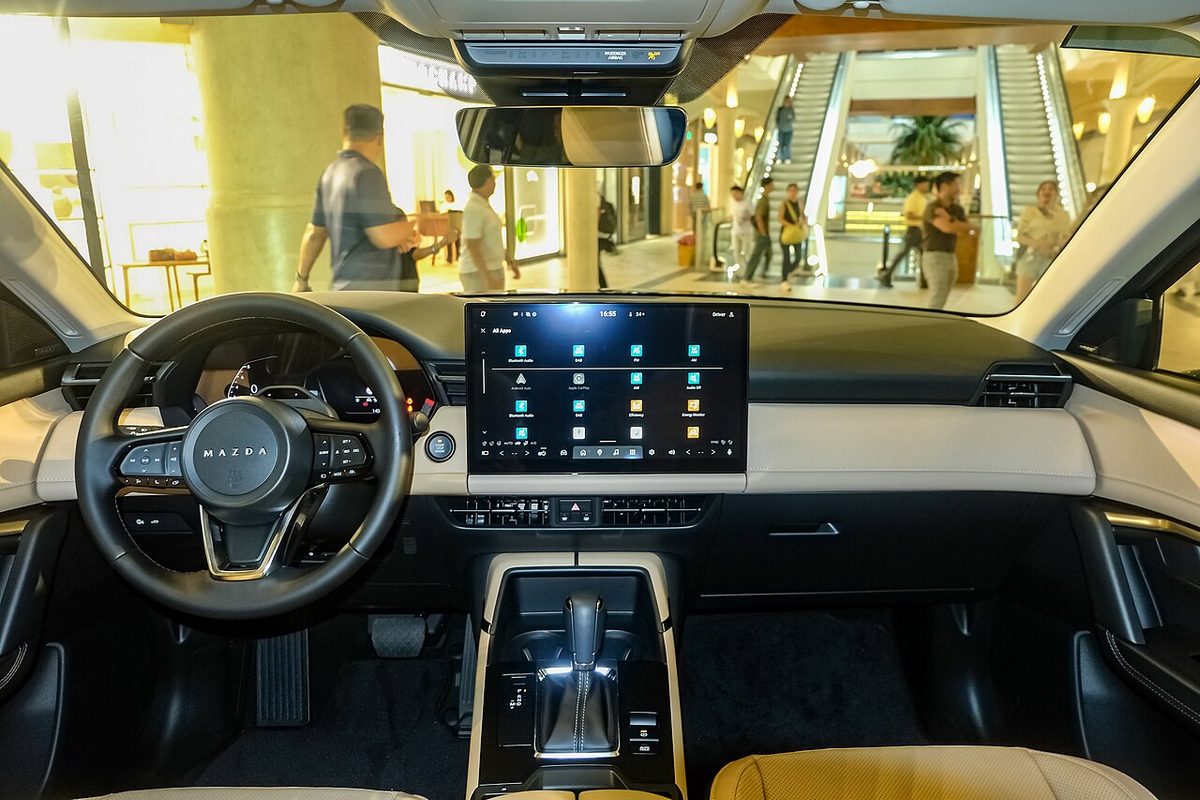
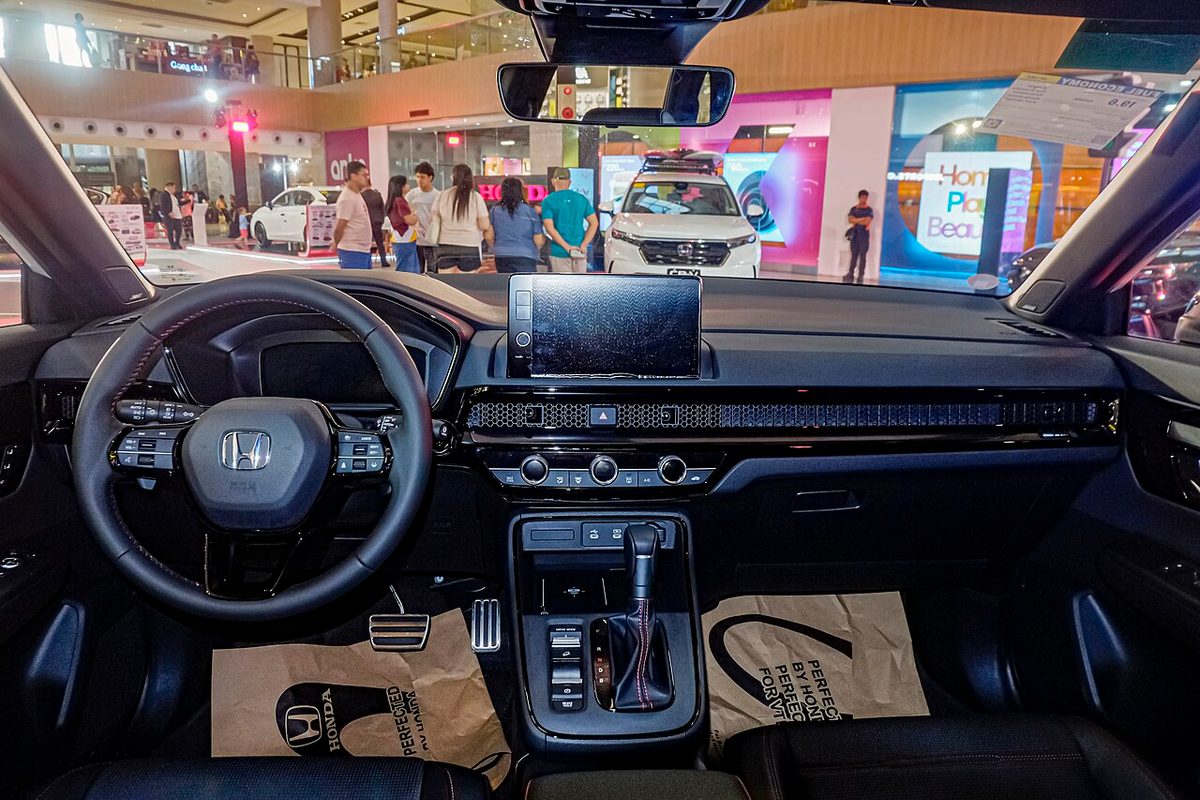
The cabins reflect opposite ideas about controls. The CR-V has a 9.0-inch touchscreen, enlarged for 2026, with wireless Apple CarPlay and Android Auto and a wireless charging pad standard on every trim, and it keeps physical knobs for climate and volume. The CX-5 has a 12.9-inch screen as standard and a 15.6-inch one as an option, both running Google software with Google Maps and voice control built in, and it moves many functions, including climate settings, into that screen. Wireless phone mirroring in the Mazda is reserved for the Select trim and above. Car and Driver also reports usability problems with the CX-5's system, including frequent glitches and a display that froze, and notes that software updates may fix them. The Mazda has the more upscale design, and Car and Driver praises its materials; the Honda's controls are easier to use while driving.
Safety is where the comparison turns. The Insurance Institute for Highway Safety gives the redesigned 2026 CX-5 a Top Safety Pick+ award, with Good ratings in the small overlap front, updated moderate overlap front and updated side tests, and Good ratings for both vehicle-to-vehicle and pedestrian crash prevention. The CR-V, in ratings that apply to 2023 through 2027 models, earns Good in the small overlap and updated side tests but Poor in the updated moderate overlap front test, and Acceptable for both kinds of crash prevention. It has no award.
The test the CR-V does badly in is the one the institute revised to add a dummy in the back seat, so the Poor rating is about protection for a rear passenger in a frontal crash, not for the driver. That makes it most relevant to exactly the people who buy these cars: parents with children too big for a rear-facing seat, and anyone who regularly carries adults in the back. It is not the whole picture. The CR-V's headlights rate Good on every trim, while the CX-5's rate Good only on the S Premium Plus and Acceptable on the four cheaper trims. For child seats, the Mazda's anchors earn the institute's top rating and the Honda's Acceptable.
Running costs after purchase are similar, with a small edge to Honda. Both carry a three-year, 36,000-mile warranty and five years or 60,000 miles on the powertrain. Honda adds one year or 12,000 miles of free scheduled maintenance; Mazda includes none. Both are rated to tow 1,500 pounds, enough for a small utility trailer and not much more.
Which one to buy depends on what the back half of the car is for. If rear passengers ride there every day, the CX-5's crash-test record is a strong argument, and it comes with standard all-wheel drive, a better-finished cabin and a lower price than an all-wheel-drive CR-V. If the priority is cargo space, fuel cost or simple controls, the CR-V is the better tool: it carries 10 more cubic feet with the seats down, uses about 48 fewer gallons a year, and offers a hybrid that the Mazda cannot yet match. A buyer who likes the CX-5 but drives a lot of miles has a reasonable third choice, which is to wait for the hybrid Mazda has promised for 2027.
| 2026 Honda CR-V (gas) | 2026 Mazda CX-5 | |
|---|---|---|
| Starting price with destination | $32,470 (LX, front-wheel drive) | $31,485 (all-wheel drive standard) |
| Engine | 1.5L turbo four, 190 hp | 2.5L four, 187 hp |
| Transmission | CVT | 6-speed automatic |
| Drive | Front-wheel drive; AWD optional | All-wheel drive |
| 0-60 mph (Car and Driver) | 8.1 s (EX-L AWD) | 8.0 s (S Premium Plus) |
| Braking, 70-0 mph (Car and Driver) | 163 ft | 173 ft |
| EPA mpg, city/highway | 28/33 (FWD); 27/31 (AWD) | 24/30; 26 combined |
| Hybrid available | Yes: 204 hp, 40 mpg combined (FWD), 37 (AWD) | Not yet; announced for 2027 |
| Wheelbase / length | 106.3 in / 184.8 in | 110.8 in / 184.6 in |
| Passenger volume, front / rear | 53 / 51 cu ft | 53 / 50 cu ft |
| Cargo, seats up / folded | 39 / 77 cu ft | 34 / 67 cu ft |
| Curb weight as tested | 3,614 lb | 3,881 lb |
| Touchscreen | 9.0 in | 12.9 in; 15.6 in optional |
| Towing | 1,500 lb | 1,500 lb |
| Free scheduled maintenance | 1 year / 12,000 miles | None |
| IIHS moderate overlap front, updated | Poor | Good |
| IIHS front crash prevention | Acceptable | Good |
| IIHS headlights | Good (all trims) | Good (S Premium Plus); Acceptable (other trims) |
| IIHS award (2026) | None | Top Safety Pick+ |
Related cars
Related articles
- 2026 Mazda CX-5 vs Toyota RAV4: Which Is Better? The Redesigned RAV4 Trades a Proven Safety Record for Hybrid Efficiency
- 2026 Toyota RAV4 vs Honda CR-V Hybrid: Which Is Better? The RAV4 Wins on Price, Fuel and Warranty, the CR-V on Ride and Rear-Seat Room
- Tesla Model 3 vs Model Y: Which Should You Buy in 2026? What the $3,000 Difference Gets You in Space, Range and Safety
- 2027 Nissan Rogue Hybrid vs Honda CR-V Hybrid: Which Wins? A $2,000 AWD Price Gap Against a Proven Hybrid
Sources
- Car and Driver: 2026 Honda CR-V review, pricing and test results
- Car and Driver: 2026 Mazda CX-5 review, pricing and test results
- IIHS: 2026 Honda CR-V 4-door SUV ratings
- IIHS: 2026 Mazda CX-5 4-door SUV ratings
- IIHS: Top Safety Pick award winners and criteria
- FuelEconomy.gov: 2026 Honda CR-V
- FuelEconomy.gov: 2026 Mazda CX-5