Updated October 13, 2026: Added the Tucson N Line trim, revealed October 12 at the Paris Motor Show — styling only, no extra power.
2027 Hyundai Tucson: Bigger, 42-MPG Hybrid, No US Plug-In — What the Redesign Changes for American Buyers
The fifth-generation Tucson gets a boxier body, a turbocharged base engine, a stronger hybrid that tows 3,000 pounds and Hyundai's new Pleos Connect screens. The plug-in hybrid stays overseas.
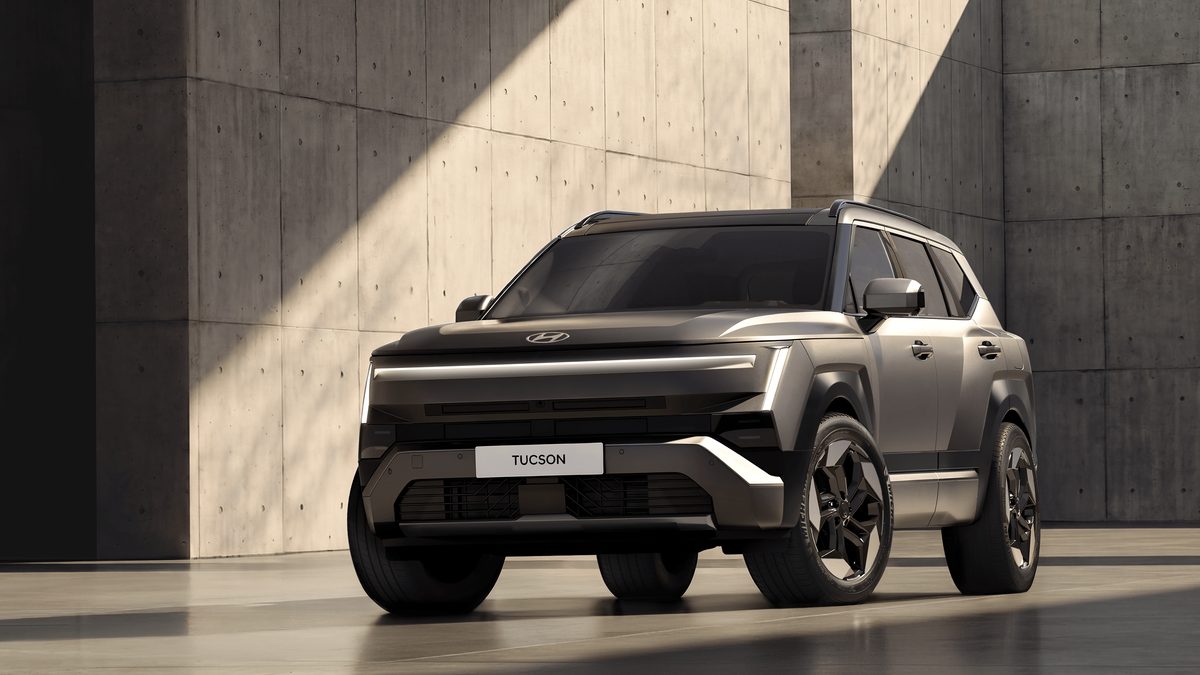
Hyundai revealed the fifth-generation Tucson on October 1, 2026, at a world premiere in Long Island City, New York — the compact SUV's first full redesign in about five years. It matters more in the US than almost anywhere: Hyundai says the Tucson has passed 11.1 million cumulative sales worldwide, America accounts for roughly a fifth of them, and hybrids made up 31% of US Tucson sales in 2025. The new model goes on sale in Korea first, with North American deliveries following in 2027. Hyundai has not announced US pricing yet.
The body grows in every direction. Hyundai's figures put the new Tucson at 4,700 mm (about 185 inches) long, 60 mm longer than before, with 40 mm more width, 20 mm more height and a 2,785 mm (109.6-inch) wheelbase, up 30 mm. Part of that length goes into the cabin: the rear doors now open to 83 degrees, 10 degrees wider than before, which makes a real difference when you are lifting a child seat in or helping an older passenger out. Cargo space behind the rear seats is quoted at 41.7 cubic feet, a small step up from the outgoing model's 41.2 — so the new size shows up more in rear-seat access and stance than in a much bigger trunk.
The biggest mechanical change for US buyers is under the hood of the non-hybrid model. The outgoing Tucson's 187-hp naturally aspirated 2.5-liter four-cylinder is gone, replaced by a turbocharged 1.6-liter rated at 184 hp and 195 lb-ft. Peak horsepower is roughly a wash, but a small turbo engine typically delivers its torque much lower in the rev range, so the new car should feel stronger when merging or passing at everyday speeds even though the headline number barely moves. What we can't judge yet is real-world fuel economy and long-term durability — EPA figures haven't been published.
The hybrid is where the clearest gains are. It pairs the 1.6-liter turbo with electric motors for a combined 233 hp and 280 lb-ft, up from 231 hp and 271 lb-ft, and Hyundai quotes 0-60 mph in 8.5 seconds. More important is efficiency: Hyundai is targeting 42 mpg for the front-wheel-drive hybrid on 17-inch wheels, against a best of 38 mpg combined for the 2026 Tucson Hybrid. Over 15,000 miles a year, the difference between 38 and 42 mpg works out to roughly 38 fewer gallons — not life-changing, but it moves the Tucson closer to the class leaders. The hybrid's towing rating also rises by 1,000 pounds to 3,000, enough for a small camper or a pair of jet skis that the old 2,000-pound rating ruled out.
The plug-in hybrid is the notable omission. Overseas, the new Tucson PHEV makes 288 hp with an all-electric range of about 81 km (roughly 50 miles), but Hyundai Motor America will not sell it. "All these people tell me to get a PHEV, and nobody ever plugged in," Olabisi Boyle, Hyundai Motor America's senior vice president of product and mobility, told Autoblog, adding that competitors' plug-in sales mix is "almost nothing." Hyundai says extended-range electric vehicles, starting with the Santa Fe, are its preferred answer for US buyers who want electric driving without range worry. If a plug-in Tucson is what you want, remaining 2026 Tucson Plug-in Hybrid inventory is the last chance — and Toyota's RAV4 still offers a plug-in alongside its hybrids.
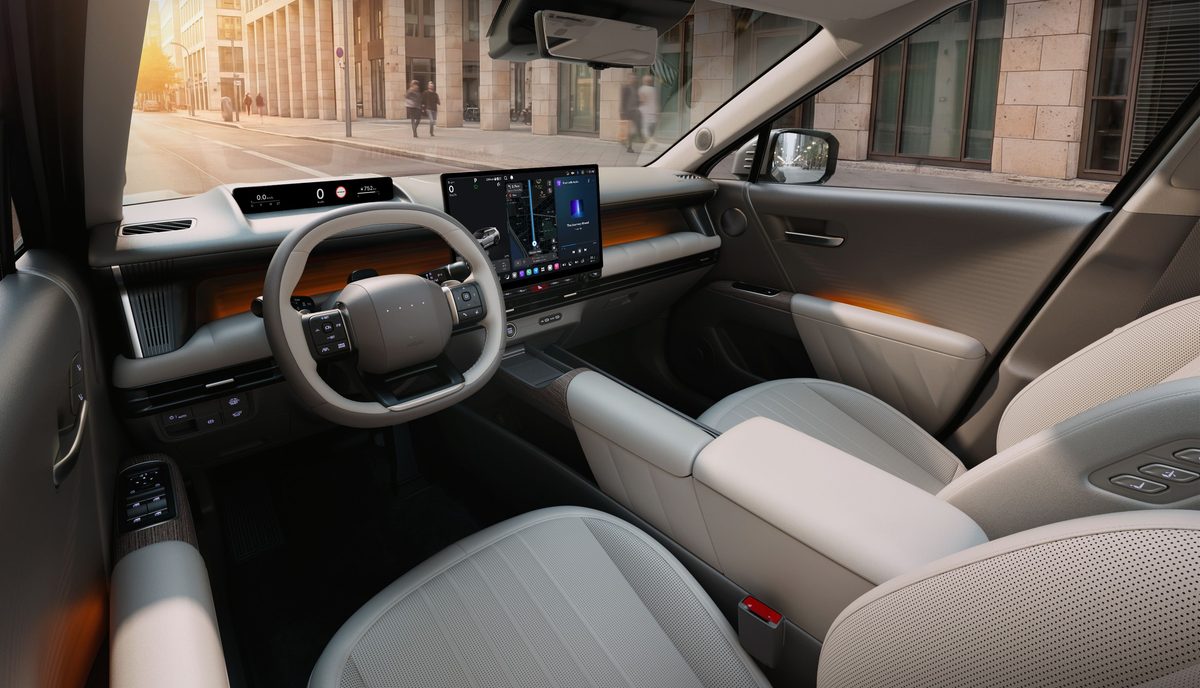
Inside, the Tucson is the first Hyundai in the US to run Pleos Connect, the company's new Android Automotive-based infotainment system. A 12.9-inch center screen is standard and a 17-inch display is optional, paired with a 9.9-inch digital instrument cluster, over-the-air software updates and a conversational voice assistant called Gleo AI. Crucially for anyone who has fought a touchscreen to change the fan speed, Hyundai kept physical buttons for climate and audio. Other available features include dual 15-watt wireless charging pads, three-zone climate control, a heated windshield and massaging front seats.
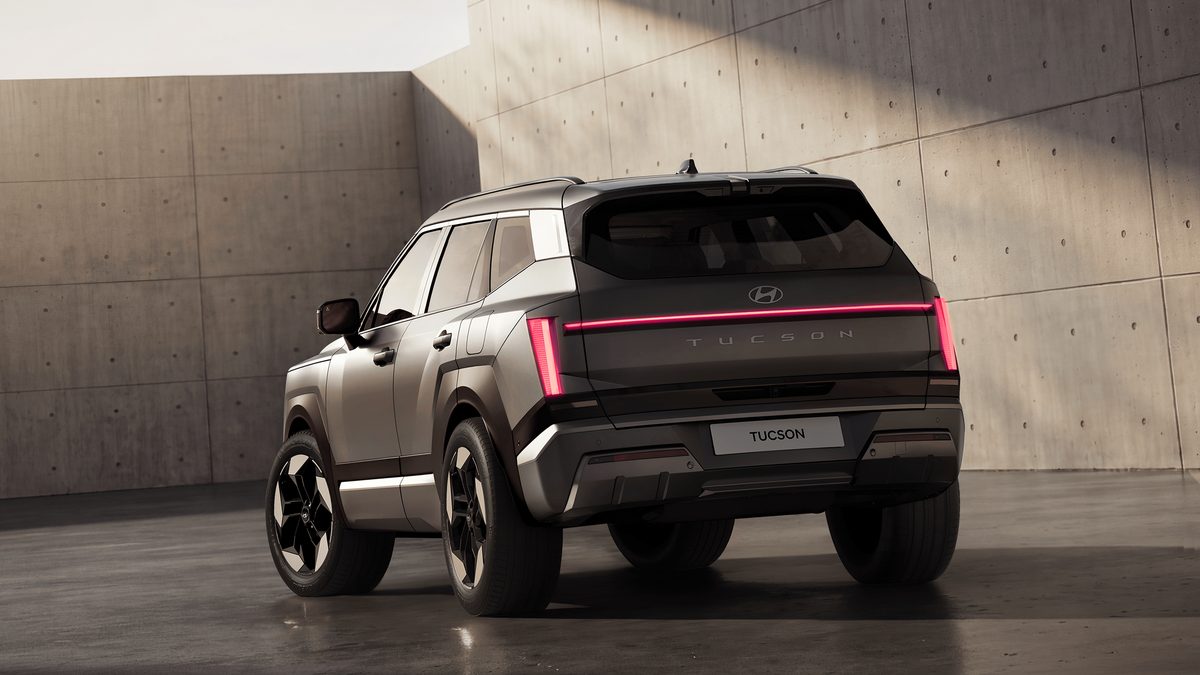
The rugged XRT and new XRT PRO versions continue. The XRT PRO raises ground clearance to 210 mm (8.3 inches) from the standard 180 mm (7.1 inches) and is the only North American Tucson with Smart Terrain Assist, which adjusts the drivetrain for surfaces like sand, mud and snow. On the safety side, new additions include child presence detection, in-cabin driver monitoring and a target speed control function for low-speed off-road crawling, plus a memory-based reversing assist and ground-view camera.
Update, October 13, 2026: Hyundai revealed the N Line version of this redesign at the Paris Motor Show on October 12. It's a styling package, not a performance upgrade — a sharper front bumper with a pronounced chin spoiler, satin-black aero ducts at the corners, body-colored lower door panels, trimmed-down fender cladding, and model-exclusive 20-inch wheels, with mild suspension changes to suit the larger wheels. It can be ordered with any of the same engines already covered above, including the plug-in hybrid where that's sold — none of them gets more power for wearing the N Line badge. Whether the N Line reaches the US alongside the rest of the redesigned lineup, and at what price, has not been confirmed.
For shoppers comparing compact SUVs right now, the 2027 Tucson changes the shape of the decision rather than settling it. The hybrid's 42-mpg target and 3,000-pound towing put it squarely against the Toyota RAV4 and Honda CR-V hybrids, while the turbo gas model gives Hyundai a cheaper entry point than a hybrid-only lineup like the new RAV4's. Until pricing and EPA ratings land closer to the 2027 on-sale date, a buyer who needs a car now loses little by choosing a discounted 2026 Tucson — the redesign's real advantages are rear-door access, the hybrid's efficiency and the new screens, not a transformed driving experience.
Related cars
Related articles
- 2026 Mazda CX-5 vs Toyota RAV4: Which Is Better? The Redesigned RAV4 Trades a Proven Safety Record for Hybrid Efficiency
- 2026 Toyota RAV4 vs Honda CR-V Hybrid: Which Is Better? The RAV4 Wins on Price, Fuel and Warranty, the CR-V on Ride and Rear-Seat Room
- 2026 Honda CR-V vs Mazda CX-5: Which Is Better? The CR-V Carries More and Burns Less, the CX-5 Holds the Top Crash-Test Award
- 2026 Hyundai Tucson vs Honda CR-V: Which Is Better? The Tucson Wins on Crash Tests and Warranty, the CR-V on Space and Mileage
Sources
- Hyundai Motor Company: Hyundai Motor Unveils the All-New TUCSON, Its Boldest SUV
- Hyundai Worldwide newsroom: all-new TUCSON media kit
- MotorWeek: 2027 Hyundai Tucson Revealed
- Autoblog: Bold New Hyundai Tucson Could Get a Futuristic New Powertrain
- Motor Illustrated: Hyundai Drops the Plug-in Hybrid Version of the 2027 Tucson in North America
- Carscoops — 2027 Hyundai Tucson Lands With Wild Design and New Hybrids
- Autoevolution — Hyundai Tucson N Line Steals the Spotlight in Paris, but It's All Show and No Go