How Long Does an EV Battery Really Last? Real Data From 250 Million Miles Says Longer Than the Warranty Implies
Two independent studies covering tens of thousands of real EVs put annual battery degradation at 1.5–2.3%, with actual replacements rare enough to be a non-issue for most owners.
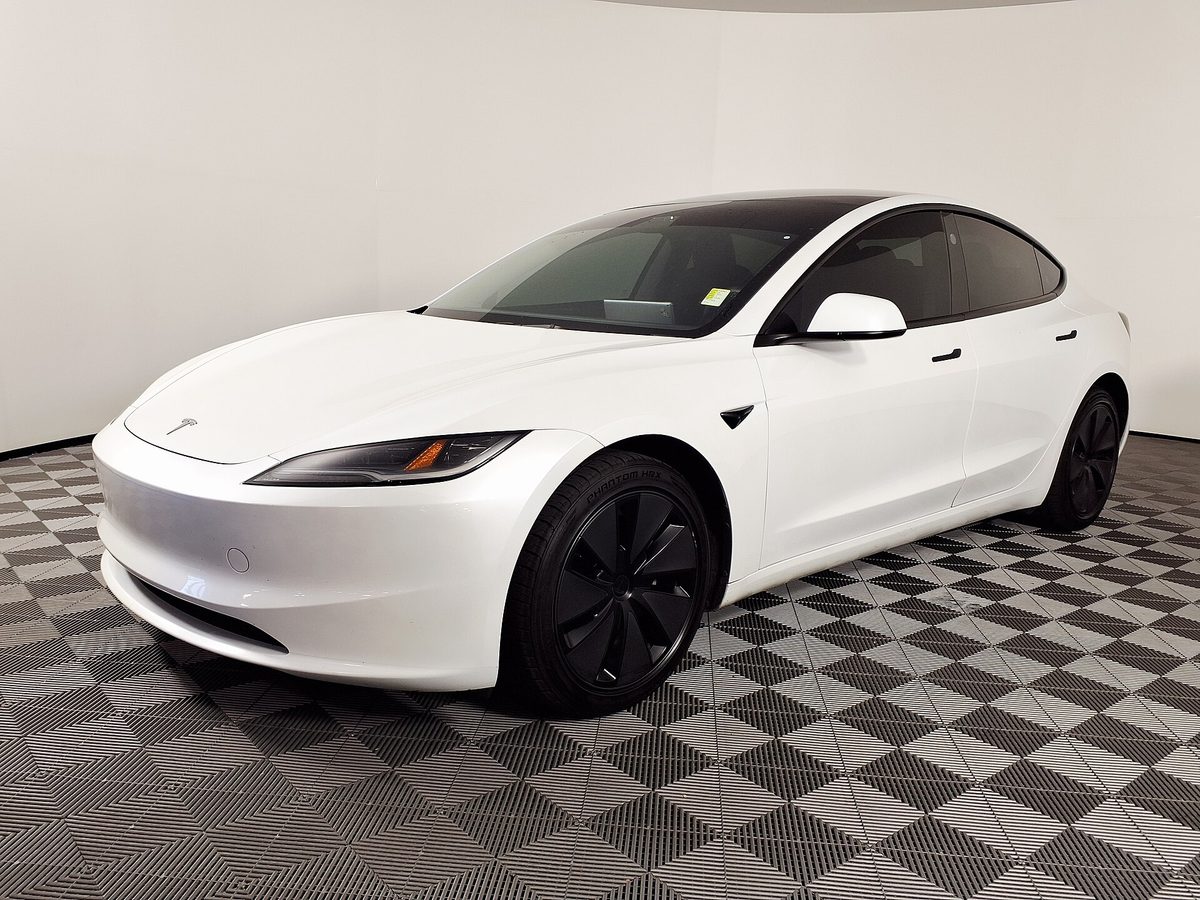
Every EV buyer eventually asks the same question a gas-car buyer never has to: what happens when the battery wears out, and how much will that cost? It's a reasonable worry — early Nissan Leafs in hot climates gave EV batteries a bad reputation a decade ago. But two large, independent studies of real fleets now answer the question with actual data instead of guesswork, and the answer is more reassuring than most buyers expect.
How fast do EV batteries actually degrade
Geotab, a fleet-telematics company, tracked 22,700 real electric vehicles across 21 models from 2020 through 2025 and published the results in April 2026. The average annual degradation rate came out to 2.3% of battery capacity per year, which works out to an average of 81.6% of original capacity retained after eight years of ownership. Recurrent, which tracks more than 30,000 EVs through a community of real owners, found a similar range on a separate dataset of 15,000 vehicles that have logged 250 million combined miles: 1–2% degradation per year, with the steepest drop happening in the first 50,000 miles before the rate levels off. Recurrent's replacement data is the number that matters most to a worried buyer: only 1.5% of EVs in its full community have ever needed a battery replacement, and for 2022-and-newer models specifically, that figure drops to 0.3%.
What actually speeds degradation up
Geotab's data breaks the average down by behavior, and the gap between the best and worst case is real. EVs that rely mostly on low-power charging retain about 88% of capacity after eight years — a 1.5% annual rate. EVs whose owners frequently use high-power DC fast charging (above 100 kW, more than 40% of charging sessions) retain only about 76% after eight years, a 3.0% annual rate. Heat adds roughly 0.4 percentage points of degradation per year compared with a mild climate, and vehicles that are charged to a high state of charge daily (more than 35% of daily cycles) degrade faster than ones charged more sparingly. None of this means fast charging or hot weather will ruin a battery — it means a used EV that was daily-supercharged in Phoenix will likely show more wear than the same model that spent its life on a home Level 2 charger in Seattle, and that difference is worth asking about.
The warranty floor, and how it compares by brand
Federal rules require every EV sold in the US to carry a battery warranty of at least 8 years or 100,000 miles, whichever comes first, guaranteeing at least 70% of original capacity over that period — if the battery drops below that floor inside the window, the manufacturer has to repair or replace it at no cost. Tesla matches the federal floor on the Model 3 (8 years/100,000 miles, 70% capacity) and extends the mileage to 120,000–150,000 miles on larger models. Hyundai and Kia go further, covering the battery for 10 years or 100,000 miles — the longest standard coverage of any mainstream brand. Chevrolet and Ford both cover their EVs for 8 years/100,000 miles with a 70% capacity floor, matching the federal minimum rather than beating it.
What replacement actually costs, by model
These figures only matter to the small share of owners who end up outside warranty with a genuinely degraded pack, but they are the real numbers when it happens. A Tesla Model 3 or Model Y battery runs around $13,500 including labor; a Chevrolet Bolt EV pack is closer to $9,000. On the Nissan Leaf, cost depends heavily on pack size: around $12,500 for the standard 40 kWh pack and up to $15,000 for the larger 62 kWh Leaf Plus pack. A Hyundai Kona Electric comes in around $10,500, and an IONIQ 5 around $11,000. At the extremes, a BMW i3's small pack replaces for around $5,000, while a Chevy Silverado EV's much larger pack runs about $21,000. Those numbers come from Recurrent's cost research and dealer-sourced quotes compiled by EV.com in September 2025 — they move as battery-pack prices keep falling, so treat them as a current ballpark, not a fixed quote.
Why the battery chemistry matters, too
Not every EV battery ages the same way even under identical use, because the underlying chemistry differs. LFP (lithium iron phosphate) packs — used in the standard-range Tesla Model 3 and Model Y sold in the US since 2022, and increasingly common elsewhere — have a cycle life Recurrent puts at 2 to 4 times longer than nickel-based NMC or NCA chemistry, because the iron-phosphate bond resists the kind of structural stress that causes nickel-based cells to degrade. That difference shows up directly in Tesla's own charging guidance: LFP-equipped cars are told to charge to 100% at least once a week with little degradation penalty, while nickel-based Model 3/Y variants are told to cap daily charging at 80–90% to preserve battery health. A used LFP-equipped EV that was charged to 100% nightly isn't showing the same wear a nickel-chemistry EV would from the same habit — which is one more reason the previous owner's charging routine matters more than their odometer reading.
So how long does a battery actually last
The honest answer from the real-world data: most EV batteries are on track to outlast the rest of the car, not the other way around. Some of Tesla's oldest Model S units, now roughly a decade old, still retain around 80% of their original range according to Recurrent's fleet data — a range loss most owners would barely notice in daily driving. The exception that shaped the EV battery's bad early reputation was the first-generation Nissan Leaf, which used a passive (not liquid-cooled) thermal management system that let batteries overheat and degrade faster, especially in hot climates — a design problem Nissan and every other automaker has since corrected with active battery cooling.
What happens when a battery is actually retired
Even the small share of batteries that do eventually fall below the usable threshold for a car — typically 70-80% of original capacity — rarely go to a landfill. At that point they still hold real, usable capacity for a stationary application that doesn't need a car's power density, which is why a second-life industry already exists for them: B2U Storage Solutions runs grid-scale storage projects in California and Texas built entirely from retired EV packs, and Redwood Materials has combined about 100 used GM vehicle batteries into a 1.5-megawatt storage system powering one of GM's own Michigan plants. Second-life batteries are still a small slice of total deployed storage today — around 2-3% — but the point for a buyer is practical: a battery that's no longer good enough for daily driving still has years of useful life left in it, which is the opposite of how a worn-out engine or transmission ends its life.
What this means if you're buying used
A used EV's mileage matters far less to its battery than a used gas car's mileage matters to its engine — the data above suggests a 60,000-mile EV and a 100,000-mile EV from the same model year will usually show a similar, small gap in battery health, not the steep depreciation curve buyers expect from engine wear. What actually matters is asking for the vehicle's current state-of-health reading, which most EVs can display on request or through a scan tool, and asking how the previous owner charged it: a car charged almost exclusively on a home Level 2 charger is a safer bet than one that lived on DC fast chargers, even at the same mileage. For anyone cross-shopping, a 10-year/100,000-mile Hyundai or Kia warranty is a real, concrete buffer against the rare worst case, while every other mainstream brand's 8-year/100,000-mile floor is still enough coverage that, per the data above, the vast majority of owners will never use it. It's also worth asking which battery chemistry the specific car has, since the same model name can span both: a standard-range Model 3 built since 2022 almost certainly has an LFP pack with a longer cycle life, while a long-range version of the same model year uses nickel-based cells with a lower safe daily charge ceiling — the chemistry, not just the trim name, is what determines how forgiving the battery is of how it was actually driven and charged.
Related cars
Related articles
- Tesla Model 3 vs Model Y: Which Should You Buy in 2026? What the $3,000 Difference Gets You in Space, Range and Safety
- Hybrid vs Plug-In Hybrid vs EV: Which to Buy in 2026? The Math at $4.41 Gas, Without the Tax Credit
- Does Cold Weather Really Kill EV Range? A 2026 AAA Test Found a 39% Drop at 20°F — Here's What Actually Causes It
- Tesla Model 3 vs Hyundai Ioniq 6: Which EV Is Better? A Real Review Says the Ioniq 6 "Overshadows" the Model 3
Sources
- Geotab — EV Battery Health: Key Findings from 22,700 Vehicle Data Analysis
- Recurrent — EV Battery Health after 250 Million Electric Car Miles
- EV.com — EV Battery Replacement Costs by Brand/Model
- Kelley Blue Book — EV Battery Health: The Essential Guide
- Recurrent — Why We're Excited about LFP Batteries for Electric Cars
- IEEE Spectrum — Second Life EV Batteries Quietly Back Up the Grid