Tesla Model 3 vs Model Y: Which Should You Buy in 2026? What the $3,000 Difference Gets You in Space, Range and Safety
The sedan and the crossover share a platform, a battery and a showroom. Test results show where they differ: the Model 3 goes farther on the highway and drives better, the Model Y is roomier and holds the stronger crash-test record.
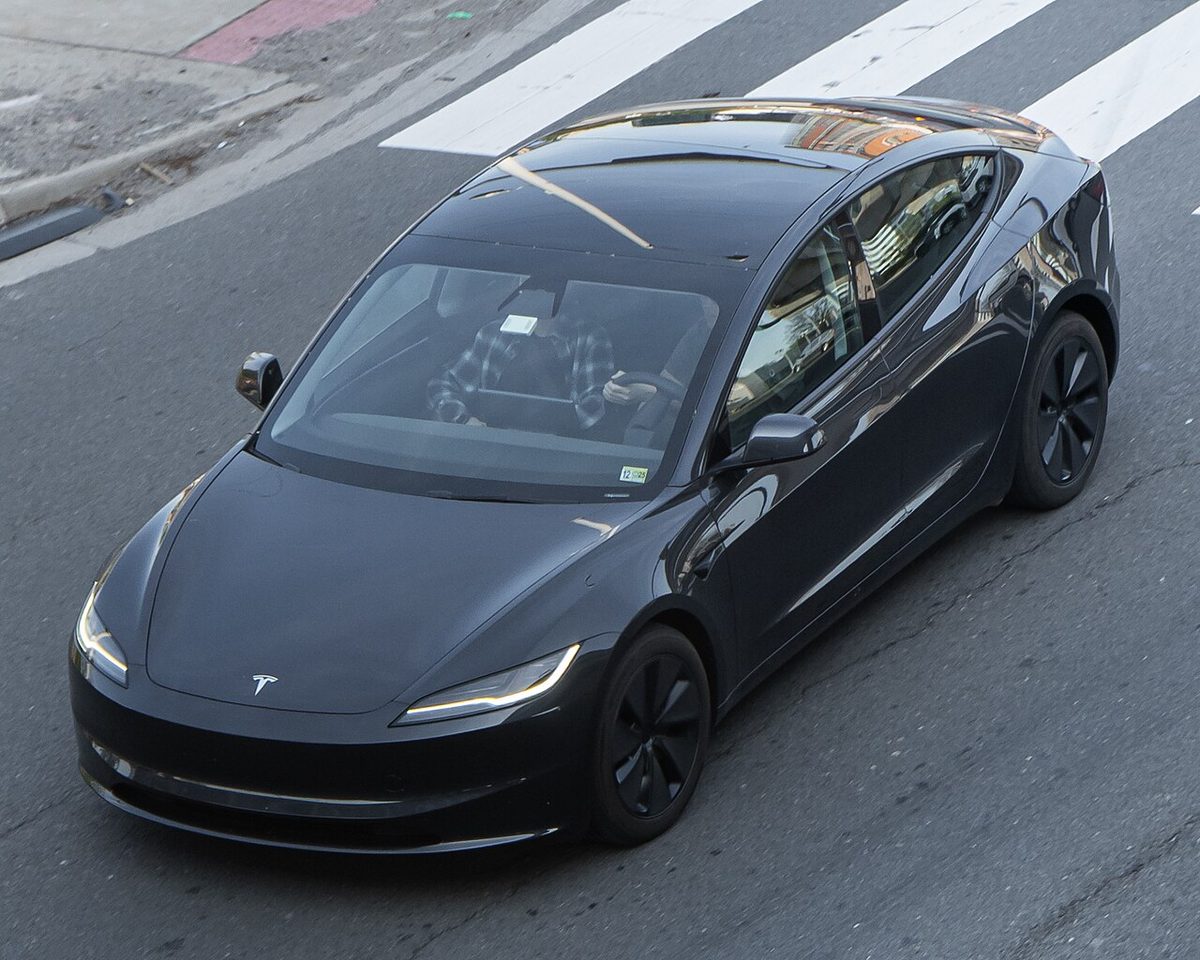
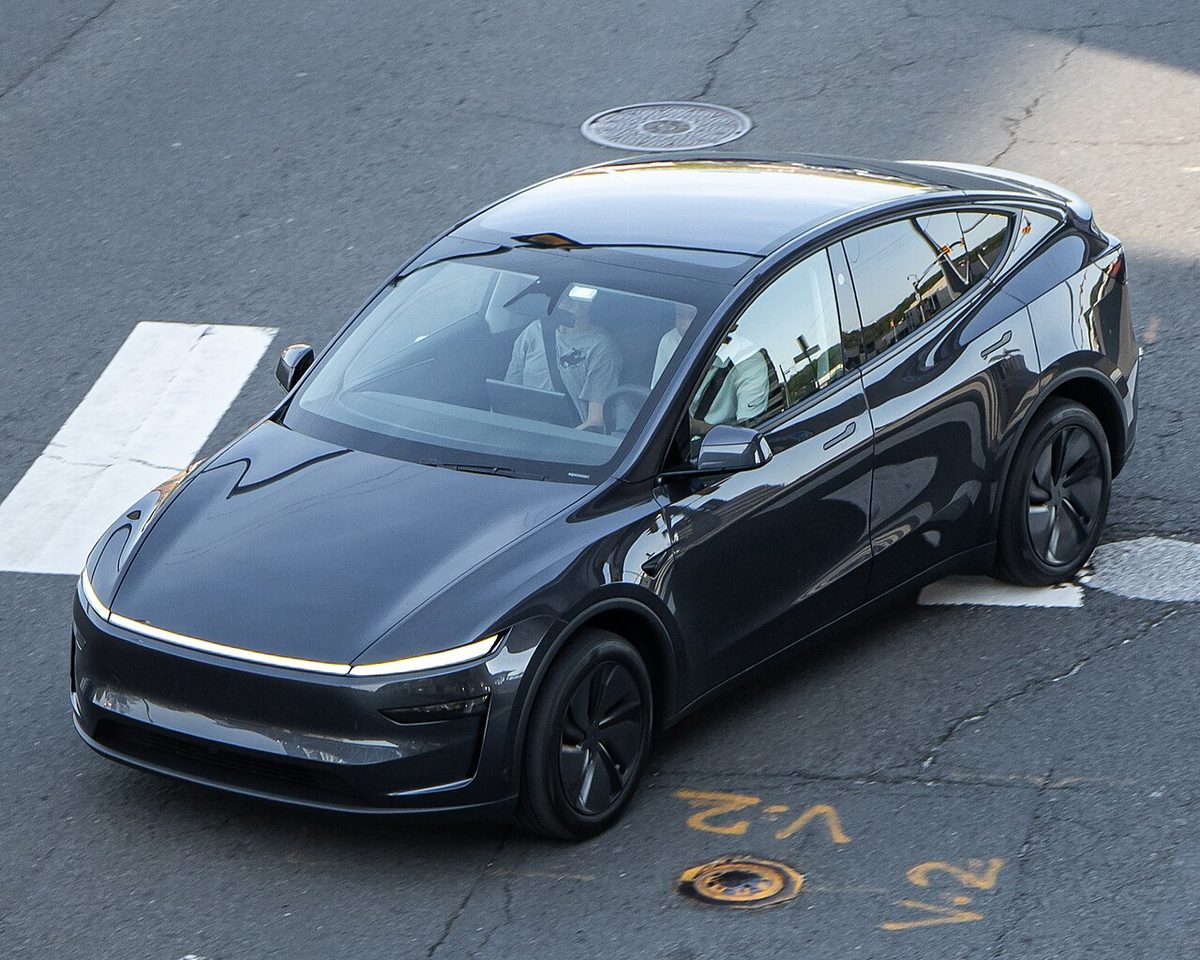
Tesla sells two cars that are close to being the same car. The Model 3 sedan and the Model Y crossover share their underpinnings, their motor and battery technology and their one-screen cabin, and they sit a few feet apart in the same showrooms. Tesla prices them accordingly: for 2026 the Model 3 starts at $36,990 and the Model Y at $39,990, and the gap stays between $2,500 and $3,500 at every matching trim up to the Performance versions at $54,990 and $57,990. Both add $1,640 in destination and order fees. So the real question for a buyer is narrow and practical: what does roughly $3,000 buy when the hardware underneath is shared, and what does it cost you.
Start with the cheapest versions, because that is where Tesla changed the most for 2026. Both lines gained a stripped base trim, and both carry the same EPA range estimate of 321 miles (517 km). The base Model 3 makes 286 horsepower and weighed 3,721 pounds on Car and Driver's scales; the base Model Y makes 300 horsepower and carries a taller, heavier body. The savings show inside. The base Model 3 has a manually adjusted steering wheel, cloth inserts in the seats, heat for the front seats only and no rear screen, and its adaptive cruise control does not include lane keeping. The base Model Y loses ventilated front seats and heated rear seats, swaps the rear screen for plain climate controls, and covers its glass roof with a headliner, so the roof is glass from outside and fabric from inside. One detail matters on road trips: the base Model 3 charges at up to 225 kW, the rest of the range at up to 250 kW.
The Model Y's 321 miles comes with a condition. It applies on the standard 18-inch wheels; choose the optional 19s and the estimate falls to 303 miles. Add a second motor to the base Model Y for $2,000 and the figure drops to 294 miles, the lowest in the lineup. Wheel and drivetrain choices move the range of the crossover more than they move the sedan's, and they are worth settling before comparing prices.
Move up to the Premium trims and the sedan pulls ahead on paper, though not by much. The Model 3 Premium RWD is rated at 363 miles and the Model Y Premium RWD at 357. With all-wheel drive it is 346 miles against 327. The Performance versions are almost level at 309 and 306. In EPA efficiency terms the two rear-drive Premium cars both use about 25 kWh per 100 miles, and the all-wheel-drive pair differ by 1 kWh per 100 miles. Over 12,000 miles a year that is about 120 kWh, which few owners would notice on an electricity bill.
Highway driving is where the body shape starts to cost range. Car and Driver runs every EV at a steady 75 mph until the battery is empty, and at that speed air resistance does most of the work. The Model 3 Premium RWD covered 310 miles. The Model Y Premium RWD, with a battery of similar size and an EPA figure only 6 miles lower, covered 270. That 40-mile difference is the real price of the taller body for anyone who drives long distances at interstate speeds, and it is far larger than the window stickers suggest. The base Model 3 also managed 270 miles in the same test, and a base all-wheel-drive Model Y 240. Charging is a draw: both a base Model 3 and a Model Y Premium RWD needed 44 minutes to go from 10 to 90 percent on a DC fast charger.
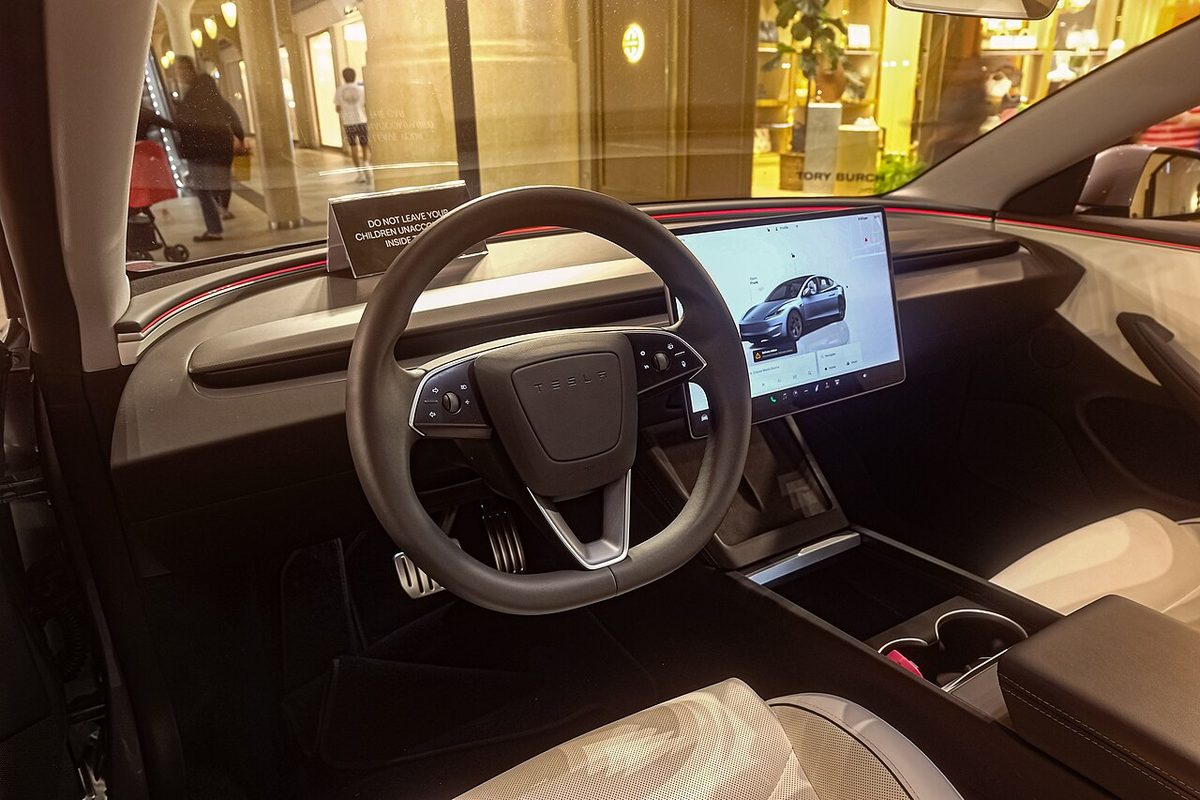
Neither is slow, and the sedan is consistently about half a second quicker. In Car and Driver's testing the base Model 3 reached 60 mph in 5.4 seconds and the base Model Y in 5.9. The Premium RWD cars ran 4.6 and 5.1 seconds. At the top, both Performance models make 510 horsepower; the Model 3 needed 2.8 seconds and the Model Y 3.3. A Model Y Premium AWD ran 3.9 seconds. For daily driving the difference between the two body styles is something you would measure, not feel.
Where you do feel it is in corners and under braking. The Model Y Premium RWD that Car and Driver tested weighed 4,178 pounds, 457 more than the base Model 3, and sits 7.2 inches taller. It stopped from 70 mph in 179 feet against the sedan's 166, a difference of most of a car length, and held 0.86 g on the skidpad against 0.88. The magazine's reviewers describe the Model 3's steering as accurate and well weighted and its ride as firm without being harsh. Of the updated Model Y they say the handling and refinement have improved but the ride may still be too firm for some drivers, and they state plainly that they prefer the Model 3's more engaging character. The sedan sits lower, weighs less and is the better car to drive, and nobody who tests both seems to dispute it.
Noise is the one area where the crossover is not the compromise. Car and Driver measured 69 decibels at a 70-mph cruise in the base Model 3, 68 in the Model Y Premium RWD and 66 in the all-wheel-drive Model Y. The refreshed Model Y received extra sound insulation, and it shows. Anyone who remembers the first Model Y as a loud car on coarse pavement should drive the current one before deciding.
The back seat is the strongest argument for spending the extra money. Front passenger volume is identical at 56 cubic feet. In the rear the Model 3 offers 41 cubic feet and the Model Y 49. Car and Driver's verdict on the sedan's rear seat is blunt: the cushion is low, space is tight, and adults will not want to stay there long. In the Model Y the second row is roomy enough for adults, with the caveat that tall passengers may touch the sloping roof. Both cars are close in footprint, 185.8 inches long against 188.6, so the extra room comes almost entirely from height. For a household that regularly carries two adults or two teenagers in the back, the sedan will be the wrong car within a year.
Cargo follows the same pattern, with one complication. The Model 3's trunk holds 21 cubic feet and its front trunk 3, and with the rear seats folded Car and Driver fit 15 carry-on suitcases. The Model Y holds 29 cubic feet behind the rear seats and 71 with them folded, plus a 4-cubic-foot front trunk; it swallowed 7 suitcases with the seats up and 19 with them down. The numbers understate the practical difference, because the Model 3 loads through a trunk lid and the Model Y through a full-height hatch. A bicycle, a flat-pack bookcase or a large dog crate goes into the crossover and does not go into the sedan at any trim.
Two more things only the Model Y can do. It is rated to tow 3,500 pounds, though the hitch receiver is a $1,000 option and range falls sharply with a trailer; Car and Driver lists no tow rating for the Model 3. And it can seat more than five. A $2,500 third row has been offered on the Premium AWD, which reviewers describe as cramped for passengers of any size, and there is now the stretched Model Y L, a six-seat version with second-row captain's chairs that starts at $61,990.
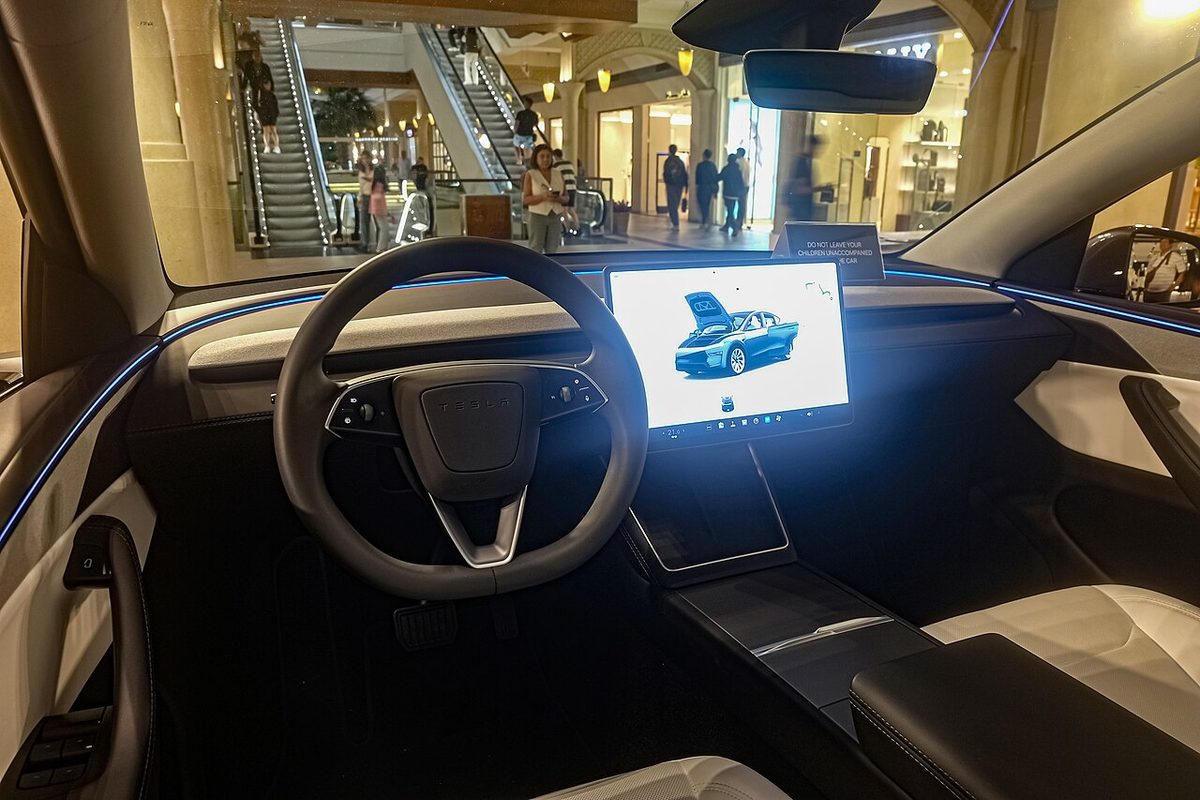
The cabins themselves are nearly interchangeable. Both put almost every control, including the gear selector, on a central touchscreen of about 15 to 16 inches, and the Model 3 offers neither Apple CarPlay nor Android Auto, which Car and Driver lists among its drawbacks; the Model Y runs the same software. Premium and Performance versions of both cars add an 8-inch screen for rear passengers. If you dislike operating wipers and vents through a screen, choosing between these two will not help; that complaint applies to both equally.
Crash-test results are the one place the two cars are further apart than their shared engineering would suggest. The Insurance Institute for Highway Safety gives the 2026-27 Model Y its highest award, Top Safety Pick+. The Model 3 has no award. The two cars match in most categories: Good in the small overlap front and updated side tests, Good for both vehicle-to-vehicle and pedestrian crash prevention, Acceptable for child-seat anchors, and Marginal for seat belt reminders on both. They differ in two. In the updated moderate overlap front test, which adds a dummy in the back seat to measure how well rear passengers are protected, the Model Y rates Good and the Model 3 Acceptable. The institute requires a Good rating in that test for its top award. Headlights rate Good on the Model Y and Acceptable on the Model 3.
That difference deserves a careful reading. Acceptable is the institute's second-best rating out of four, not a failing mark, and the Model 3 earns the top rating in the small overlap front and side tests. But the gap falls in exactly the place that matters to families: the test where the Model 3 trails is the one about the person in the back seat. Combined with the tighter rear cabin, it is a second reason to choose the Model Y if the back seat will be used every day.
Ownership costs are effectively the same. Both carry a four-year, 50,000-mile warranty and at least eight years or 100,000 miles on the battery and drive unit, with no free scheduled maintenance. Energy use at matching trims is within a few percent. The purchase price is the only real cost difference, and it is the $2,500 to $3,500 already described.
So the choice comes down to how the car will be used. If it mostly carries one or two people, covers long highway distances and is bought by someone who enjoys driving, the Model 3 is the better car and the cheaper one: it goes about 40 miles farther at 75 mph in Premium RWD form, stops shorter and is quicker at every trim. The Premium RWD at $42,490 is the version Car and Driver recommends, and its 363-mile rating is the highest of any Tesla in this pair. If the back seat and the cargo area are in regular use, the Model Y is worth its premium several times over. It has 8 more cubic feet of rear passenger space, a hatch, a tow rating, a quieter cabin and the stronger crash-test record for rear passengers. Buyers choosing a base trim should look hardest at what was removed, because the two base cars cut different things, and a Model Y on 19-inch wheels gives up 18 miles of rated range before it leaves the lot.
| Tesla Model 3 (2026) | Tesla Model Y (2026) | |
|---|---|---|
| Starting MSRP | $36,990 (base RWD) | $39,990 (base RWD) |
| Premium RWD / AWD MSRP | $42,490 / $47,490 | $45,990 / $49,990 |
| Performance MSRP | $54,990 | $57,990 |
| Destination and order fees | $1,640 | $1,640 |
| EPA range, base RWD | 321 mi | 321 mi (18-inch wheels); 303 mi (19-inch) |
| EPA range, Premium RWD / AWD | 363 mi / 346 mi | 357 mi / 327 mi |
| 75-mph highway range (Car and Driver) | 310 mi (Premium RWD); 270 mi (base RWD) | 270 mi (Premium RWD); 240 mi (base AWD) |
| 0-60 mph (Car and Driver) | 5.4 s base; 4.6 s Premium RWD; 2.8 s Performance | 5.9 s base; 5.1 s Premium RWD; 3.3 s Performance |
| Braking, 70-0 mph (Car and Driver) | 166 ft (base RWD) | 179 ft (Premium RWD) |
| Curb weight as tested | 3,721 lb (base RWD) | 4,178 lb (Premium RWD) |
| Length / height | 185.8 in / 56.7 in | 188.6 in / 63.9 in |
| Passenger volume, front / rear | 56 / 41 cu ft | 56 / 49 cu ft |
| Cargo | 21 cu ft trunk + 3 cu ft front trunk | 29 cu ft behind rear seats; 71 cu ft folded; 4 cu ft front trunk |
| Towing | No rating listed | 3,500 lb (hitch optional, $1,000) |
| IIHS moderate overlap front, updated | Acceptable | Good |
| IIHS headlights | Acceptable | Good |
| IIHS award | None | Top Safety Pick+ (2026-27) |
Related cars
Related articles
- Tesla Model 3 vs Hyundai Ioniq 6: Which EV Is Better? A Real Review Says the Ioniq 6 "Overshadows" the Model 3
- Tesla Launches the Model Y L, a Stretched Three-Row Model Y, at $61,990
- 2026 Tesla Model Y vs Mustang Mach-E: Which EV to Buy? More Range and Faster Charging Against a Calmer Ride and a Lower Price
- Hybrid vs Plug-In Hybrid vs EV: Which to Buy in 2026? The Math at $4.41 Gas, Without the Tax Credit
Sources
- Car and Driver: 2026 Tesla Model 3 review, pricing and test results
- Car and Driver: 2026 Tesla Model Y review, pricing and test results
- Car and Driver: 2027 Tesla Model Y review, trims and pricing
- IIHS: 2026 Tesla Model 3 4-door sedan ratings
- IIHS: 2026 Tesla Model Y 4-door SUV ratings
- IIHS: 2027 Tesla Model Y 4-door SUV ratings and award
- IIHS: Top Safety Pick award winners and criteria
- FuelEconomy.gov: 2026 Tesla Model 3
- FuelEconomy.gov: 2026 Tesla Model Y