Honda Pilot vs Toyota Grand Highlander: Which Is Better? One Engine Option Against Three, and a Reliability Record That Isn't a Fair Fight Yet
Both are three-row family SUVs built in the mid-$40,000s, but they split hard on how many ways you can buy the powertrain
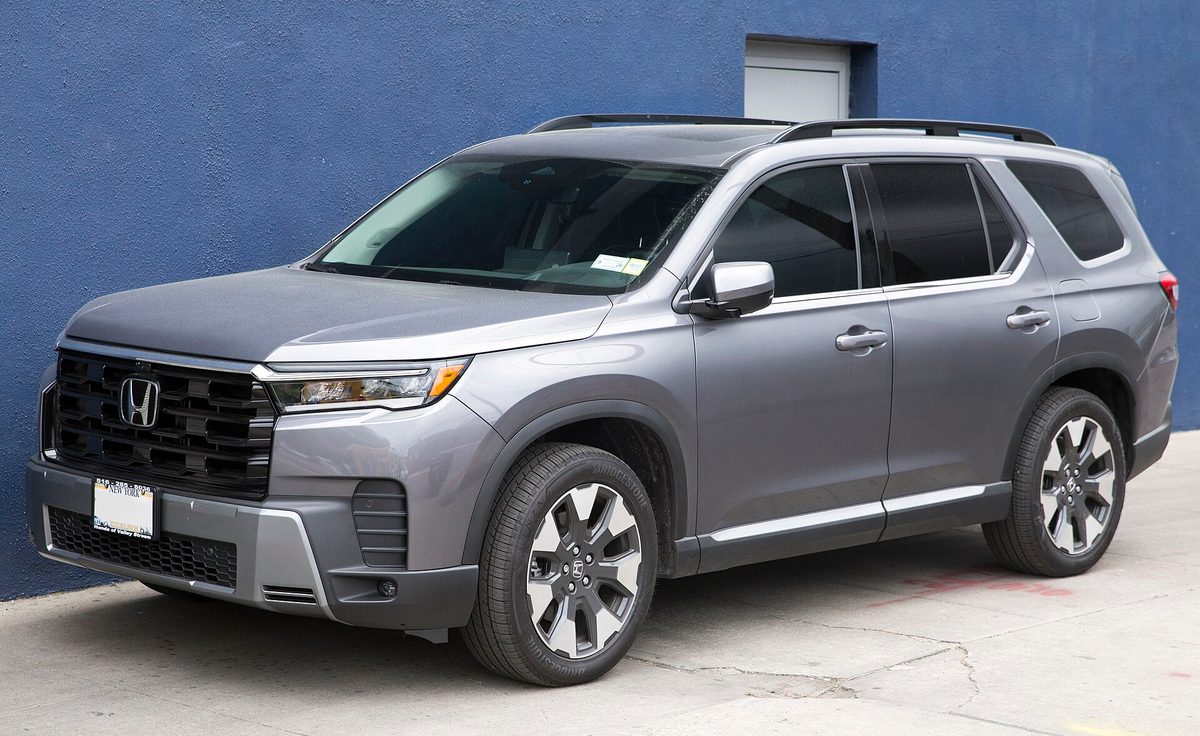
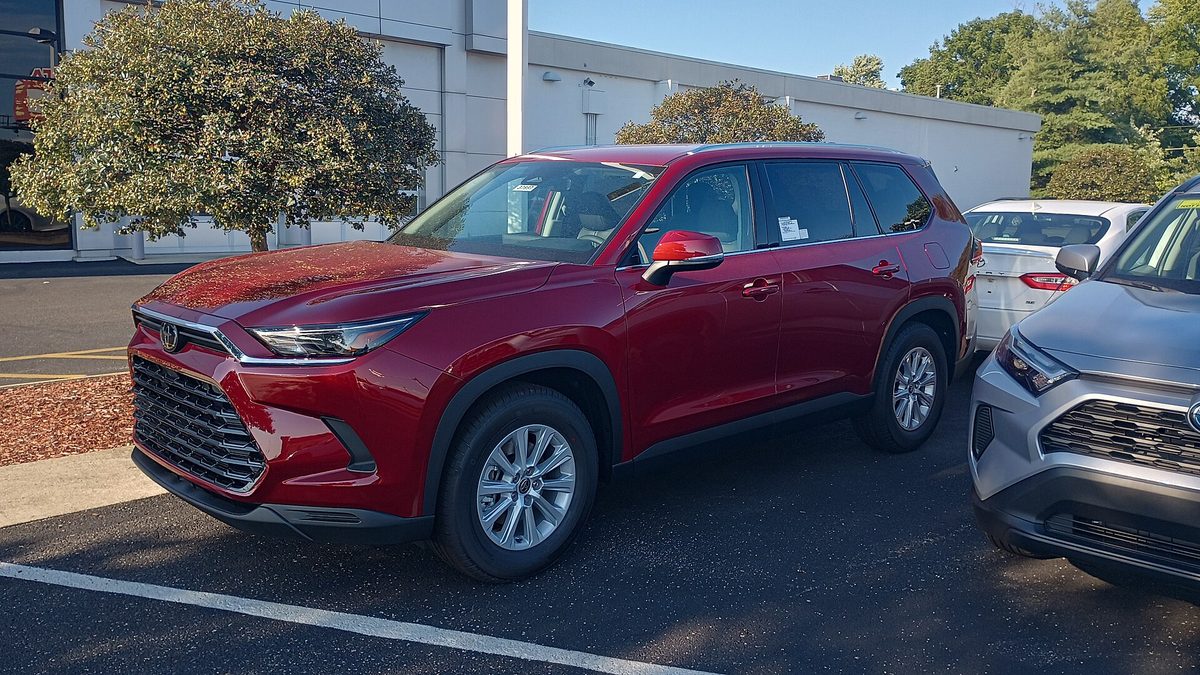
The Honda Pilot and Toyota Grand Highlander compete for the same driveway: three rows, eight seats, a starting price a few hundred dollars apart. Where they split is underneath. The Pilot ships with exactly one engine across its whole lineup. The Grand Highlander offers three separate powertrains, including a 362-horsepower hybrid that outguns both of them by a wide margin.
Price and trims
The 2026 Pilot runs from $42,395 for a 2WD Sport up to $55,195 for the AWD-only Black Edition, spread across seven named trims (Sport, EX-L, TrailSport, Touring, Touring S, Elite, Black Edition), all but the base Sport and EX-L requiring all-wheel drive. The Grand Highlander's gas lineup runs $42,855 (LE) to $56,040 (Platinum) across four trims, with a parallel hybrid lineup from $46,205 (Hybrid LE) to $60,770 (Hybrid Platinum) adding a Nightshade Edition and the performance-oriented Hybrid MAX trims. At the bottom of each range, the two are within about $500 of each other.
Engines: one choice versus three
The Pilot's only engine is a naturally aspirated 3.5-liter V6 making 285 horsepower and 262 lb-ft of torque, paired with a 10-speed automatic and available front- or all-wheel drive. The Grand Highlander spreads across three distinct powertrains: a 2.4-liter turbocharged four-cylinder (265 hp, 310 lb-ft) with an 8-speed automatic as the standard gas engine; a 2.5-liter hybrid system making 245 hp combined through a CVT; and the Hybrid MAX, a turbocharged 2.4-liter paired with an electric motor for 362 hp and 400 lb-ft through a 6-speed automatic — enough to make the Grand Highlander the quicker vehicle in its hottest trim by a wide margin over anything Honda offers in this class.
Fuel economy and towing
The base Grand Highlander already beats the Pilot at the pump: 20-21 mpg city and 26-28 highway on the turbo gas engine, against the Pilot's 19 city/27 highway (19/25 on AWD models, 18/23 on the off-road-focused TrailSport). The Grand Highlander Hybrid stretches that further to an EPA-estimated 34 mpg combined, while even the quicker Hybrid MAX holds 27 mpg combined — better than the Pilot's V6 while also being the more powerful option. Towing is a wash at the top end: both top out at 5,000 lbs when properly equipped, the Pilot with AWD, the Grand Highlander with either the gas engine or Hybrid MAX (the base hybrid is capped lower, at 3,500 lbs).
Cargo and seating
Both seat 8 standard, with a 7-seat captain's-chair layout optional on most trims of each. The Grand Highlander has more room behind the third row — 20.6 cubic feet versus the Pilot's 18.6 to 22.4 depending on trim — and more total cargo space with seats folded, 97.5 cubic feet to the Pilot's 48.5 behind the second row. Toyota also quotes 33.5 inches of third-row legroom, a real number for fitting adults back there on a longer trip rather than just kids. Honda's counter is seat flexibility: the Pilot's second-row middle seat is removable on most trims, something the Grand Highlander's captain's-chair layout doesn't offer in the same way.
Interior and tech
The 2026 Pilot refresh brought a larger 12.3-inch touchscreen and a 10.2-inch digital driver display, both with wireless Apple CarPlay and Android Auto, across most of the lineup — a real step up from the smaller displays the Pilot carried before this update. Both the Pilot and Grand Highlander offer a panoramic sunroof (on Touring trims and above for the Pilot), heated and ventilated front seats on upper trims, and a third-row that's genuinely usable by adults rather than a kids-only afterthought, though the Grand Highlander's extra legroom back there gives it the edge for taller passengers on longer drives.
Off-road and trim-specific variants
Honda's TrailSport trim gives the Pilot a genuine off-road-leaning variant: all-terrain tires, additional underbody protection, and a slightly different suspension tune, at the cost of the worst fuel economy in the lineup (18 city/23 highway). The Grand Highlander doesn't offer a direct off-road equivalent in the same vein — its trim spread (LE, XLE, Limited, Platinum, plus the Nightshade appearance package on the hybrid) is built around comfort and tech tiers rather than terrain capability. For buyers who actually want to leave pavement occasionally without stepping up to a body-on-frame SUV, that gives the Pilot a niche the Grand Highlander doesn't contest.
Safety ratings
The Pilot earned an IIHS Top Safety Pick for the 2025 model year; the Grand Highlander did not, according to a side-by-side safety comparison published by Ames Honda. Both offer the now-standard suite of forward-collision warning, automatic emergency braking, lane-keep assist and blind-spot monitoring, but a couple of specific IIHS results favor the Pilot: its headlights rated "Good" against the Grand Highlander's "Acceptable," and NHTSA-based handling analysis puts the Pilot at 1.4% to 3.1% lower rollover risk than the Grand Highlander. These are real, measured differences, though neither is large enough on its own to override everything else in this comparison — they're one more data point alongside reliability and cargo space, not a deciding factor by themselves.
Reliability: not an equal comparison yet
AutoReliabilityIndex scores the Grand Highlander at 79/100 against the Pilot's 68/100, both rated "Good," with the Pilot showing 51 recalls against the Grand Highlander's 10. The gap is real but the comparison isn't apples to apples: that data covers 9 model years of Pilot history against just 3 years for the Grand Highlander, which is a newer nameplate with far less time on the road to accumulate either recalls or complaints. The site's own notes flag the Pilot's recall history as including sudden engine failure and transmission shudder complaints, while the Grand Highlander's issues so far read as milder — but with a much shorter track record behind that read. Warranty coverage splits differently too: Toyota backs its hybrid battery for 10 years or 150,000 miles, while Honda's standard powertrain warranty runs the more typical 5 years or 60,000 miles.
Which one to buy
Buy the Grand Highlander if fuel economy matters, if you want the option to step up to real power with the Hybrid MAX, or if maximum third-row and cargo room are priorities — and if you're comfortable with a newer nameplate that has less long-term reliability data behind it. Buy the Pilot if you want the simplicity of one well-proven V6 across the range, the flexibility of a removable middle seat for car-seat and carpool duty, a lower price at the entry trim with a longer production history to draw reliability conclusions from, or you specifically want the TrailSport's off-road capability and the IIHS Top Safety Pick distinction.
Neither vehicle is a bad choice at this price point, which is exactly why the decision comes down to which specific numbers matter most in your household: the Grand Highlander's case rests on efficiency, power ceiling, and outright cargo volume; the Pilot's case rests on mechanical simplicity, seat flexibility, and a longer safety and reliability track record to actually evaluate. Test-drive both with your own car seats and strollers before deciding — spec sheets don't capture how a specific stroller folds into a specific cargo well, and that's the kind of detail that ends up mattering more day to day than an extra cubic foot on paper.
| Honda Pilot | Toyota Grand Highlander | |
|---|---|---|
| Starting price | $42,395 (Sport 2WD) | $42,855 (LE gas) |
| Engine options | 1: 3.5L V6, 285 hp / 262 lb-ft | 3: 2.4L turbo (265 hp), 2.5L hybrid (245 hp), Hybrid MAX (362 hp / 400 lb-ft) |
| Fuel economy (base) | 19 city / 27 hwy mpg | 20-21 city / 26-28 hwy mpg |
| Fuel economy (hybrid/MAX) | N/A — no hybrid offered | 34 mpg combined (Hybrid) / 27 mpg combined (Hybrid MAX) |
| Max towing | 5,000 lbs (AWD) | 5,000 lbs (gas or Hybrid MAX) |
| Cargo behind 3rd row | 18.6-22.4 cu ft | 20.6 cu ft |
| Max cargo (seats folded) | 48.5 cu ft | 97.5 cu ft |
| Powertrain/battery warranty | 5 yr / 60,000 mi | 10 yr / 150,000 mi (hybrid battery) |
| Reliability score (AutoReliabilityIndex) | 68/100 (9 model years tracked) | 79/100 (3 model years tracked) |
Related cars
Related articles
- 2026 Toyota Highlander vs Honda Pilot: Which Is Better? The Last Highlander With an Engine Meets a Roomier Rival
- Jeep Grand Cherokee L vs Ford Explorer: Which Is Better? The Explorer Starts $4,500 Cheaper and Tops Out at 400 Horsepower, the Jeep Counters With Composure
- How Long Does a Timing Belt Really Last in 2026? Most New Cars Don't Even Have One Anymore, but a 2026 Honda Pilot Still Needs Its Changed at 105,000 Miles
- Audi Q5 vs BMW X3: Which Should You Buy? (2026) — A Better-Equipped Audi Against a Cheaper-to-Run BMW, Both Top Safety Picks
Sources
- Cars.com — 2026 Honda Pilot trims, pricing and specs
- Cars.com — 2026 Toyota Grand Highlander trims, pricing and specs
- PlazaAutoMall — Honda Pilot vs Toyota Grand Highlander comparison
- AutoReliabilityIndex — Honda Pilot vs Toyota Grand Highlander reliability
- Ames Honda — 2026 Honda Pilot vs 2026 Toyota Grand Highlander safety comparison