2026 Toyota Highlander vs Honda Pilot: Which Is Better? The Last Highlander With an Engine Meets a Roomier Rival
The 2027 Highlander goes electric only, so this is the final year for the gas and hybrid versions. The refreshed Pilot answers with more room in every row and a Top Safety Pick award.
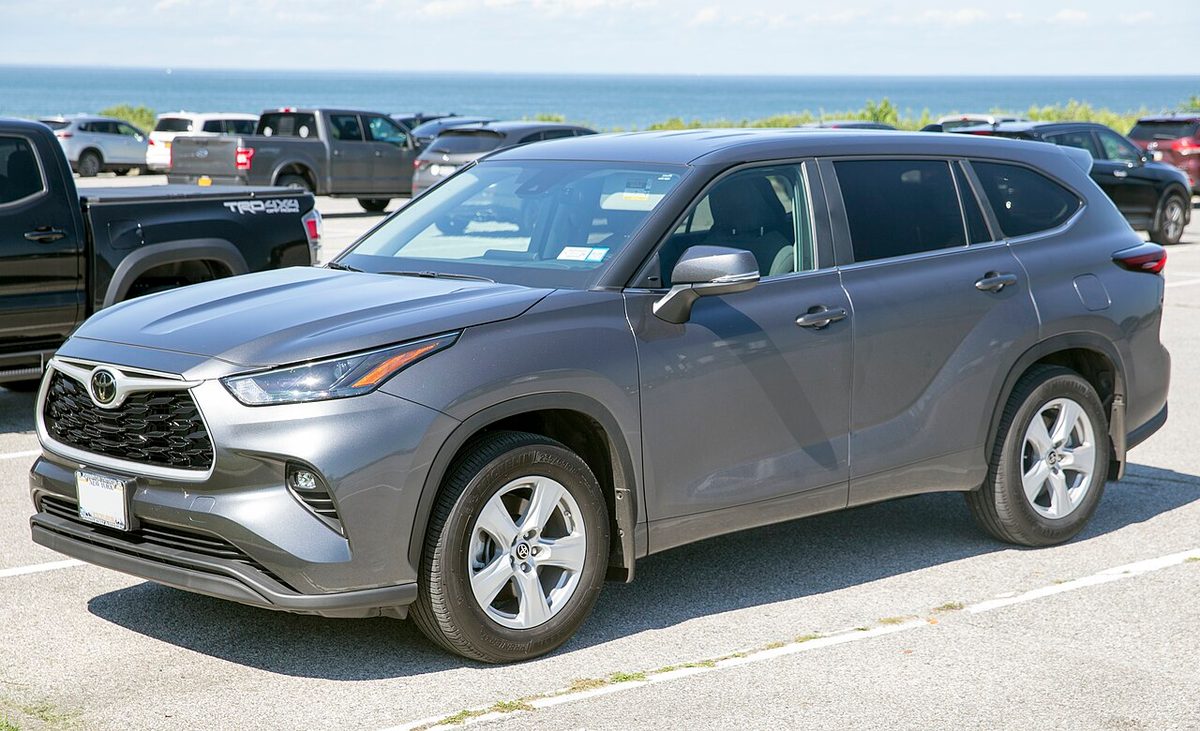
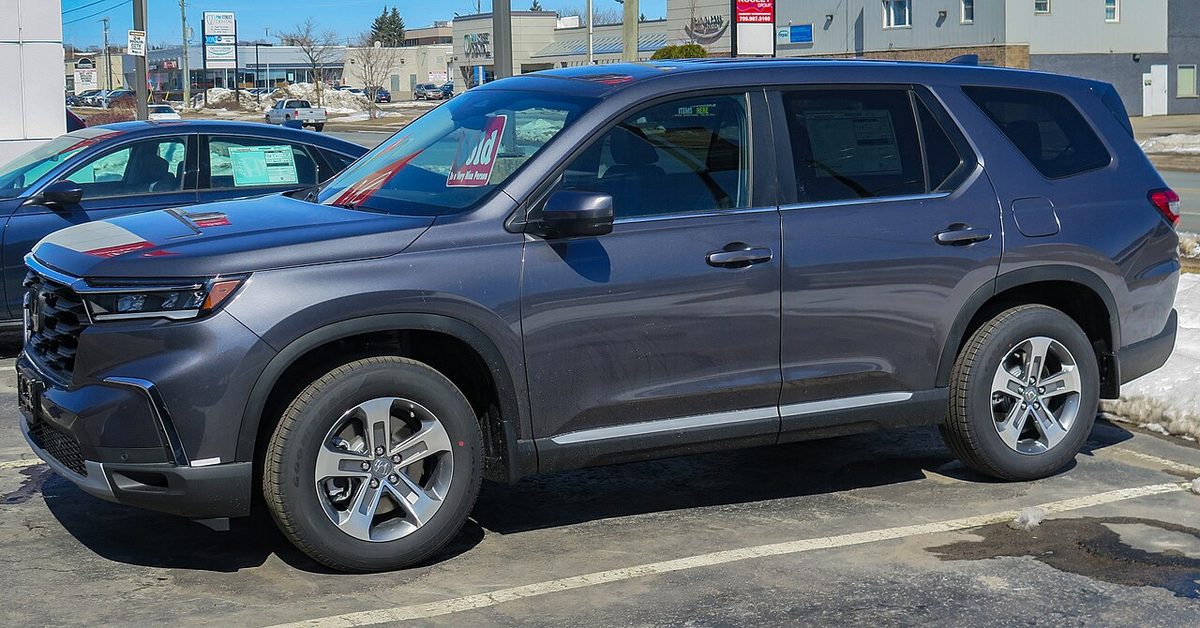
This is the last model year in which a Toyota Highlander can be bought with an engine. Toyota has said the next one, the 2027 Highlander, will be electric only, with the gas and hybrid versions discontinued and the larger Grand Highlander left to carry those powertrains. That turns the 2026 Highlander into a deadline as much as a car, and it sharpens the usual question for a family shopping three-row SUVs: buy the outgoing Toyota while it still exists in this form, or the Honda Pilot, which was refreshed for 2026 and is expected to carry on largely unchanged.
The two are aimed at the same buyer and priced close together. Toyota lists the gas Highlander XLE at $45,270 before its delivery fee, and for 2026 that price includes all-wheel drive, which is now standard across the lineup. Dealer price guides put the Pilot Sport at $42,395 with front-wheel drive and $44,495 with all-wheel drive. Matched for drivetrain, then, the two start within about $800 of each other before fees, and the front-drive Pilot is the cheapest way into either. A buyer in a warm state who does not need all-wheel drive can save about $2,100 by choosing the front-drive Honda; Toyota no longer offers that choice.
Under the hood they take opposite approaches. The Highlander uses a turbocharged 2.4-liter four-cylinder with 265 hp and 310 lb-ft of torque. The Pilot uses a naturally aspirated 3.5-liter V6 with 285 hp and 262 lb-ft, paired with a 10-speed automatic. In practice the Toyota's extra torque arrives low in the rev range, which is what you feel pulling away from a light or climbing a grade with seven people aboard, while the Honda needs more revs to give its best but delivers its power more smoothly. Reviewers have repeatedly described the Toyota's four-cylinder as sounding coarser than the V6 when pushed. Neither is quick, and neither is slow for the class.
Fuel economy is the Highlander's clearest advantage. Toyota rates the all-wheel-drive gas model at 24 mpg combined. Honda's figures for the Pilot are 22 mpg combined with front-wheel drive and 21 with all-wheel drive, or 20 for the off-road TrailSport. Three mpg does not sound like much, but at 15,000 miles a year it is roughly 90 gallons, and the gap widens sharply with the Highlander Hybrid, which is rated at 35 mpg combined and starts at $47,020 for the XLE. That is a $1,750 premium over the gas XLE for a 46% improvement in fuel economy, and for anyone who drives mostly in town it pays for itself within a few years. Honda has no hybrid Pilot.
The hybrid comes with one compromise worth knowing before signing. Gas Highlanders tow up to 5,000 pounds, the same as an all-wheel-drive Pilot, but the hybrid is limited to 3,500 pounds. So is a front-drive Pilot. A family with a mid-size camper or a boat needs the gas Toyota or the all-wheel-drive Honda; the efficient Highlander and the cheap Pilot both fall short.
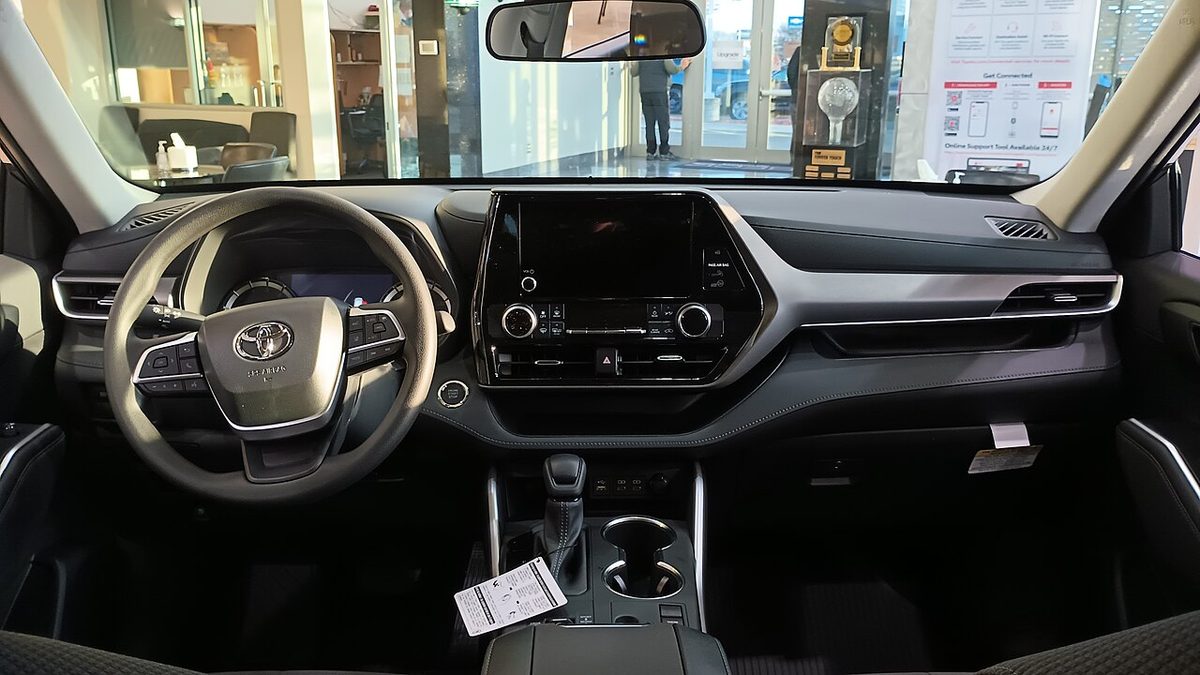
Space is where the comparison stops being close, and it favors Honda on every measure. The Pilot's third row has 32.5 inches of legroom against 28.0 in the Highlander. Four and a half inches is the difference between a row adults can use for an hour and one that suits children only. The second row is roomier too, 40.8 inches against 38.7. If the third row is for occasional carpool duty, the Toyota is adequate. If teenagers or grandparents will ride back there regularly, the Honda is the one built for it.
Cargo follows the same pattern. Behind the third row the Pilot holds 18.6 cubic feet, or 21.8 counting its underfloor compartment, against 16.0 in the Highlander. With every seat folded Honda quotes 87.0 cubic feet and up to 111.8 by its maximum measure; the Highlander tops out at 84.3. The Pilot also has details that do not show up in cubic feet: on some trims the middle seat of the second row can be removed and stowed in a well under the cargo floor, and the second row slides forward at the touch of a button to open a path to the third.
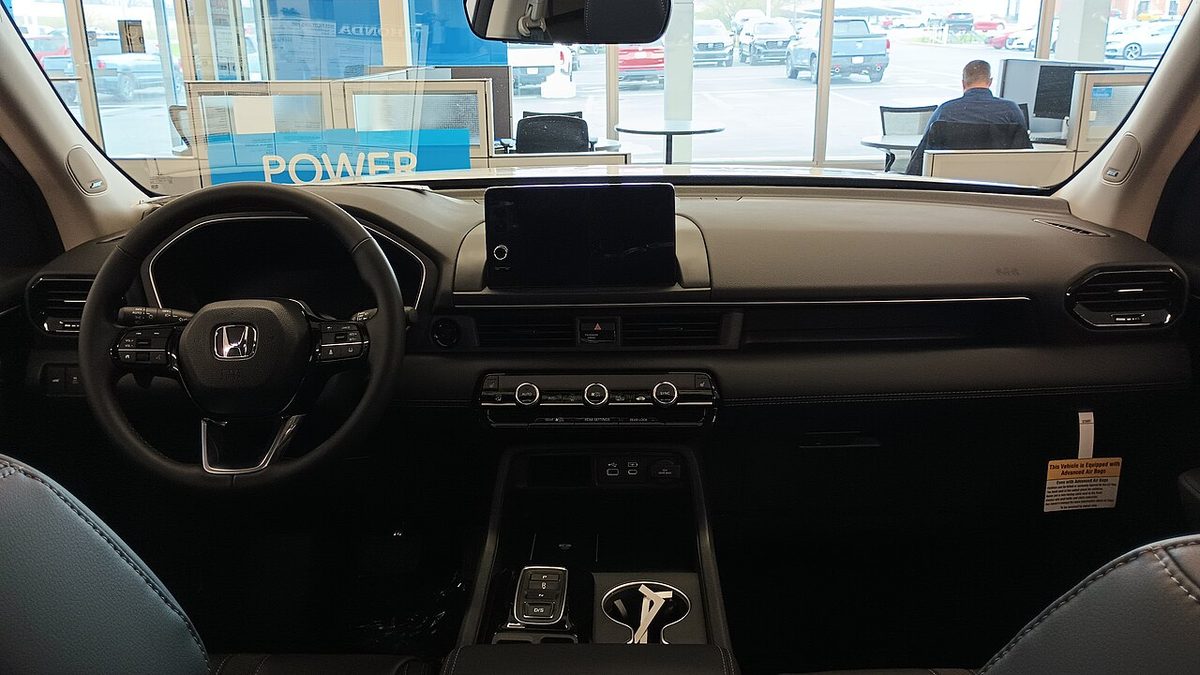
Inside, the Pilot's 2026 update shows. Every trim now has a 12.3-inch touchscreen and a 10.2-inch digital instrument display. The Highlander XLE comes with an 8.0-inch screen, with the 12.3-inch unit optional there and standard from the XSE up. Edmunds, in its testing, judged the Highlander XLE's cabin materials to be behind the best in the class, naming the Hyundai Palisade and Kia Telluride. Neither of these two is the segment's benchmark for interior quality, but the Honda feels like the newer design, because it is.
On the road, both are comfortable rather than engaging. The Pilot rides firmly but with good control, and Honda says acoustic glass and added insulation make it quieter than before. Even so, Edmunds found it louder than quieter rivals such as the Telluride, and Consumer Reports noted pronounced road noise on rough pavement. The Highlander is about five inches shorter, which makes it the easier of the two to place on a narrow street or in a parking garage. That is the practical upside of its smaller cabin.
Safety equipment is standard on both: Toyota Safety Sense 2.5+ on every Highlander, Honda Sensing on every Pilot, each with automatic emergency braking, adaptive cruise control and lane-keeping assistance. The crash-test results differ. The Insurance Institute for Highway Safety rates the 2026 Pilot Acceptable in its updated moderate overlap front test and Good elsewhere, and names it a Top Safety Pick. The 2026 Highlander is rated Good in the small overlap and updated side tests but Marginal in the updated moderate overlap test, because of the protection it gave the rear-seat dummy, and it has no award. That test was revised specifically to measure what happens to people in the second row, which is where the children sit. Both score Good for the ease of use of their child-seat anchors.
Reliability leans the other way, by a margin that depends on who is counting. iSeeCars scores the two almost level, 8.1 out of 10 for the Highlander and 8.0 for the Pilot. A separate index that combines predicted reliability with owner complaints puts the Toyota further ahead, 72 to 66, with fewer complaints per vehicle and lower annual repair costs. Resale is the more tangible difference: the Highlander is estimated to lose about 42% of its value over five years and the Pilot about 48%. On a $48,000 purchase, that is close to $3,000.
That resale figure deserves a caveat this year. It reflects Highlanders sold while the model had a direct successor. What a discontinued gas Highlander will be worth in 2031, with an electric Highlander beside it in showrooms, is not something anyone has data for. It could hold up well, as the last of a trusted line, or it could trail. Buyers who plan to keep the car for ten years need not care. Buyers who trade every four should not treat the historical number as a promise.
As for what replaces it: the 2027 Highlander is larger than this one and comes with a 77 or 95.8 kWh battery, an estimated range of up to 320 miles, and assembly in Kentucky. Toyota said at the reveal that it would go on sale in late 2026 and that pricing would be announced closer to launch. It is a different product for a different buyer, and anyone who wants a Toyota three-row with an engine after this year will be looking at the Grand Highlander, which is bigger and costs more.
So the choice comes down to what the third row is for and how much fuel matters. The Pilot is the better family vehicle in the plain sense: more room in every row, more cargo space, a newer cabin, the stronger crash-test result and a lower price if you can live without all-wheel drive. The Highlander's case rests on the hybrid. At 35 mpg it has no equivalent in the Honda showroom, and with Toyota's reliability record behind it, it is the sensible pick for a family that uses the third row rarely and drives a lot. The gas Highlander is the hardest of the three to recommend: it gives up the Pilot's space without the hybrid's economy to show for it.
| 2026 Toyota Highlander | 2026 Honda Pilot | |
|---|---|---|
| Starting price | $45,270 (XLE, AWD standard; before delivery fee) | $42,395 (Sport FWD); $44,495 (Sport AWD) |
| Engine | 2.4L turbo four, 265 hp, 310 lb-ft | 3.5L V6, 285 hp, 262 lb-ft |
| Hybrid | 243 hp, 35 mpg combined, from $47,020 | Not offered |
| EPA combined (AWD, gas) | 24 mpg | 21 mpg (22 FWD) |
| Maximum towing | 5,000 lb gas; 3,500 lb hybrid | 5,000 lb AWD; 3,500 lb FWD |
| Second-row legroom | 38.7 in | 40.8 in |
| Third-row legroom | 28.0 in | 32.5 in |
| Cargo behind third row | 16.0 cu ft | 18.6 cu ft (21.8 with underfloor) |
| Maximum cargo | 84.3 cu ft | 87.0 cu ft (111.8 by Honda's maximum measure) |
| Standard touchscreen | 8.0 in (12.3 in from XSE) | 12.3 in |
| IIHS updated moderate overlap front | Marginal | Acceptable |
| IIHS 2026 award | None | Top Safety Pick |
| Reliability score (iSeeCars) | 8.1 / 10 | 8.0 / 10 |
| Five-year depreciation (estimate) | About 42% | About 48% |
| What comes next | Electric-only 2027 model; gas and hybrid end | Expected to continue largely unchanged |
Related cars
Related articles
- Kia Telluride vs Hyundai Palisade: Which 3-Row SUV to Buy? The Telluride Wins the Numbers, Edmunds Still Picked the Palisade
- 2026 Toyota RAV4 vs Honda CR-V Hybrid: Which Is Better? The RAV4 Wins on Price, Fuel and Warranty, the CR-V on Ride and Rear-Seat Room
- 2026 Honda CR-V vs Mazda CX-5: Which Is Better? The CR-V Carries More and Burns Less, the CX-5 Holds the Top Crash-Test Award
- 2026 Ford Explorer vs Toyota Highlander: Which Is Better? The Explorer Has the Safer Crash Results, the Highlander a 35-mpg Hybrid
Sources
- Toyota USA Newsroom: 2026 Toyota Highlander Gets Standard All-Wheel Drive Across the Lineup (September 5, 2025)
- Honda News: 2026 Honda Pilot Specifications & Features
- IIHS: 2026 Toyota Highlander ratings
- IIHS: 2026 Honda Pilot ratings
- Cars.com: 2027 Toyota Highlander: Toyota Reinvents Its Three-Row SUV as All-Electric Vehicle (Damon Bell, February 10, 2026)
- Edmunds: The 2026 Honda Pilot Is Improved. But Are These Updates Enough? (first drive)
- Edmunds: 2026 Honda Pilot vs 2026 Toyota Highlander
- Consumer Reports: 2026 Honda Pilot road test
- Ron Bouchard Honda: 2026 Honda Pilot price guide and trim breakdown
- Auto Reliability Index: Honda Pilot vs. Toyota Highlander reliability (iSeeCars data)
- RepairPal: Toyota Highlander vs. Honda Pilot