NACS vs CCS: Which EV Charging Plug Matters in 2026? Who Can Use Superchargers, What You Need to Carry, and Why a Port Does Not Set Your Charging Speed
The Tesla-designed connector is becoming the US standard, but for a buyer the plug is only part of the charging story.
If you are shopping for an electric car in the US, you have probably heard that the plug is changing. The short version: the connector Tesla designed, now standardized as SAE J3400 and still widely called NACS, is replacing the older CCS1 plug that most non-Tesla EVs have used. What matters to a buyer is not which acronym wins. It is whether the car you are looking at can use the biggest fast-charging network, what you will need to carry, and whether the car charges quickly once it gets there.
What NACS and CCS actually are
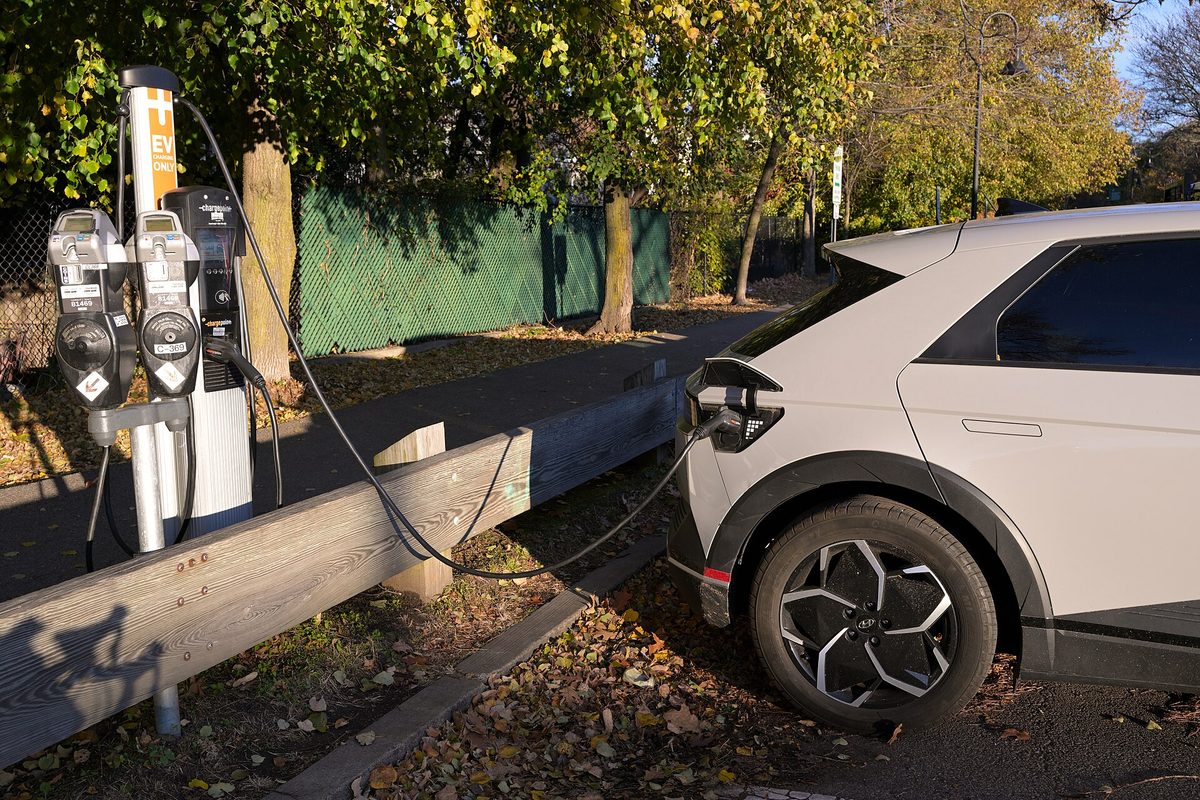
CCS1 (Combined Charging System) is the plug most non-Tesla EVs sold in the US have used for DC fast charging. It sits on top of the J1772 socket used for slower AC charging, which is why the CCS inlet looks like a big port with two extra pins underneath. NACS is Tesla's smaller single connector that handles both AC and DC charging through the same pins. Wikipedia's summary of the standard notes that the NACS AC pin layout matches J1772, which is what makes simple pass-through adapters possible.
The connector became an industry standard in stages. According to the Wikipedia entry on the North American Charging System, SAE International announced in June 2023 that it planned to standardize the connector as SAE J3400, published a technical information report in December 2023, and published the recommended practice on September 30, 2024.
What the standard allows
The same source lists two DC configurations, up to 500 V and up to 1,000 V, with the higher one backward compatible. Tesla's V4 Supercharger is described as delivering up to 500 kW, though only briefly before thermal throttling. Cable ratings are given as a maximum of 375 A uncooled and 650 A liquid-cooled. For AC, the standard allows up to 80 A at 277 V, but typical configurations provide 48 A at 240 V, about 11.5 kW. For a buyer, none of this changes what your own car can accept: the limit is your car's battery and charging hardware, not the plug.
Who can use Superchargers, and since when
The practical question is which automakers have actually opened Tesla's network to their cars. The Wikipedia table lists the dates access went live: Ford on February 29, 2024; Rivian on March 18, 2024; GM on September 18, 2024; Volvo and Polestar on October 29, 2024; Nissan on December 10, 2024; Mercedes-Benz on February 4, 2025; Hyundai and Genesis on March 25, 2025; Kia on April 24, 2025; Honda on July 22, 2025; Jaguar Land Rover on August 8, 2025; Toyota and Subaru on October 22, 2025; BMW Group on December 10, 2025; and Volkswagen Group on November 18, 2025. Stellantis is listed at March 19, 2026, while Mazda and Mitsubishi are still shown as planned.
Two caveats matter. First, access is something each automaker enables for specific models, usually through its own app or software, so owning an adapter alone is not enough. Second, that table reflects a public reference page, so confirm your exact model year and trim with the automaker before you buy.
Native NACS versus an adapter
A car with a native NACS port plugs straight into a Supercharger. A car with a CCS1 port needs an adapter to do the same, and the reverse is also true: a native NACS car needs an adapter to use the many CCS1 stations that still exist outside Tesla's network. In practice, every EV will carry an adapter for some years.
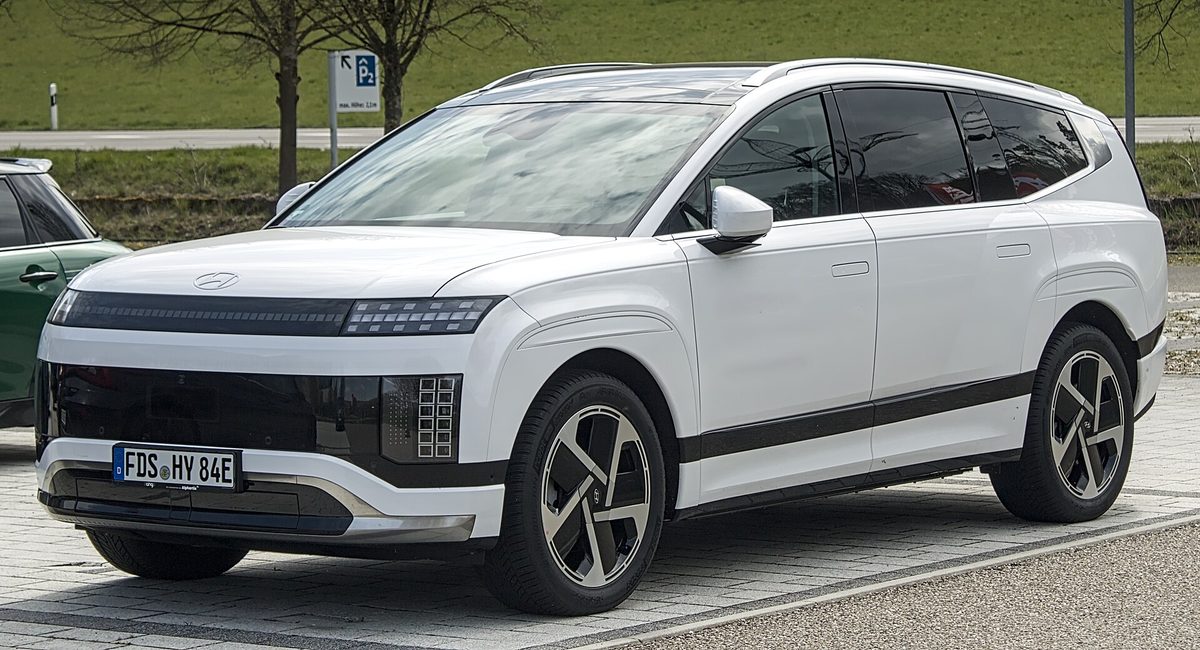
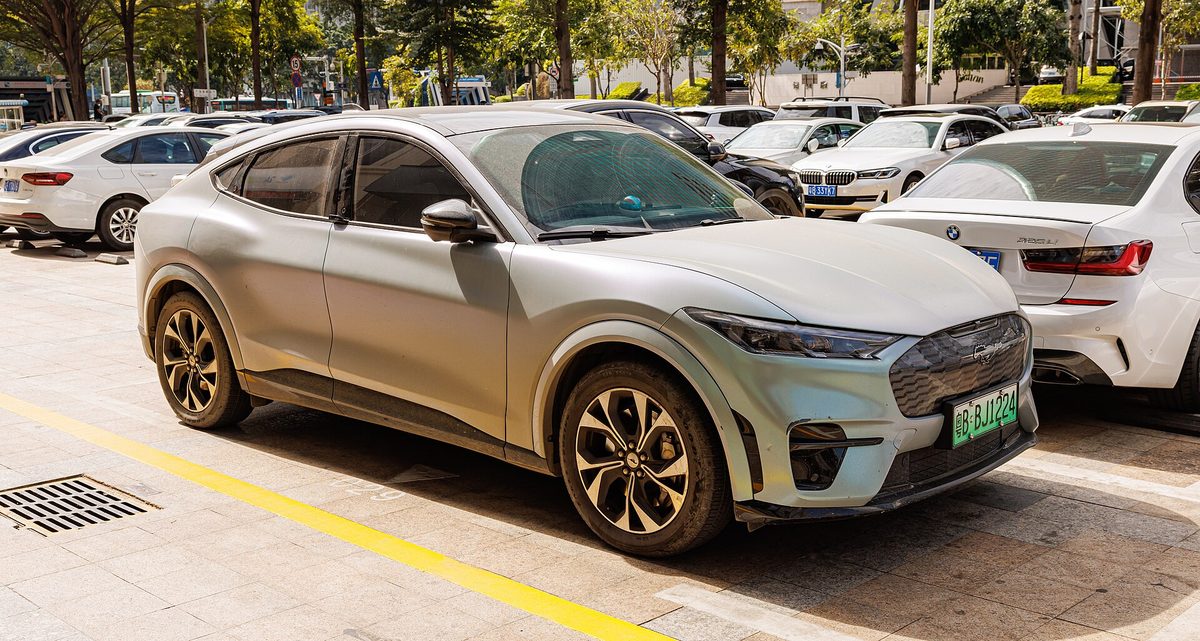
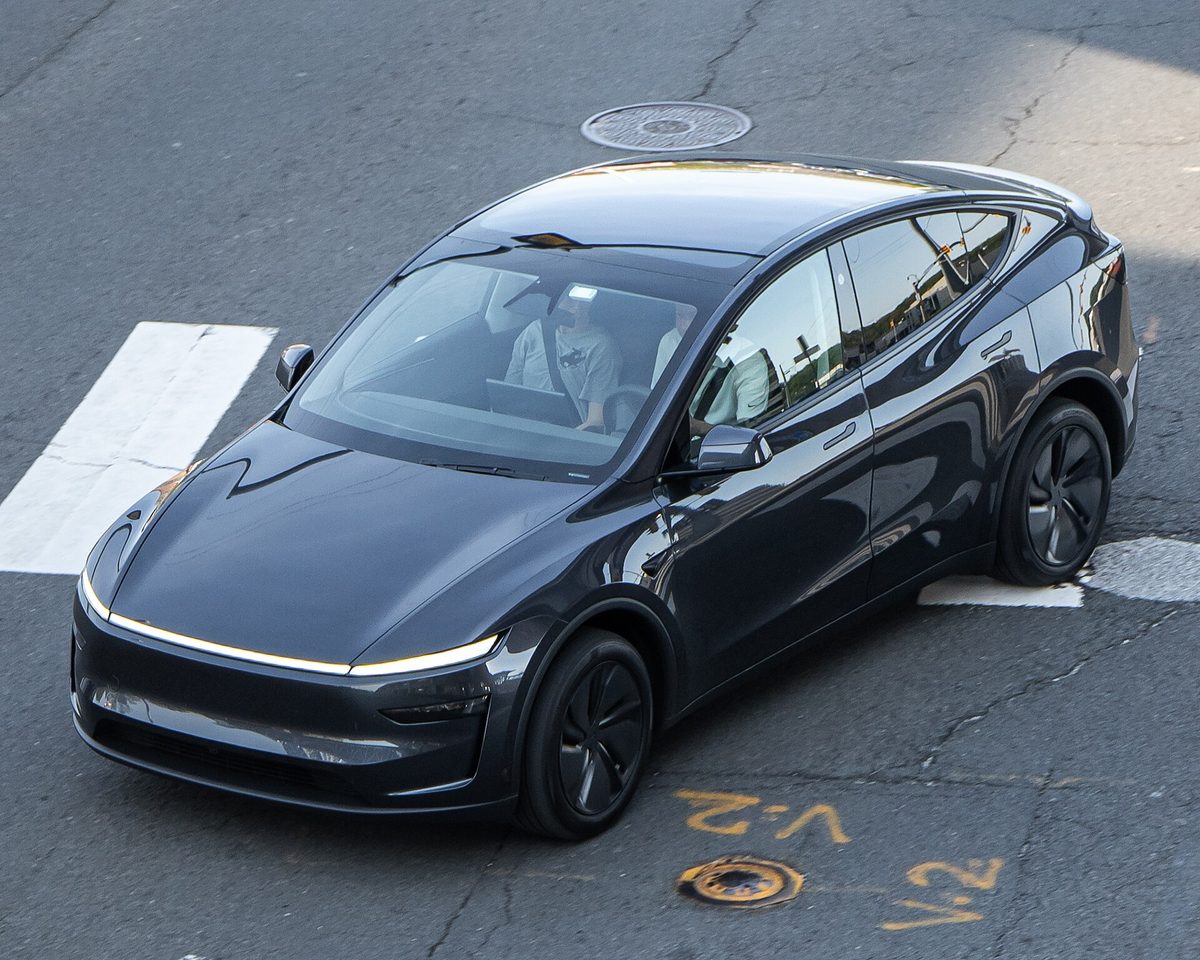
Three cars show the range of situations. The Tesla Model Y has used Tesla's own connector from the start, and Wikipedia lists its Supercharger peak at up to 250 kW on Premium, Long Range, Performance and Model Y L trims, and up to 225 kW on the Standard trim. The 2026 Hyundai Ioniq 9 is a clear example of a non-Tesla car with a native NACS port: InsideEVs reported in May 2025 that it has a Tesla-designed port and that Hyundai includes a free adapter for CCS stations. The Ford Mustang Mach-E sits on the other side: Wikipedia says Ford still sold it with a native CCS1 port in the US for the 2025 model year, with a NACS-to-CCS1 adapter offered as an option (a $200 dealer item if not installed at the factory), and gives no date for a native port.
Adapters are not a flaw so much as a transition cost. Ford was the first automaker to offer one to customers, in February 2024, and Wikipedia says it works on a majority of Tesla V3 and V4 chargers. Hyundai and Genesis owners were reported to be getting free adapters, and Honda and Acura owners were given approved adapters for Supercharger access. The lesson for a buyer is to treat the adapter as part of the car: find out who pays for it, whether it is approved by the automaker, and where it lives in the vehicle so it is there when you need it on a trip.
The catch: a plug is not a charging speed
The Ioniq 9 illustrates why a native port is only half the story. InsideEVs notes that it is an 800-volt vehicle, while Tesla Superchargers operate at about 400 volts, so Hyundai's hardware has to boost the lower voltage. The result, per InsideEVs and Hyundai's own estimates: roughly 24 minutes for 10 to 80 percent on a 350 kW non-Tesla charger, but about 40 minutes at a Supercharger, with a peak of 237 kW on a high-voltage charger and 126 kW on a Supercharger. The Ioniq 9 carries a 110.3 kWh battery, according to Wikipedia.
The Mach-E has a different profile. Wikipedia lists its DC peak at up to 150 kW for 2024 and later models, with 240 to 320 miles of EPA range depending on trim. Because its peak is modest, it gains less from a faster network than a car built around a big, high-voltage pack, and the adapter, not the speed, is its main cost.
What to check before you buy
- Port type for the exact model year and trim. Sources disagree on several models, so ask the dealer to show you the inlet, not just tell you.
- Whether the automaker has actually enabled Supercharger access for that model, and how it is activated.
- Whether the adapter is included. The Ioniq 9 ships with one for CCS stations; on the 2025 Mach-E it can be a $200 option.
- The car's own charging curve. A 10 to 80 percent time on the spec sheet usually assumes a specific charger. Ask what it is on a Supercharger.
- Tesla vehicles built before 2021 may need an ECU retrofit to charge at CCS1 stations, according to Wikipedia, which matters if you are buying a used Tesla and plan to use non-Tesla chargers.
- Home charging. Most charging still happens at home on AC, and the AC pin layout is shared, so the connector matters less there than the wiring and the wall unit.
Bottom line by type of buyer
If you road trip often, a car with Supercharger access is a real advantage today, and a native NACS port removes the one piece of hardware you could forget. If you mostly charge at home, the connector is a minor factor, and range, price and charging speed deserve more weight. If you are considering a used CCS1 EV, check that its maker has enabled Supercharger access and budget for the adapter. And if you are choosing between a native-NACS car and a CCS1 car at a similar price, pick on charging curve and range first, and treat the port as a tiebreaker.
Related cars
Related articles
- GM Closes Detroit EV Battery Plant, but Not Because of EVs — The Brownstown Plant's Lease Is Ending, and Its Tiny Output Says More Than the Headline
- Buying vs. Leasing in 2026: A $10,000 Tax Break Changes Math — A New Federal Deduction Favors Buyers, While EVs Just Lost the Lease Loophole That Used to Tilt the Other Way
- Lexus TZ Starts at $64,050 — the Brand's First Three-Row EV Undercuts Its Own Hybrid Flagship by Almost $10,000
- Hybrid vs Plug-In Hybrid vs EV: Which to Buy in 2026? The Math at $4.41 Gas, Without the Tax Credit