2025 BMW X3 vs Mercedes GLC: Which Should You Buy? The New X3 Is Softer Than You'd Expect, and the GLC Isn't as Plush as Its Badge Suggests
Both start around $50,000 with a 255-hp turbo four and standard all-wheel drive — but real road tests complicate the old "sporty BMW, comfy Mercedes" cliché on both sides.

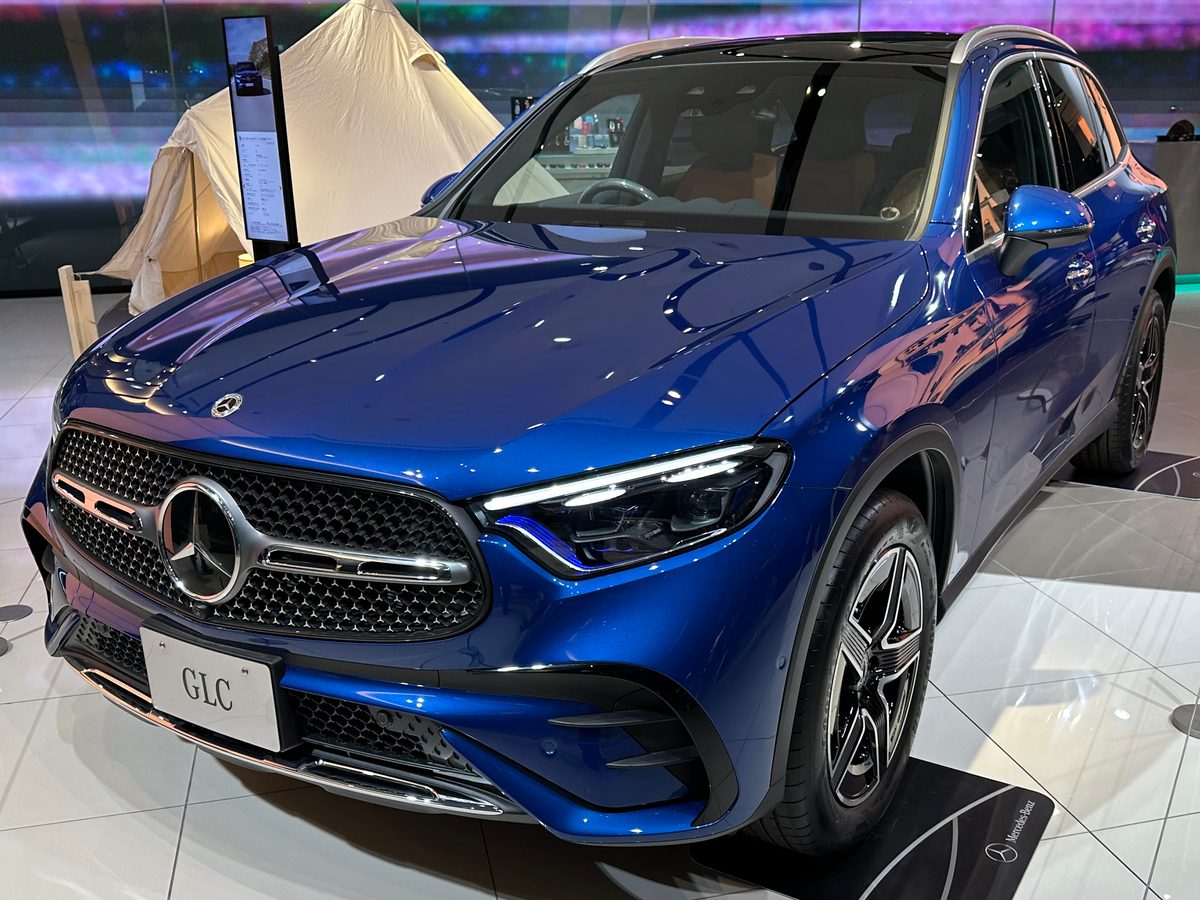
The X3 and GLC have converged on nearly identical starting math: the GLC opens at $49,550, the X3 at $50,900, both built around a 255-horsepower turbocharged four-cylinder. Both earned the IIHS Top Safety Pick+ award for 2025, so neither has a real safety edge to lean on. Where they actually diverge is lineup structure and — once you check real road tests instead of assuming the old stereotype — actual driving character.
BMW keeps the lineup simple. The X3 lineup is just two trims: the X3 30 xDrive at $50,900, and the sportier M50 xDrive performance model at $65,900. Every X3 comes with xDrive all-wheel drive standard. Mercedes goes the other way, with a GLC lineup running from the GLC 300 through a plug-in hybrid and two full Mercedes-AMG performance variants, topping out at the AMG GLC 63 S E Performance's 671 horsepower — nearly triple the X3 M50's output, a real ceiling the X3 range doesn't offer at all.
The real driving-character surprise: this new BMW is softer, not sportier. The Drive's first-drive review found the X3's steering "isn't especially feelsome but it's well-weighted... quick and fun enough to use on a backroad," and BMWBlog's own testing called the ride "surprisingly supple, adaptive suspension effectively smoothing out imperfections" — but BMWBlog also states directly that this generation (G45) is "softer in the ride and softer in the steering, with a rounder and fuzzier texture than the old car," a real, explicit departure from the outgoing X3 M40i's sharper reputation. Edmunds' own road-trip test disagreed on ride quality specifically, calling it "a letdown" where "road seams or bumps get transmitted into the cabin without enough of a buffer" — real reviewers, real disagreement, worth knowing rather than papering over with one confident verdict.
The GLC's own real surprise: it's not as plush as the badge implies. Consumer Reports says outright they were "surprised by the GLC's ride quality, or lack thereof... some bumps come through in an overly pronounced way, uncharacteristic for a Mercedes." Evo's review found "more significant bumps make their way into the cabin and right through the seat" despite the chunky 45/40-profile tires meant to help secondary ride. One real, documented exception: the GLC Plug-in Hybrid rides noticeably better than the standard GLC thanks to its rear adaptive air suspension — a genuinely different ride depending which GLC you're actually testing, not a single fixed character.
Interior space, with real numbers. The GLC wins every measured dimension: 40.7 inches of front legroom against the X3's 40.2, 37.4 inches of rear legroom against 36.3, and more headroom both rows too (41.3/39.7 vs. 40.5/38.2). The X3 answers back on cargo — 31.5 cubic feet behind the rear seats against the GLC's 21.9, a real, everyday-relevant gap for anyone who actually loads the back seat and trunk at the same time.
Infotainment, genuinely different philosophies. BMW's iDrive 9 runs on Android Automotive with a touch-and-voice-first design around the Curved Display, but keeps a physical rotary controller — reviewers call it "arguably the most user-friendly system in the luxury space" for anyone who wants tactile control without hunting through touch menus. Mercedes' MBUX is AI-driven, learning driver habits and proactively surfacing functions, but comes with "a significant learning curve" before it clicks, per the same comparison. Neither is simply better — one rewards familiarity, the other tries to get ahead of you from day one.
Ownership cost — a real, if incomplete, story. RepairPal puts the BMW X3 at $1,034 a year on average, $5,923 over 5 years and $12,074 over 10 — more than $6,500 above the class average, with a 2.5-out-of-5.0 reliability score that ranks 10th of 11 in its class. The most common documented issue is oil leaks from the valve cover gasket after roughly 60,000 miles. The Mercedes GLC 300 runs close on the annual number — about $1,039 a year per RepairPal — with a J.D. Power Quality & Reliability score of 77/100, which J.D. Power itself describes as above average. RepairPal doesn't have enough data yet to publish a scored reliability rating for the GLC300 specifically, so the X3's worse-than-class-average reputation is the better-documented one here — that's a real, honest gap in the data, not a case for the GLC quietly winning ownership costs.
Between two vehicles this close on price and this willing to complicate their own brand stereotypes, the real decision comes down to which specific trade-off you'd rather live with: the X3's bigger cargo hold and its own newly softened, more comfort-leaning character, or the GLC's genuine interior-space edge and a performance ceiling (that 671-hp AMG variant) the X3 lineup simply doesn't offer at any price.
Related cars
Related articles
- Audi Q5 vs BMW X3: Which Should You Buy? (2026) — A Better-Equipped Audi Against a Cheaper-to-Run BMW, Both Top Safety Picks
- 2027 Nissan Rogue Hybrid vs Honda CR-V Hybrid: Which Wins? A $2,000 AWD Price Gap Against a Proven Hybrid
- 2026 Subaru Forester vs Toyota RAV4: Which Is Better? Subaru Wins on Safety Ratings and AWD, Toyota on Mileage and Warranty
- 2026 Ford Explorer vs Toyota Highlander: Which Is Better? The Explorer Has the Safer Crash Results, the Highlander a 35-mpg Hybrid