Atlas vs Highlander: Which Should You Buy? (2027) — A Redesigned VW That Just Won IIHS's Top Award Against a Highlander That Missed It by One Test
VW's second-generation Atlas out-scores the Highlander on crash tests and rear-seat space, but Toyota still wins on fuel economy and dependability history.
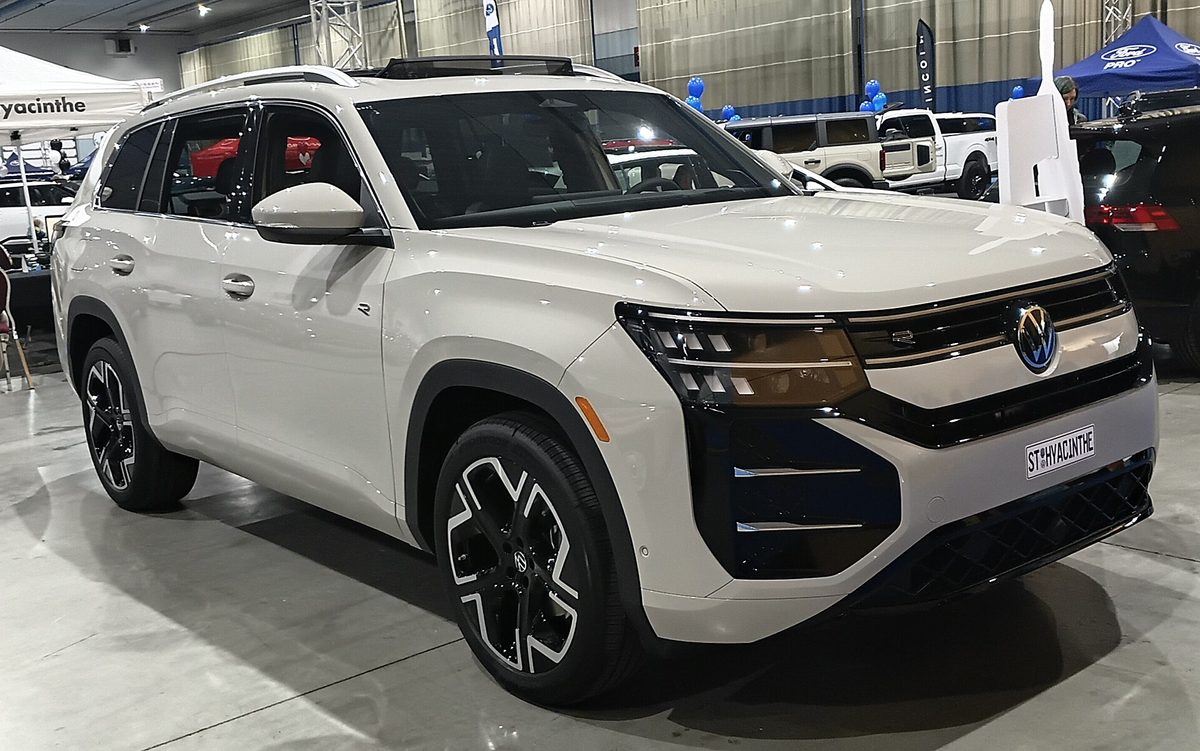
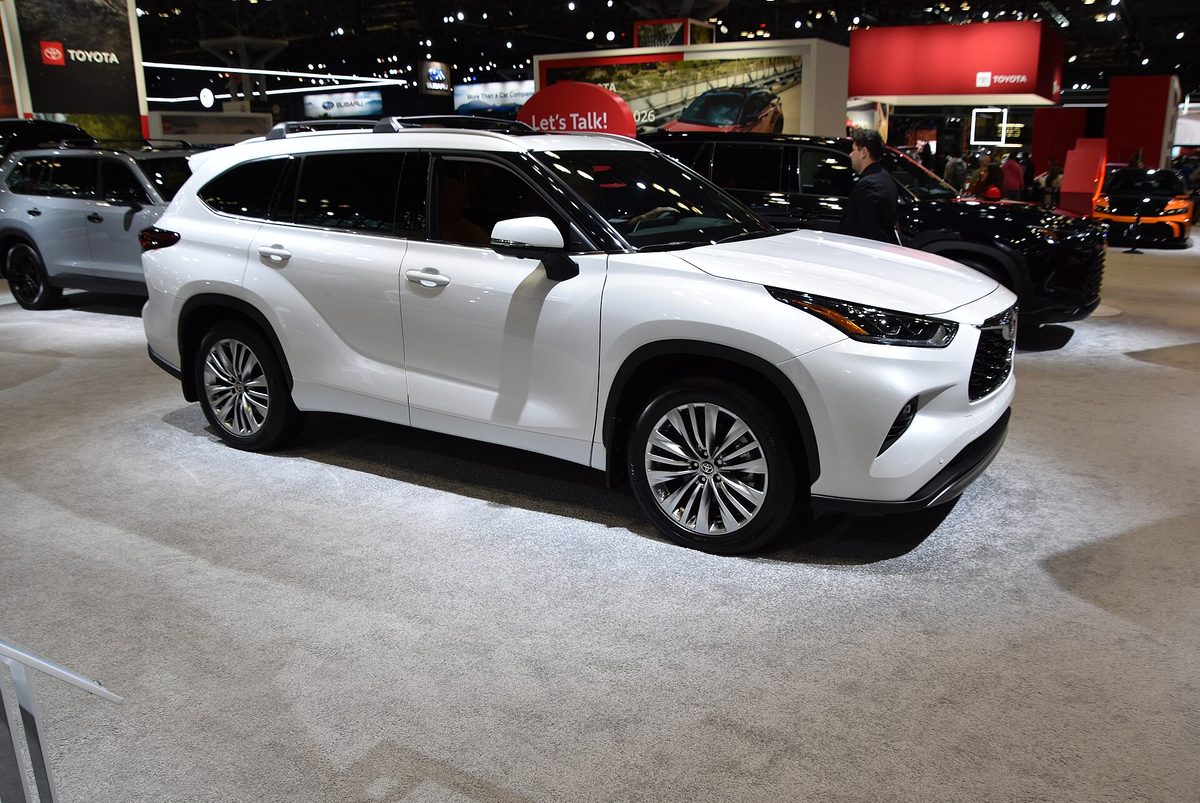
Volkswagen's three-row Atlas was fully redesigned for 2027, and the timing puts it right up against a Toyota Highlander that got its own mid-cycle refresh for 2026, including standard all-wheel drive on every trim. Both are gas-turbo three-row SUVs that start in the low-to-mid $40,000s before options. The Atlas now carries IIHS's Top Safety Pick, something the redesigned Highlander narrowly missed, and it beats the Toyota's third row by more than six inches of legroom. The Highlander answers with a hybrid powertrain the Atlas still doesn't offer, a J.D. Power reliability score Toyota calls "Great," and a brand reputation for dependability that Volkswagen, ranked last among mainstream brands in J.D. Power's 2026 dependability study, has not matched.
Price: the Atlas undercuts the Highlander at every comparable trim
The redesigned 2027 Atlas starts at $41,610 for the front-wheel-drive SE, or $43,610 with 4Motion all-wheel drive, plus a $1,525 destination charge. That puts the cheapest Atlas at $43,135 and the cheapest all-wheel-drive Atlas at $45,135. Climb the lineup and an SE with Technology package runs $45,610 FWD or $47,610 AWD, the SEL R-Line starts at $52,110 with 4Motion standard, and the top SEL Premium R-Line 4Motion is $56,610, all before destination.
Toyota's 2026 Highlander starts higher and arrives with all-wheel drive already standard, so there is no front-drive discount to chase. The gas XLE is $47,865 including destination. XSE is $49,935, Limited is $52,320, and Platinum tops the gas lineup at $55,520. The Highlander Hybrid starts at $48,020 for the XLE, climbing to $52,475 for Limited and $55,675 for Platinum; there is no hybrid XSE.
Line up the cheapest all-wheel-drive version of each and the Atlas SE 4Motion at $45,135 undercuts the Highlander XLE at $47,865 by $2,730. The gap narrows in the middle of the lineup — an Atlas SEL R-Line at roughly $53,635 with destination sits close to a Highlander Limited at $52,320 — but Volkswagen's cheapest trims reliably beat Toyota's by a few thousand dollars.
Powertrains: one engine choice against two
Every 2027 Atlas uses an updated turbocharged 2.0-liter four-cylinder making 282 horsepower and 258 lb-ft of torque, a 13-hp gain over the outgoing engine, though torque drops 15 lb-ft. Volkswagen rates it at 22 mpg city, 29 highway, 25 combined. There is no hybrid, no six-cylinder, and no diesel; this turbo-four is the only engine in the lineup, matched to an 8-speed automatic.
The Highlander offers two: it ships standard with a 2.4-liter turbocharged four-cylinder rated at 265 hp and 310 lb-ft, driving all four wheels through an 8-speed automatic and EPA-rated at 24 mpg combined. Step up to the Highlander Hybrid and a 2.5-liter four pairs with electric motors for 243 net combined horsepower, an electronic on-demand AWD system, and an EPA rating of 35 mpg combined across XLE, Limited and Platinum trims — matching XSE is not offered as a hybrid.
On paper the Atlas has the most horsepower of the three options (282 vs. 265 gas or 243 hybrid), though less torque than the Highlander's gas turbo (258 lb-ft vs. 310). The real gap is fuel economy: the Atlas's 25 mpg combined actually beats the Highlander gas's 24, essentially a wash, but it trails the Highlander Hybrid by 10 mpg. At 15,000 miles a year and $3.25 a gallon, the Highlander Hybrid burns roughly $1,393 in fuel annually against about $1,950 for the Atlas — a difference of about $557 a year that keeps compounding for as long as you own the car.
Safety: the Atlas has the award the Highlander just missed
This is where the Atlas separates itself most clearly. The IIHS 2026 ratings list the Atlas as Good in every crashworthiness category — small overlap front (both sides), the updated moderate overlap front test, and the updated side test — plus Good headlights, and the model carries IIHS's Top Safety Pick designation. Its one soft spot is the standard Front Assist pedestrian-detection system: in IIHS's toughest scenario, a simulated child darting into the road at 26 mph, the system cut impact speed by only 10 mph and did not avoid contact, and LATCH child-seat anchor ease-of-use is rated only Marginal.
The Highlander's IIHS page shows Good ratings in the small overlap front and side tests, but the updated moderate overlap front test — which IIHS tightened for 2026 to specifically weigh rear-seat occupant protection — comes back Marginal, the second-lowest grade. That one result is enough to keep the Highlander off the Top Safety Pick list entirely; Toyota's own 2025 Highlander held the award under the old, looser criteria. Headlights rate Good only on Platinum and Hybrid Platinum trims, Acceptable on the rest. Both the Atlas and the Highlander earned five-star overall ratings from NHTSA.
For a family cross-shopping these two on safety alone, the Atlas's clean sweep of Good ratings plus the Top Safety Pick badge is a real, documented edge, even with its pedestrian-braking caveat. The Highlander is not a bad performer — Good in two of three crash tests — but it is the one that currently carries no IIHS award in this class.
Interior space: the third row is not close
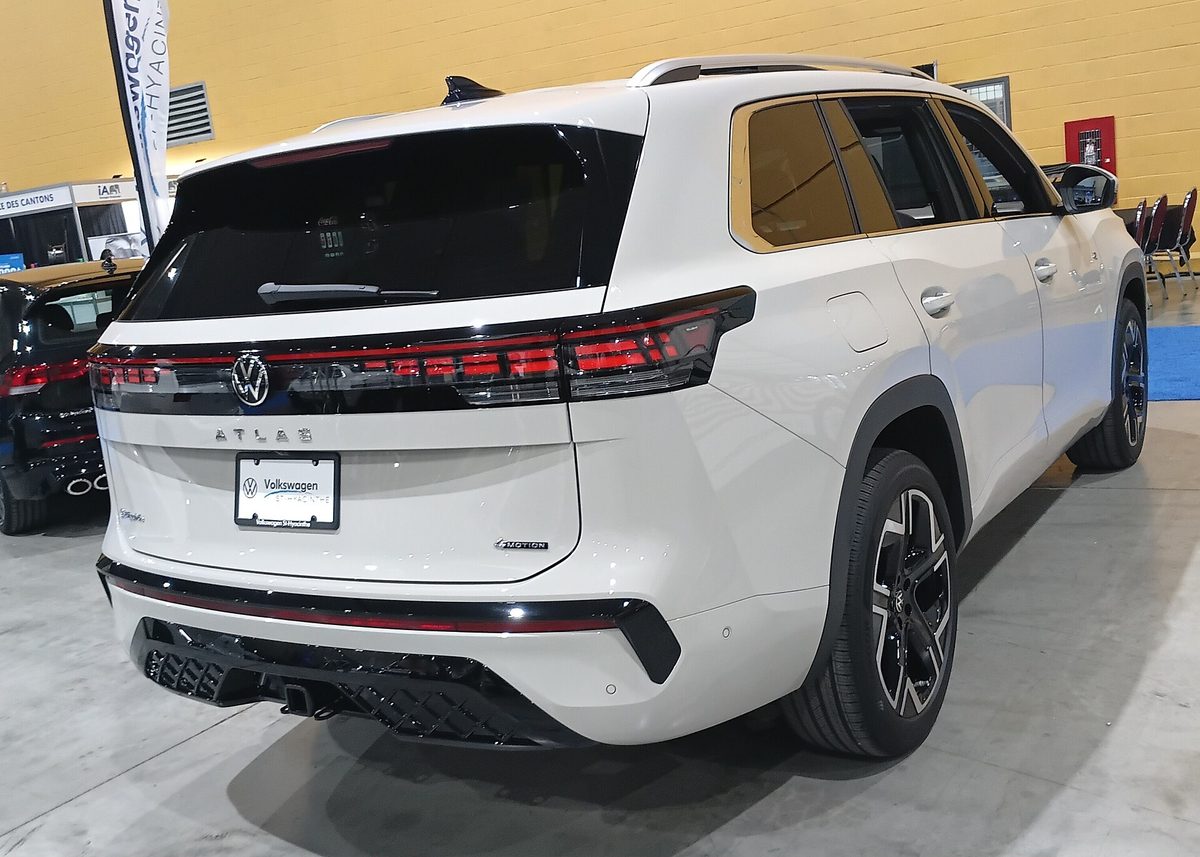
Three-row-SUV shoppers who actually plan to use the third row should look hard at this number: the Atlas offers 34.1 inches of third-row legroom, while the redesigned Highlander offers just 28 inches — a 6.1-inch gap that is immediately obvious to anyone over about 5-foot-6 sitting in the way-back seat. Toyota's own materials acknowledge the Highlander's third row trails class rivals like the Chevrolet Traverse and Honda Pilot; the Atlas, with its longer wheelbase inherited from the original Atlas's dedicated three-row architecture, does not have that problem.
Cargo space splits the other way in the most commonly used configuration. Behind the third row, the Atlas holds 21.2 cubic feet to the Highlander's 16 — another Atlas win for everyday grocery-run cargo. Fold the third row and the Highlander's 48.4 cubic feet (second row up) is harder to compare directly to Volkswagen's 55.9 cubic feet behind the second row, but with every seat folded flat, the Atlas's roughly 95.4 cubic feet beats the Highlander's 84.3. On interior volume, the redesigned Atlas is simply the bigger vehicle inside, which tracks with its better third-row and cargo numbers.
Towing is closer: both the Atlas and the gas Highlander are rated to tow up to 5,000 pounds when properly equipped. Choose the Highlander Hybrid instead and that capacity drops to 3,500 pounds, so a family cross-shopping a hybrid for fuel economy needs to also weigh the tow-rating cut.
Reliability and ownership
This is the Highlander's strongest argument. J.D. Power gives the 2026 Highlander an overall score of 82 out of 100, rated "Great," with a Quality & Reliability component score of 84. RepairPal separately rates the Highlander 4 out of 5 for reliability, placing it 7th out of 26 midsize SUVs and tops among direct rivals in that ranking. Toyota's warranty is the industry-standard 3-year/36,000-mile basic plus 5-year/60,000-mile powertrain, with hybrid components covered for 8 years/100,000 miles.
The Atlas's reliability picture is less reassuring, though not alarming. J.D. Power's predicted reliability score for the 2026 Atlas is 71 out of 100, which the firm classifies as "Average," and Volkswagen as a brand ranked last among mainstream automakers in J.D. Power's 2026 Vehicle Dependability Study. Owner complaints collected by various warranty trackers cluster around transmission hesitation, electrical glitches, oil consumption and water intrusion from sunroof drains on earlier Atlas model years — the redesigned 2027 is too new for its own long-term data yet. Volkswagen's warranty runs 4 years/50,000 miles bumper-to-bumper, shorter in years but longer in miles than Toyota's basic coverage, plus a 7-year/100,000-mile rust warranty.
Edmunds' first-drive verdict on the redesigned Atlas was blunt: "better than ever, but with its stiff ride and lack of a hybrid option, it doesn't stand out in its class." The Atlas's 2026 (pre-redesign) Edmunds expert score was 6.7 out of 10 against the Highlander's 6.4, a close result that predates both this redesign and refresh.
Who should buy which
**Buy the Atlas if** third-row legroom is a dealbreaker for your family, you want the IIHS's top safety honor, or you're shopping strictly by sticker price on a comparable AWD trim — the SE 4Motion undercuts the Highlander XLE by $2,730. It is also the one with more horsepower if that matters to you.
**Buy the Highlander if** fuel economy or long-term reliability data matters more than interior volume. The Hybrid's 35 mpg combined and Toyota's "Great" J.D. Power score are real, measurable advantages that compound over years of ownership, and the brand's dependability reputation is not just marketing — it shows up in Volkswagen's last-place finish in the same J.D. Power study.
**Wait or look elsewhere if** you need both a hybrid and a genuinely spacious third row in one vehicle — neither of these two currently offers that combination at this price point. The Kia Telluride and Hyundai Palisade are worth a look for third-row space without the Atlas's reliability question marks.
In short, the redesigned Atlas is the safer, roomier, cheaper-to-start SUV on paper. The Highlander is the one more likely to still be running trouble-free in year eight. Which one of those matters more to you should decide this.
| 2027 VW Atlas | 2026 Toyota Highlander | |
|---|---|---|
| Starting MSRP | $41,610 (SE FWD) | $47,865 (XLE, incl. destination) |
| With destination | $43,135 ($1,525) | included above |
| Cheapest AWD | $45,135 (SE 4Motion) | $47,865 (AWD standard) |
| Hybrid available | No | Yes, from $48,020 |
| Engine | 2.0L turbo I4 | 2.4L turbo I4 (gas) / 2.5L hybrid |
| Horsepower | 282 hp | 265 hp (gas) / 243 hp (hybrid) |
| Fuel economy (combined) | 25 mpg | 24 mpg (gas) / 35 mpg (hybrid) |
| Towing capacity | 5,000 lb | 5,000 lb (gas) / 3,500 lb (hybrid) |
| Third-row legroom | 34.1 in | 28.0 in |
| Cargo behind 3rd row | 21.2 cu ft | 16.0 cu ft |
| Max cargo (seats folded) | 95.4 cu ft | 84.3 cu ft |
| IIHS award | Top Safety Pick | None |
| IIHS moderate overlap | Good | Marginal |
| J.D. Power reliability | 71/100 (Average) | 82/100 (Great) |
Related cars
Related articles
- 2026 Toyota Highlander vs Honda Pilot: Which Is Better? The Last Highlander With an Engine Meets a Roomier Rival
- 2027 VW Atlas Arrives From $43,135, Dealers Oct. 16 — Redesigned Three-Row SUV Gets a 282-HP Engine and Real Wood Trim on the Base Model
- Honda Pilot vs Toyota Grand Highlander: Which Is Better? One Engine Option Against Three, and a Reliability Record That Isn't a Fair Fight Yet
- 2026 Ford Explorer vs Toyota Highlander: Which Is Better? The Explorer Has the Safer Crash Results, the Highlander a 35-mpg Hybrid
Sources
- Edmunds — 2027 Volkswagen Atlas Gets a Big Price Increase
- Edmunds — 2027 Volkswagen Atlas First Drive Review: It's Better, But Not By Much
- IIHS — 2026 Volkswagen Atlas 4-door SUV ratings
- IIHS — 2026 Toyota Highlander 4-door SUV ratings
- Toyota USA Newsroom — 2026 Toyota Highlander Gets Standard All-Wheel Drive Across the Lineup
- Cars.com — Why No Toyota SUV Earned an IIHS Top Safety Pick for 2026
- J.D. Power — 2026 Volkswagen Atlas Reliability
- J.D. Power — 2026 Toyota Highlander Reliability, Consumer Ratings & Pricing
- Cars.com — What's the 2026 Toyota Highlander and Highlander Hybrid's MPG?
- Volkswagen of America Newsroom — 2027 Atlas pricing announcement