2026 Toyota Tacoma vs. Chevrolet Colorado Compared: The Tacoma Wins on Reliability and Resale, the Colorado Wins on Towing and Tech
Both trucks share nearly identical payload numbers and starting prices, but they split hard on what midsize-truck buyers actually argue about: towing capacity, interior tech, and which one will still run well in ten years.
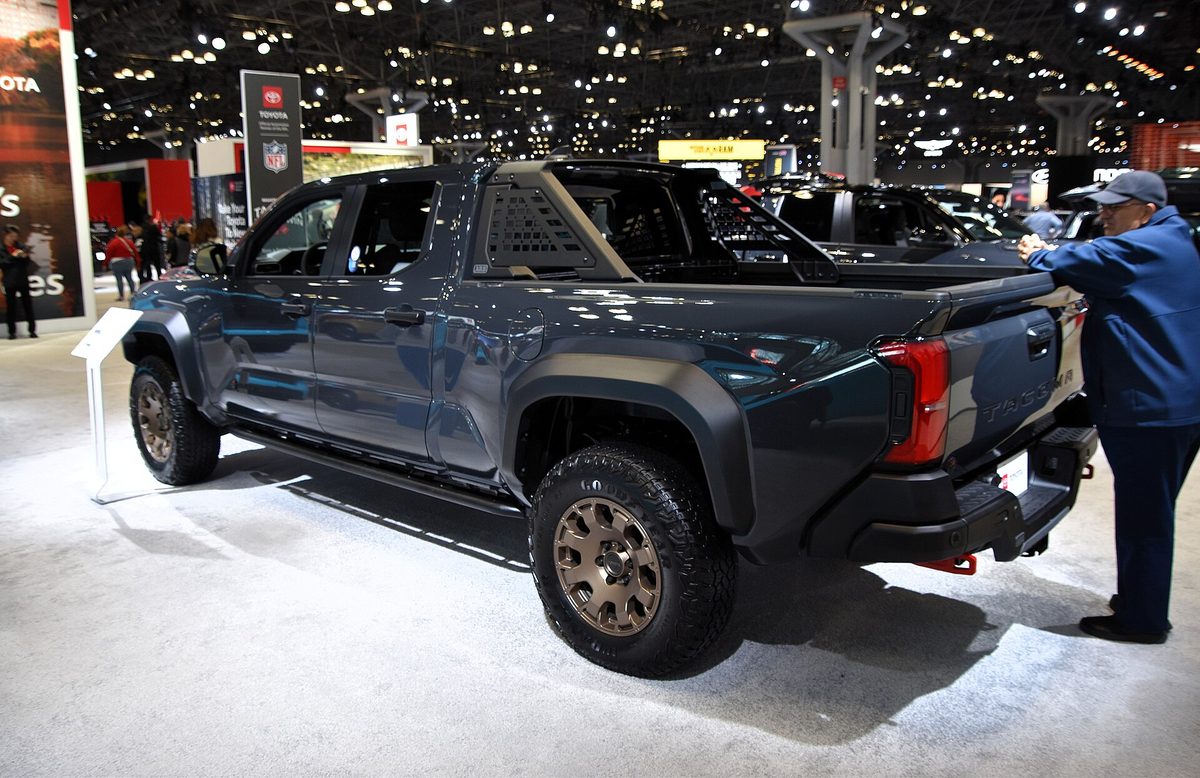
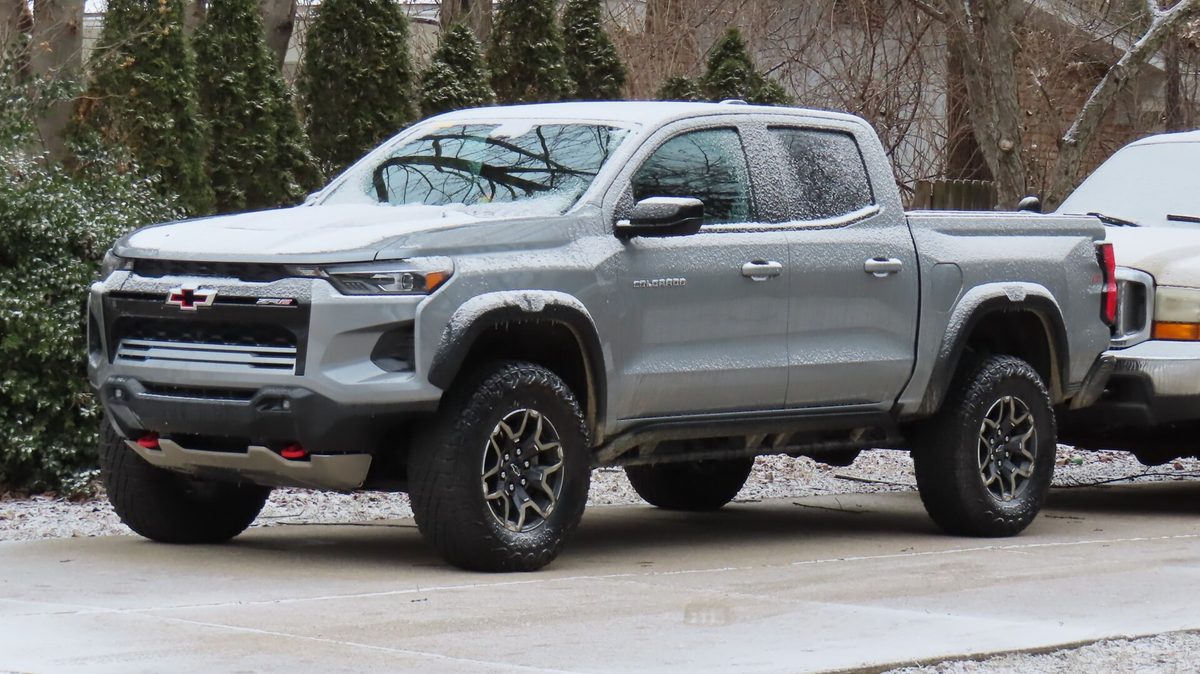
Midsize trucks are the segment where Toyota and Chevrolet fight hardest, and the 2026 Tacoma and Colorado make the comparison genuinely close. Both are current-generation trucks — the Tacoma in its fourth generation since a 2023 redesign, the Colorado in its third since the same year — so neither buyer is choosing between an old platform and a new one. The split comes down to priorities: towing and standard tech favor the Colorado, while reliability, resale value, and powertrain range favor the Tacoma.
Pricing: close at the bottom, far apart at the top
The 2026 Toyota Tacoma starts at $32,245 for the base SR trim and climbs to $64,350 for a fully loaded TRD Pro with the i-FORCE MAX hybrid powertrain, spread across eight trim levels: SR, SR5, TRD PreRunner, TRD Sport, TRD Off-Road, Limited, Trailhunter, and TRD Pro. The 2026 Chevrolet Colorado starts slightly higher at $34,495 for a 2WD Work Truck ($37,795 with 4WD, both before the $2,095 destination charge) and tops out around $50,700 for the off-road-focused ZR2, across six trims: WT, Custom, LT, Trail Boss, Z71, and ZR2.
That means the Tacoma undercuts the Colorado at the entry level by over $2,000, but the Colorado's six-trim range tops out nearly $14,000 cheaper than the Tacoma's eight-trim range — mostly because Toyota's priciest Tacoma variants carry a hybrid powertrain the Colorado doesn't offer at any price. Shoppers cross-shopping base work trucks will find the Tacoma cheaper to start; shoppers who want the most capable version of each truck will find the Colorado's ceiling considerably lower.
Engines and towing: Colorado's one clear number advantage
Every 2026 Colorado trim uses the same 2.7-liter turbocharged four-cylinder, badged TurboMax, producing 310 horsepower and 430 lb-ft of torque through an eight-speed automatic, with rear- or four-wheel drive depending on trim. It's a one-engine, no-confusion lineup. The Tacoma spreads its 2.4-liter turbo four across a wider power band — 228 hp/243 lb-ft on the base SR, up to 278 hp/317 lb-ft on most other gas trims — and adds an i-FORCE MAX hybrid option on upper trims that reaches 326 hp and 465 lb-ft, something the Colorado doesn't offer in any configuration. Buyers can also still get a 6-speed manual on some Tacoma trims, a holdout the segment is otherwise abandoning.
Towing is where the gap is real and not close. Properly equipped, the Colorado tows up to 7,700 lbs, which Chevrolet markets as best-in-class for the segment; the ZR2's off-road hardware and added weight drop that to 6,000 lbs. The Tacoma's gas trims max out at 6,500 lbs, and the hybrid i-FORCE MAX trims actually tow less — 5,950 to 6,000 lbs — because of the added battery weight. For anyone planning to tow a travel trailer or a large boat regularly, that 1,200-pound gap between a base Colorado and a base Tacoma is the single biggest spec difference between these trucks. Payload tells the opposite, nearly identical story: 1,710 lbs max for the Colorado versus 1,705 lbs for the Tacoma — a wash.
Fuel economy splits by configuration rather than by brand. A 2WD Colorado WT or LT is EPA-rated at 21 mpg combined (19 mpg with 4WD, 17 mpg combined on the heavier ZR2), while the Tacoma's gas trims run 20–24 mpg combined depending on trim and drivetrain, with the hybrid doing meaningfully better than either gas powertrain. Neither truck is a mileage leader in absolute terms, but the Tacoma's hybrid option gives Toyota the only path to genuinely better efficiency in this class.
Interior, tech, and bed/payload practicality
Inside, the Colorado's advantage is both the size of its standard screen and how much cabin space it offers. An 11.3-inch touchscreen with Google built-in comes standard across the Colorado lineup, with voice commands and app integration that most reviewers call genuinely capable, not just a bigger display for its own sake. The Tacoma's base screen is smaller, and matching the Colorado's tech typically means stepping up a trim or two. The Colorado also edges out the Tacoma on rear legroom and overall interior volume, which matters more on a work truck that spends real time as a daily driver than it does on a weekend off-roader.
That said, multiple reviewers who've spent time in both note the Tacoma's redesigned cabin has closed the materials and fit-and-finish gap that used to separate it clearly from the Colorado, and that the Tacoma's tech, safety features, and driving dynamics feel more deliberately tuned to work together as a system — the Colorado feels modern; the Tacoma feels more cohesive. Both trucks offer comparable bed-length choices, with crew-cab configurations running 5 feet or 6.2 feet on each.
Safety: both trucks have an honest weak spot
Neither truck has a clean safety-test sweep, and buyers should know exactly where each one falls short rather than assuming either is simply "safe" or "unsafe." The 2026 Tacoma earns top IIHS marks in the updated side-impact test and the small-overlap front test, but only a marginal rating in the moderate-overlap front test — in that test, a rear dummy's head came close to striking the seatback, and the lap belt rode up onto the abdomen in a pattern IIHS calls submarining. The Tacoma doesn't currently hold an IIHS award, and NHTSA hasn't yet published full NCAP crash-test results for the 2026 model.
The 2026 Colorado has been tested by both agencies. NHTSA gives it an overall four stars — five stars in the side-impact test, four in the frontal test, but only three stars for rollover resistance. IIHS rates the Colorado Good in small-overlap front and side tests but, like the Tacoma, only Marginal in the newer moderate-overlap front test. Where the Colorado falls further behind is its driver-assistance scoring: IIHS rates its standard vehicle-to-vehicle front crash prevention system Poor, with only the pedestrian-detection half of the system rated Acceptable. Buyers who weight active-safety tech heavily should treat that as a real mark against the Colorado, even though its crash-structure ratings are competitive.
Reliability and resale: the Tacoma's real advantage
This is where the two trucks separate most clearly over time rather than on a spec sheet. J.D. Power's 2026 quality and reliability rankings put the Tacoma first in the midsize-truck segment at 85/100, with the Colorado close behind at 83/100 — a narrow gap on paper that understates Toyota's track record, since Tacoma has led the segment in J.D. Power dependability and Consumer Reports reliability scoring for years running. That reputation shows up directly in resale value: Tacomas hold roughly 65% of their MSRP at 36 months, versus roughly 52% for the Colorado, a gap that adds up to real money on a truck most owners keep for years rather than trading in quickly.
Both trucks share one specific weak point — automatic-transmission complaints. The Tacoma's issue is delayed or abrupt engagement at low speeds, but beyond that its problem list is short. The Colorado's transmission complaints run a bit broader — shuddering, delayed engagement, rough shifting — and its average repair cost when something does go wrong tends to run higher than the Tacoma's. Neither is a dealbreaker on its own, but it's one more data point favoring the Tacoma for buyers planning to own long-term.
Which one to buy
Buy the Chevrolet Colorado if towing capacity is your main priority, if you want the segment's biggest standard touchscreen and a more spacious cabin without hunting for the right trim, or if the lower ceiling price on a well-equipped truck matters more than long-term resale value. The Trail Boss and Z71 trims in particular undercut comparable Tacoma off-road trims by a real margin.
Buy the Toyota Tacoma if you want the only hybrid powertrain in the segment, a stronger base-model price, or the reliability and resale track record that's made Tacoma the default choice for buyers who keep trucks a decade or more. It also remains the only one of the two offering a manual transmission on select trims, a detail that still matters to a vocal slice of the midsize-truck market.
For most shoppers comparing these two side by side at a dealership, the decision usually comes down to a single question: do you tow heavy trailers often, or do you plan to own this truck for the long haul? The Colorado answers the first question better. The Tacoma answers the second.
| Spec | Toyota Tacoma | Chevrolet Colorado |
|---|---|---|
| Starting price | $32,245 | $34,495 (2WD) / $37,795 (4WD) |
| Top trim price | $64,350 (TRD Pro hybrid) | ~$50,700 (ZR2) |
| Engine | 2.4L turbo I4, 228-278 hp; optional i-FORCE MAX hybrid, 326 hp/465 lb-ft | 2.7L turbo I4 "TurboMax", 310 hp/430 lb-ft (all trims) |
| Transmission | 8-speed automatic or 6-speed manual (select trims) | 8-speed automatic only |
| Max towing | 6,500 lbs (gas) / 5,950-6,000 lbs (hybrid) | 7,700 lbs (6,000 lbs on ZR2) |
| Max payload | 1,705 lbs | 1,710 lbs |
| Combined fuel economy | 20-24 mpg (gas), better on hybrid | 21 mpg (2WD) / 19 mpg (4WD) / 17 mpg (ZR2) |
| Standard touchscreen | Smaller on base trims; larger screen requires a trim step-up | 11.3 in. with Google built-in, standard on all trims |
| IIHS moderate overlap front | Marginal | Marginal |
| NHTSA overall rating | Not yet tested (2026 model) | 4 stars (5 side / 4 front / 3 rollover) |
| J.D. Power quality & reliability | 85/100 (#1 in segment) | 83/100 (#2 in segment) |
| 36-month resale value | ~65% of MSRP | ~52% of MSRP |
| Trim count | 8 (SR to TRD Pro) | 6 (WT to ZR2) |
Related cars
Related articles
- Slate Truck Opens First Showroom, Priced From $24,950 — The Chicago Experience Center Sits in a Former Tesla Store, and the Truck Still Has No Dealers
- Towing Capacity, Payload and GVWR Explained (2026): Why the Trailer Rating in the Ad Is Rarely the Limit That Stops You
- Audi Q5 vs BMW X3: Which Should You Buy? (2026) — A Better-Equipped Audi Against a Cheaper-to-Run BMW, Both Top Safety Picks
- Honda Pilot vs Toyota Grand Highlander: Which Is Better? One Engine Option Against Three, and a Reliability Record That Isn't a Fair Fight Yet
Sources
- TrueCar — 2026 Toyota Tacoma Review
- Beechmont Toyota — 2026 Toyota Tacoma Specs: Towing Capacity, MPG & Hybrid Power
- GM Authority — 2026 Chevy Colorado Pricing Uncovered
- Edmunds — 2026 Chevrolet Colorado Specs & Features
- autoevolution — 2026 Toyota Tacoma Fails To Win Top Safety Award After "Marginal" Crash Test Rating
- informedforlife.com — 2026 Chevrolet Colorado Safety Rating (NHTSA/IIHS)
- J.D. Power — 2026 Toyota Tacoma Reliability, Consumer Ratings & Pricing
- Autoblog — Toyota Tacoma Vs. Ford Ranger Vs. Chevrolet Colorado: Which One Is The Most Reliable?
- GM Authority — How Does 2026 Chevy Colorado Fuel Economy Stack Up?
- Tustin Toyota — 2026 Toyota Tacoma vs. Chevy Colorado