Altima vs Camry: Which Should You Buy? (2027) — A $27,790 Gas Sedan in Its Reportedly Final Year Against a 51-MPG Hybrid With the IIHS's Top Safety Award
The Altima undercuts the Camry at the dealer, but fuel and crash-test results tilt ownership toward Toyota.
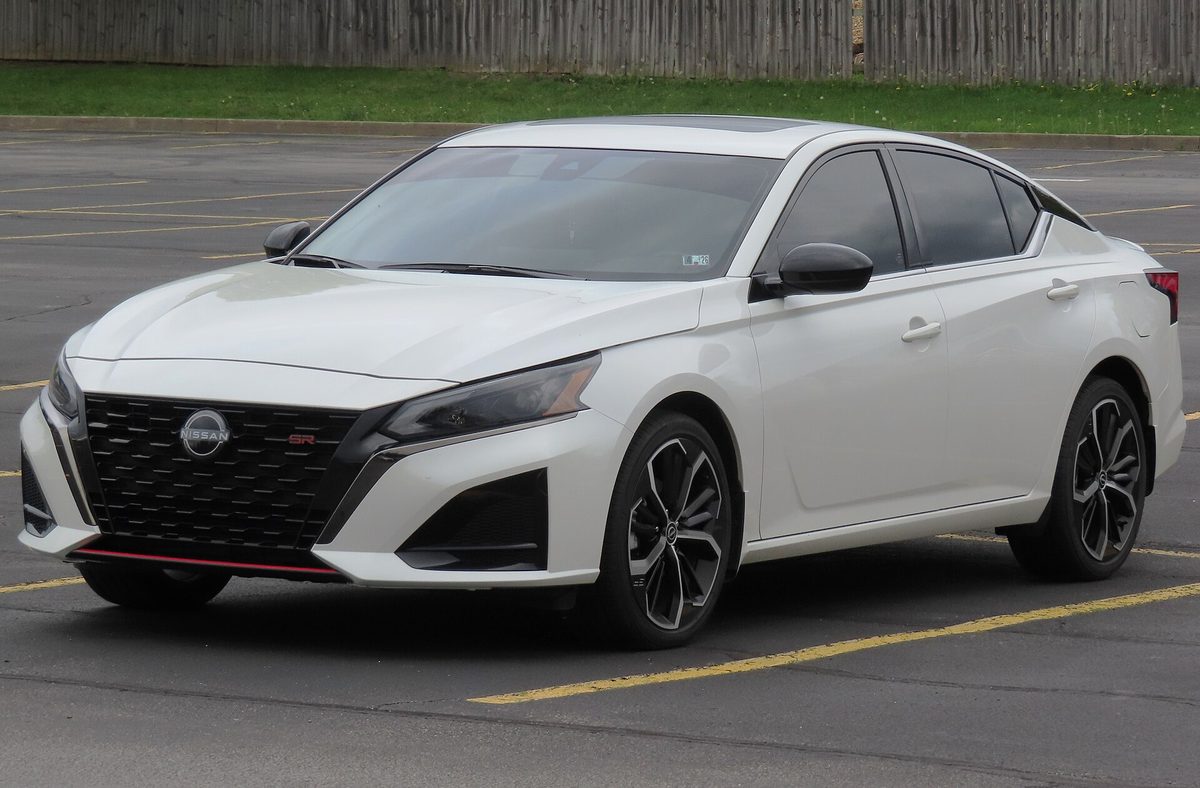
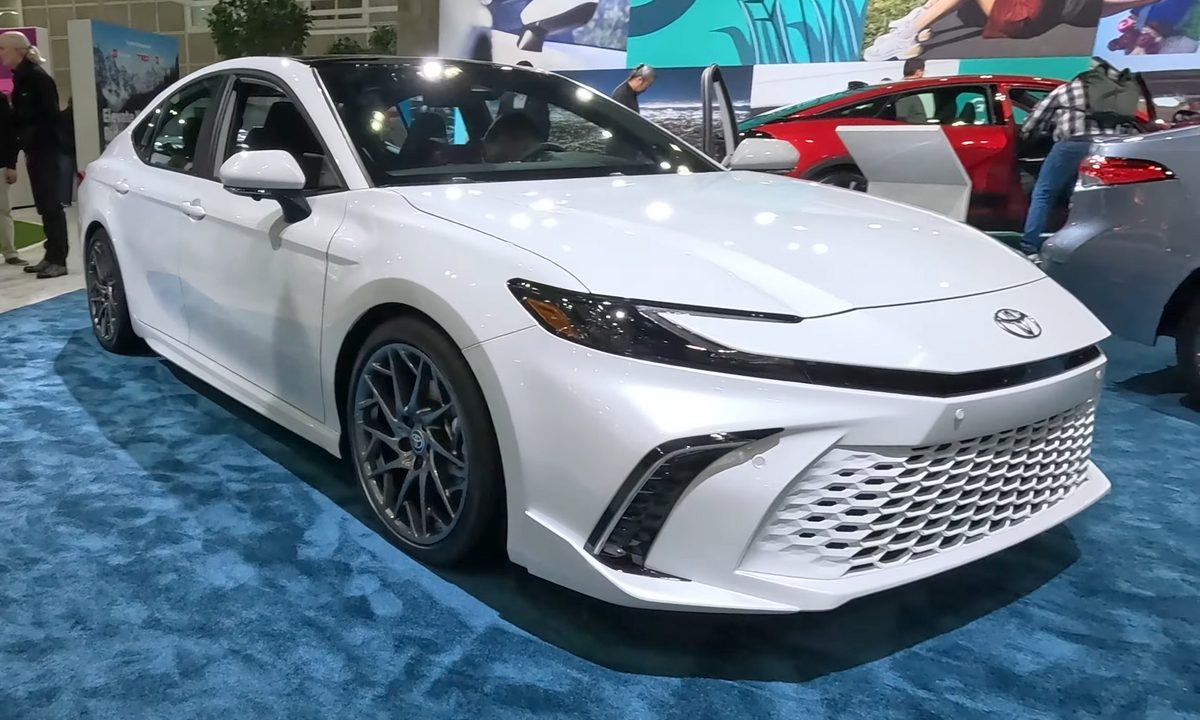
Two midsize sedans from Japanese brands share a wheelbase to the tenth of an inch and sit within a few hundred dollars of each other once all-wheel drive is added. That is where the similarity ends. The 2027 Nissan Altima is a conventional gasoline car that costs less to buy and reportedly enters its last model year. The 2027 Toyota Camry is hybrid-only, rated up to 51 mpg combined, and carries the highest crash-test award the Insurance Institute for Highway Safety gives. For most shoppers the decision comes down to how much the first $1,930 matters against what the Altima's safety scores and fuel bills will cost over ownership.
Price: the Altima is cheaper, but only until you want all-wheel drive
The 2027 Altima starts at $27,790 for the front-drive SV, according to AutoGuide's October 14, 2026 report. Add Nissan's $1,275 destination charge and the cheapest Altima is $29,065. The sporty SR is $29,190 in front-wheel drive and $30,690 with Intelligent All-Wheel Drive. The cheap all-wheel-drive SV is gone, so the AWD cars now start at the SR grade.
Toyota's 2027 Camry lineup, announced with a flat $600 price increase, starts at $29,700 for the LE. Destination rose $100 to $1,295, which makes the cheapest Camry $30,995. The SE is $32,200, the Nightshade $33,200, the XLE $34,900 and the XSE $36,100, all before destination. All-wheel drive is a $1,525 option on any trim.
That makes the entry gap $1,930 in the Altima's favor ($30,995 minus $29,065). It shrinks once you compare like with like. A Camry LE with all-wheel drive is $29,700 plus $1,525 plus $1,295, or $32,520. An Altima SR AWD is $30,690 plus $1,275, or $31,965. The Camry costs $555 more for the all-wheel-drive version, and that Camry is a hybrid. If you want the sportier look, the comparison runs the other way: an Altima SR front-drive at $30,465 with destination is $3,030 below a Camry SE at $33,495.
Powertrains and fuel economy: the biggest gap in the class
Every 2027 Altima uses the same 2.5-liter four-cylinder, rated at 188 horsepower in front-wheel drive and 182 hp with all-wheel drive. Nissan lists up to 26 mpg city and 36 highway for front-drive cars, and 25 city and 33 highway with all-wheel drive. Cars.com's comparison puts the front-drive car at 30 mpg combined. The turbocharged variable-compression engine that once sat above it was dropped after the 2024 model year, so there is no stronger Altima to step up to.
The Camry has been hybrid-only since the current generation launched. Its 2.5-liter hybrid system makes 225 hp in front-wheel drive and 232 hp with all-wheel drive, which adds a rear electric motor instead of a driveshaft. Toyota's figures are up to 51 mpg combined for the front-drive LE and 50 mpg with all-wheel drive. Cars.com lists the same 51 mpg against the Altima's 30.
Put numbers on it. Assume 15,000 miles a year and gasoline at $3.00 a gallon, both our own round figures. At 30 mpg the Altima burns 500 gallons, about $1,500 a year. At 51 mpg the Camry burns about 294 gallons, about $882. The difference is roughly $618 a year, so the Camry's $1,930 entry premium is covered in a little over three years of fuel alone, before resale. Drive fewer miles or live where gasoline is cheap and the payback stretches; drive more and it shortens.
There is also a performance angle that surprises people. The Camry is the quicker-feeling car on paper because its horsepower advantage (225 against 188) comes with the instant torque of an electric motor. The Altima's CVT-equipped four-cylinder is adequate, not exciting.
Safety: the most lopsided category
This is where the two cars diverge most clearly. The IIHS lists the 2026-27 Camry as a Top Safety Pick+ in the midsize class, its highest award. To earn it a car must score Good in the small overlap, moderate overlap and side tests, and have Acceptable or Good headlights and Good pedestrian front crash prevention as standard. NHTSA also gave the 2026 Camry five stars overall, according to Cars.com.
The Altima does not carry an IIHS award, and the individual results explain why. Its small overlap front test is Good. But the updated moderate overlap front test is Marginal, with rear passenger restraints rated Poor, and the updated side test is Poor, with driver head protection Marginal. Its headlights are Acceptable. Standard front crash prevention scores Poor for vehicle-to-vehicle and Marginal for pedestrians. Child-seat anchors are the bright spot, rated Good+ for LATCH. NHTSA's overall rating for the Altima is five stars.
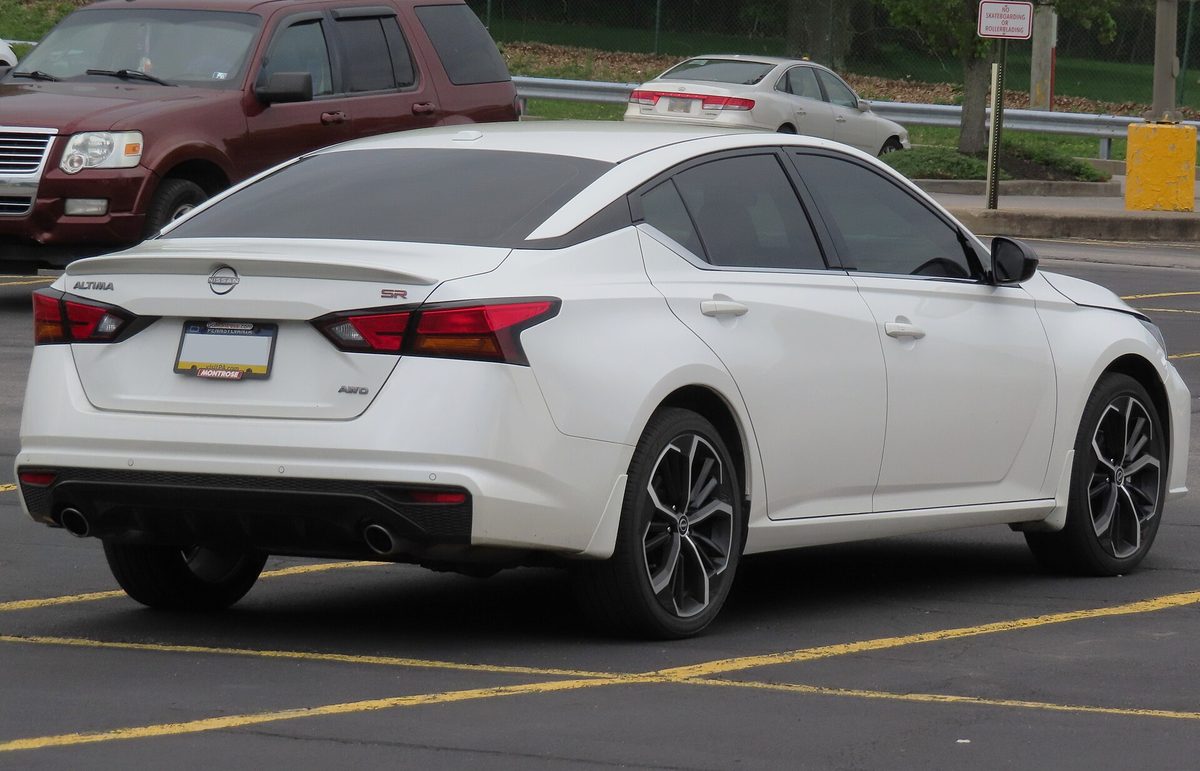
Nissan does equip every Altima with Safety Shield 360, which bundles blind spot warning, rear automatic braking and high beam assist, and ProPILOT Assist is available for highway driving. The equipment list is respectable. The structural and crash-avoidance results are what lag, and a family that carries passengers in the back seat should weigh the rear-restraint score in particular.
Space, comfort and tech
The two cars have the same 111.2-inch wheelbase and nearly the same length: 193.0 inches for the Altima, and 192.3 to 193.7 inches for the Camry depending on variant. Nissan quotes up to 15.4 cubic feet of trunk space and 58.1 cubic feet with the rear seats folded. Cars.com lists the Camry's trunk at 15.1 cubic feet, so the Altima is slightly ahead for luggage. The Camry wins the back seat, with 38.0 inches of rear legroom against the Altima's 35.2 inches in the same comparison.
Inside, the Altima SV uses an 8-inch touchscreen and the SR steps up to a 12.3-inch unit, 19-inch wheels, paddle shifters and carbon-look trim. Apple CarPlay and Android Auto are standard, as is remote start. Nissan still markets its Zero Gravity front seats, which many drivers find comfortable on long trips. The Camry's lineup spans five grades, from LE to the sportier SE, Nightshade and XSE and the more luxurious XLE, so there is a wider range of interior choices.
Which one costs more to own
Sticker price is the smaller part of the story. The Camry's fuel advantage is real and measurable. Edmunds' side-by-side rates the Camry 8.4 out of 10 against 6.4 for the Altima, and the gap largely reflects efficiency, safety and the hybrid powertrain. Resale values for Toyota sedans have long been stronger than Nissan's, though we have not found a current dataset we can cite for these two specific models, so treat that as a general pattern rather than a figure.
One more factor is time. Nissan's own press kit covers only pricing and does not announce an end date, but AutoGuide calls 2027 the final year and other outlets say it may be. An orphaned model is not unusual to own, and parts and service continue for years, but it can affect trade-in value and the pace of any future software or feature updates. The Camry has no such cloud over it.
Who should buy which
**Buy the Camry if** you drive more than about 10,000 miles a year, want the best crash-test results in the class, carry adults in the back seat, or plan to keep the car for years. The extra $1,930 pays for itself in fuel in roughly three years at our assumptions, and the safety award is not available at any price on the Altima.
**Buy the Altima if** the lowest monthly payment is the priority, you drive little, and you want a front-drive sedan under $30,000 with destination. It is also the choice for a buyer who wants the sportier SR styling and all-wheel drive for about $555 less than an AWD Camry, and who is comfortable with the IIHS results above.
**Wait or look elsewhere if** you want a gasoline sedan with a stronger engine. The Altima no longer offers one, and the Camry has no non-hybrid option either. Cross-shop the Honda Accord, which we compared with the Camry earlier, before signing.
In short, the Altima is the cheaper car on the day you buy it, and the Camry is the cheaper car to live with. For most households the second one wins.
| 2027 Nissan Altima | 2027 Toyota Camry | |
|---|---|---|
| Starting MSRP | $27,790 (SV) | $29,700 (LE) |
| With destination | $29,065 ($1,275) | $30,995 ($1,295) |
| All-wheel drive | SR only, from $30,690 | Any trim, +$1,525 |
| Powertrain | 2.5L four-cylinder, CVT | 2.5L hybrid, electric AWD |
| Horsepower | 188 (FWD) / 182 (AWD) | 225 (FWD) / 232 (AWD) |
| Fuel economy | 26/36 mpg FWD, about 30 combined | Up to 51 combined (50 AWD) |
| Wheelbase | 111.2 in | 111.2 in |
| Trunk | 15.4 cu ft | 15.1 cu ft |
| Rear legroom | 35.2 in | 38.0 in |
| IIHS award | None | Top Safety Pick+ |
| IIHS moderate overlap / side | Marginal / Poor | Good / Good |
| Edmunds rating | 6.4 / 10 | 8.4 / 10 |
Related cars
Related articles
- 2025 Honda Accord vs Toyota Camry: Which Is Better? One Only Comes as a Hybrid Now, and It Shows
- 2027 Toyota Camry Costs $700 More, Still Starts Under $31,000 With Destination — Toyota Didn't Touch the Hybrid Powertrain or Features, Just the Price
- 2027 Nissan Altima Price: From $27,790, Final Model Year — The Sedan's Last Year Costs $210 More, and the Cheap All-Wheel-Drive SV Is Gone
- October 2026 Car Sales Forecast: $823 Record Payment — Hybrids Reach 18.6% While Shoppers Pay More Each Month for a Market That Is Barely Growing
Sources
- AutoGuide — Here's What It'll Cost You to Buy the Very Last Nissan Altima
- IIHS — 2026 Nissan Altima 4-door sedan ratings
- IIHS — 2026 Top Safety Picks: Toyota
- Toyota USA Newsroom — 2027 Toyota Camry
- Nissan USA Newsroom — 2027 Altima press kit
- Nissan USA — Altima features
- Cars.com — Nissan Altima vs. Toyota Camry
- Edmunds — Nissan Altima vs. Toyota Camry
- Wikipedia — Nissan Altima (L34)