October 2026 Car Sales Forecast: $823 Record Payment — Hybrids Reach 18.6% While Shoppers Pay More Each Month for a Market That Is Barely Growing
J.D. Power and GlobalData project flat October volume, but monthly payments, loan rates and hybrid share are all moving.
The October 2026 forecast from J.D. Power and GlobalData, reported on October 25, describes a US new-car market that is holding its volume while getting more expensive to finance. Total sales are projected at 1,327,100 units, up 0.2% year over year after adjusting for selling days (3.9% unadjusted), and the seasonally adjusted annual rate is 15.6 million, flat against October 2025.
The payment is the story
The average transaction price is forecast at $46,329, down 0.1%, so sticker prices are not what is moving. What is moving is the cost of carrying the loan: the average monthly payment is projected at $823, an October record, and the average new-vehicle loan rate is 6.81%, up 19 basis points from a year earlier. Retail spending still rises 3.2% to $49.2 billion even though retail volume falls 1.4% on an adjusted basis, to 1,109,500 units.
The financing mix shows how buyers are stretching to hold that payment. Loans of 84 months or longer make up 13.3% of financing, up 0.9 percentage points, 29.6% of trade-ins carry negative equity (up 0.6 points), and subprime borrowers account for 11.0% of financing, up 1.5 points. That echoes what we reported on used-car loan costs earlier this month: affordability is being squeezed from the credit side, not the price tag.
Incentives are quietly doing the work
Automakers are paying to keep volume flat. The average incentive is forecast at $3,304 per vehicle, up 13.1% and equal to 6.3% of MSRP, 0.7 points higher than last year. Gasoline and conventional hybrid models carry $3,142 on average, up $468 (17.5%), while EV incentives of $7,531 are down $5,455, a 42.0% drop, as the discounting that followed the end of the federal credit fades.
Hybrids keep gaining while EVs slip
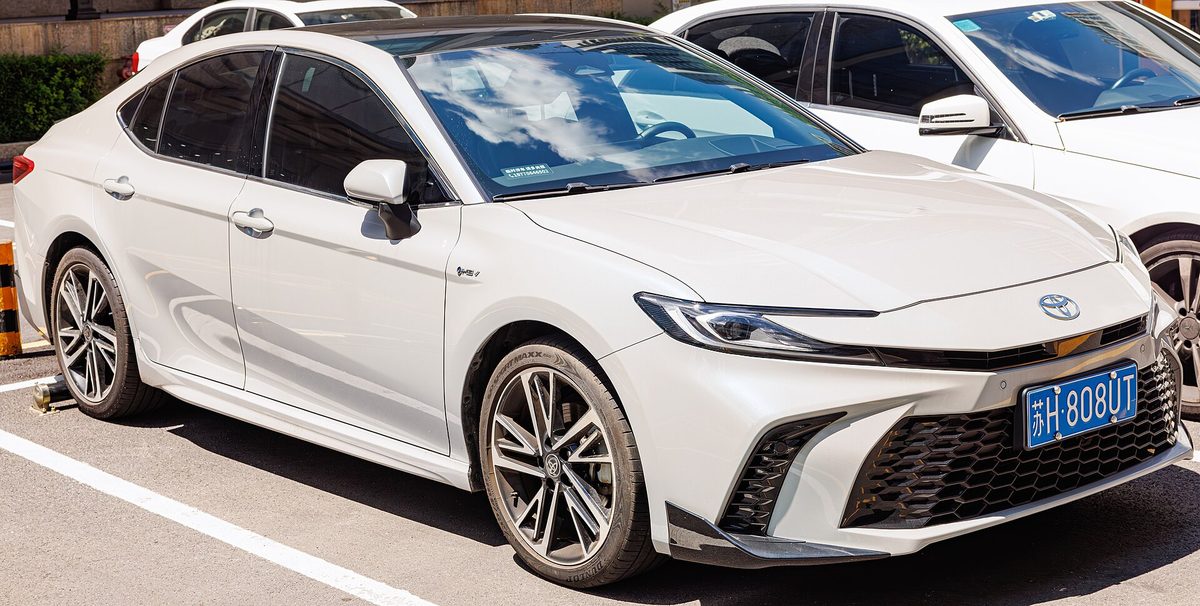
The powertrain split is the clearest shift. Hybrids are forecast at 18.6% of retail sales, up 4.0 percentage points, while EV share is projected at 6.9%, down 0.3 points. For shoppers it means the cheapest way to cut fuel costs is increasingly a hybrid from a mainstream brand; the Toyota Camry, which is sold only as a hybrid, is the clearest example of a nameplate that has made the switch for everyone.
Outside the US the picture is weaker. The same forecast puts global light-vehicle sales for October at 7.7 million units, down 7.4%, and trims the full-year 2026 forecast to 87.9 million, down 4.8%, from a previous 88.3 million. For American buyers the practical takeaway is narrower: volume is steady, incentives on gas and hybrid models are growing, and the monthly payment, not the price, is where the pressure shows.
Related cars
Related articles
- Buying vs. Leasing in 2026: A $10,000 Tax Break Changes Math — A New Federal Deduction Favors Buyers, While EVs Just Lost the Lease Loophole That Used to Tilt the Other Way
- Used Car Loan Interest Hit $11,000 This Year — Nearly Double 2019, as Cox Automotive Says Wealthy Buyers Are Now Propping Up the Whole Market
- 2026 Toyota RAV4 Review: Hybrid-Only, From $31,900, Up to 43 MPG Combined and Mixed IIHS Crash Results
- 2027 Toyota Camry Costs $700 More, Still Starts Under $31,000 With Destination — Toyota Didn't Touch the Hybrid Powertrain or Features, Just the Price