Do You Need Winter Tires If You Have AWD? Real Ice-Braking Tests Say Yes — AWD Helps You Go, Not Stop
All-wheel drive sends power to all four wheels when you accelerate. It does nothing at all when you brake — and braking is where most winter crashes actually happen.
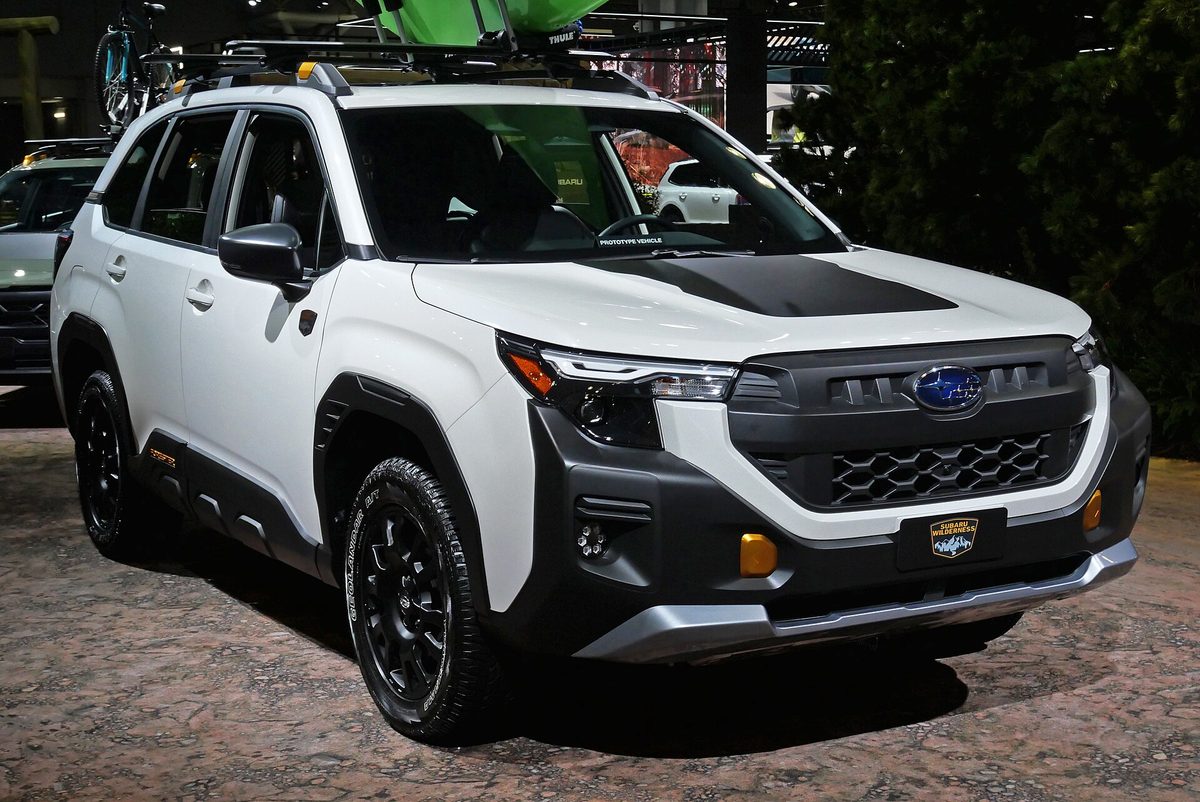
All-wheel drive is one of the most persistent sources of overconfidence in winter driving, because it solves exactly one problem — getting the car moving on a slippery surface — and does nothing for the two things that actually cause most winter crashes: stopping in time and holding a line through a turn. Both of those depend entirely on how much grip the tires themselves generate, and a summer or all-season tire loses a large share of its grip once the pavement drops toward and below freezing, regardless of how many wheels the engine is sending power to.
Why AWD doesn't help you stop
All-wheel drive systems exist to manage power delivery during acceleration — splitting torque between axles (and often individual wheels) so the car can put power down without one axle spinning uselessly. Braking is a completely separate system, handled by the brakes and, critically, by how much the tire's contact patch can actually grip the road surface under braking load. An AWD car and a front-wheel-drive car wearing the identical tire will stop in essentially the same distance on the same surface, because the drivetrain that helped the car accelerate a moment earlier has nothing to do with the physics of four tires trying to slow the car down.
What the actual tests show
The clearest illustration of this gap comes from a widely cited Tire Rack test using a 2008 BMW 328i on ice: with all-season tires, the car needed roughly 40 feet to stop from 10 mph; with dedicated winter tires on the identical car, that dropped to roughly 21 feet — nearly half the distance, from the same vehicle with the same drivetrain, the only variable being the tire. On packed snow at 30 mph, the same style of test has shown winter tires stopping in roughly 59 feet against roughly 89 feet for all-season tires on the same vehicle — a gap of two full car lengths. Consumer Reports' own winter tire testing reaches the same conclusion from its own data: winter and snow tires deliver measurably better grip for starting in snow and stopping on ice than all-season or all-terrain tires, an advantage the publication describes as a real, tested margin rather than a marketing claim.
Where AWD genuinely does help
None of this means AWD is pointless in winter — it's a real advantage specifically for getting moving from a stop on snow or ice, and for maintaining traction on moderate inclines where a two-wheel-drive car might struggle to get rolling at all. An AWD car with all-season tires will typically out-accelerate a front-wheel-drive car with the same tires on a snowy incline. The honest way to think about it: AWD buys you confidence leaving a snowy parking lot; winter tires buy you the ability to actually stop and steer once you're already moving, which is where the more dangerous situations tend to happen.
The combination that actually matters most
The best-performing setup in every test that compares the variables independently is AWD paired with winter tires, which is unsurprising once you separate what each system actually does — one helps you accelerate, the other helps you stop and turn, and they don't substitute for each other. A front-wheel-drive car on good winter tires will out-brake and out-corner an AWD car on all-season tires in most real winter conditions, even though the AWD car will likely win a straight-line launch from a stop on fresh snow. If a buyer is choosing between spending extra on AWD or spending on a second set of winter wheels and tires, and genuinely can't do both, the tires are the purchase more directly tied to crash avoidance.
A practical note on when winter tires actually matter
The traditional advice to switch at consistent temperatures below 45°F (7°C) is about the rubber compound, not just ice and snow: winter tire compounds are formulated to stay pliable and grippy in cold temperatures, while all-season rubber progressively hardens and loses grip as temperatures drop, even on dry pavement with no snow on the ground at all. That means the benefit of winter tires isn't limited to snowy or icy days specifically — a winter-compound tire outperforms an all-season tire in cold, dry conditions too, which is why the seasonal swap is typically recommended by temperature window rather than by whether snow is actually falling that particular week.
What a real winter tire setup costs
A full set of four winter tires typically runs $600 to $1,200 depending on tire quality and vehicle size, according to AAA's own cost guidance, with studded versions running somewhat higher, $500 to $1,500 for the set. Most owners who switch seasonally also buy a second, cheaper set of wheels — steel wheels run roughly $50-150 each, a set of four for $200-600 — specifically so the swap doesn't require remounting tires onto the same rims twice a year, which adds its own mounting and balancing cost of roughly $10-15 per wheel each time. All in, a complete first-time winter setup with its own dedicated wheels lands somewhere around $850-2,100, a real cost that's worth comparing directly against what AWD typically adds to a comparable trim's sticker price — on many compact SUVs and sedans, AWD as a factory option runs $1,500-2,500 over the front-wheel-drive version, in the same range as a full winter tire-and-wheel setup, not meaningfully cheaper.
Studded vs. studless, and why most drivers don't need studs
Studless winter tires rely entirely on rubber compound and tread design — deep, aggressive sipes that bite into snow and a compound that stays soft in freezing temperatures — and they're legal to use year-round in most US states. Studded tires add physical metal studs for extra bite specifically on glare ice, but they're louder and rougher on dry pavement, wear faster on surfaces that aren't actually icy, and several states restrict or ban their use on public roads outside a defined winter window. For the large majority of drivers dealing with ordinary snow, slush and cold-weather commuting rather than routine driving on glare ice, a quality studless winter tire covers the realistic use case without the dry-pavement trade-offs studs bring.
The bottom line for an AWD buyer this winter
If the budget allows for only one winter safety investment this year, dedicated winter tires are the one with a directly measured effect on stopping distance and cornering grip, backed by repeatable test data rather than a general reputation. AWD remains worth having for the acceleration and incline traction it genuinely provides, but treating it as winter-weather insurance on its own is the exact assumption that the ice-braking test data above exists to correct — the car that can get moving fastest on a snowy road is not necessarily the car that can stop fastest once it's moving.
Related cars
Related articles
- Does Cold Weather Really Kill EV Range? A 2026 AAA Test Found a 39% Drop at 20°F — Here's What Actually Causes It
- 2026 Subaru Forester vs Toyota RAV4: Which Is Better? Subaru Wins on Safety Ratings and AWD, Toyota on Mileage and Warranty
- Free Parts-Store Scan: What the Trouble Codes Tell You, and What They Leave Out
- Is an Extended Car Warranty Worth It in 2026? Consumer Reports Says 55% of Buyers Never Use Theirs, and the Average Buyer Recoups Only 70 Cents for Every Dollar Spent