Civic Type R vs GR Corolla: Which Hot Hatch Should You Buy? Front-Wheel Precision Against All-Wheel Grip, $9,000 Apart
Two of the best hot hatchbacks money can buy in America right now take opposite approaches to going fast — one puts power through the front wheels with a chassis tuned to compensate, the other sends it to all four and lets the all-wheel-drive system do the work.
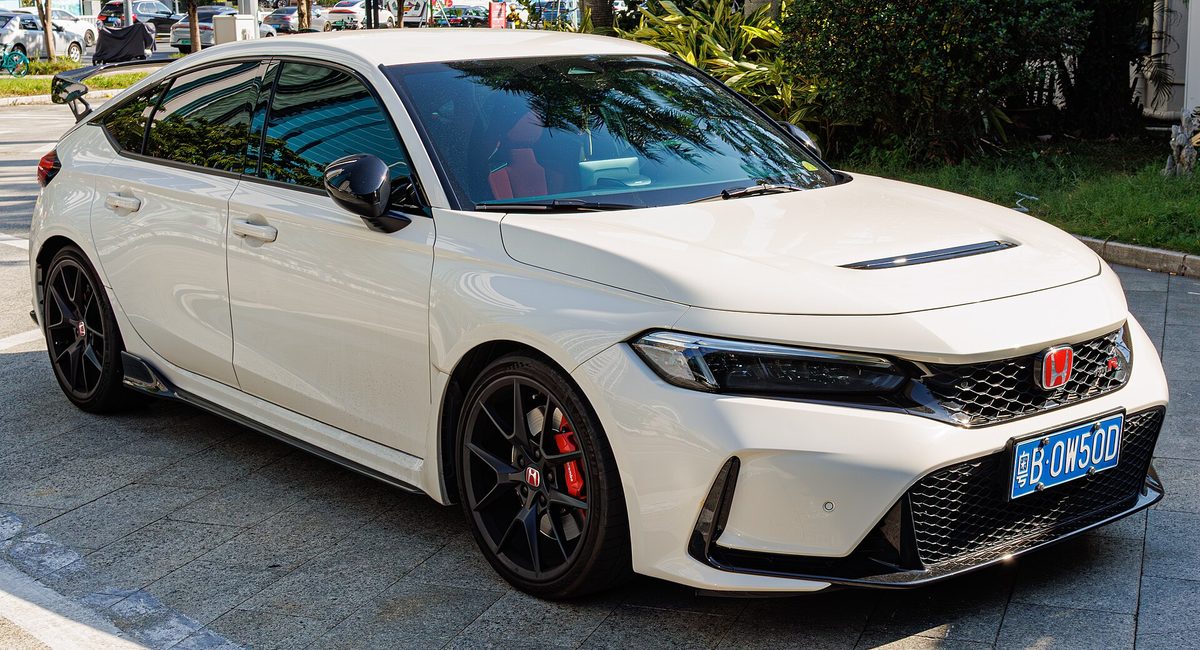
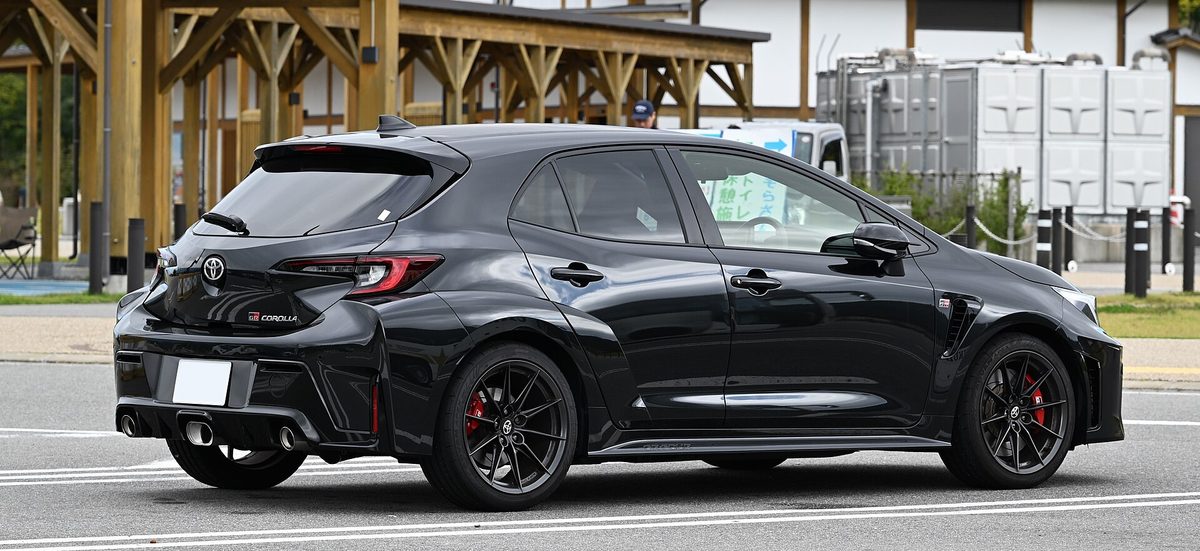
The Honda Civic Type R and Toyota GR Corolla are the two cars enthusiasts argue about most in the sub-$50,000 performance segment, and for good reason: both are genuinely track-capable, genuinely practical enough to drive daily, and built around completely different engineering philosophies for getting power to the road. Honda refreshed the Type R for 2027, pricing it at $49,990 with destination — up $1,300 from the outgoing model year, with the 315-horsepower engine and 6-speed manual left untouched. Toyota hasn't published 2027 pricing for the GR Corolla yet, so the real-world comparison right now is between that just-priced 2027 Type R and the current 2026 GR Corolla, which starts at $39,920 for the manual base trim ($41,115 with the $1,195 delivery fee) and tops out at $45,965 before delivery for the Premium Plus.
Engine, drivetrain and straight-line speed
The Civic Type R's 2.0-liter turbocharged four-cylinder makes 315 horsepower and 310 lb-ft of torque, sent exclusively to the front wheels through a 6-speed manual and a helical limited-slip differential — Honda doesn't offer an automatic or all-wheel-drive option on the Type R in the US at any price. The GR Corolla takes the opposite approach on both counts: a 1.6-liter turbocharged three-cylinder making 300 horsepower and 295 lb-ft, paired with standard GR-FOUR all-wheel drive that can be switched between Normal, Track and Gravel torque-split modes, available with either a manual or an automatic transmission.
On paper the Type R has more power from a bigger, more conventional engine; in practice, the two are remarkably close in a straight line. Manufacturer figures put both at roughly 4.9 seconds to 60 mph, though real-world test results vary by publication — the GR Corolla's all-wheel drive gives it a real advantage off the line, since it can put its torque down immediately where the front-drive Type R has to manage wheelspin, but the Civic tends to close the gap and pull ahead as speed builds and corners get faster. One test clocked the GR Corolla's quarter mile at 13.7 seconds; Car and Driver's independent testing found the GR Corolla quicker to 60 mph (4.4 seconds) than the Type R (5.0 seconds) in their specific test conditions, while Motor Trend's numbers ran the other way. The honest takeaway is that both cars are close enough that launch technique, tires and testing conditions matter more than any inherent advantage either drivetrain has.
Handling: where the two cars actually diverge
This is the real split between them. On a skidpad, the Civic Type R has posted figures as high as 1.03-1.04g of lateral grip against the GR Corolla's 0.94-0.96g — a meaningful gap that reflects Honda's approach of tuning a front-wheel-drive chassis with a wider track and a sophisticated limited-slip differential to deliver genuine precision rather than fighting the car's natural understeer. Reviewers consistently describe the Type R as the more settled, more confidence-inspiring car as speeds rise: strong braking stability, precise steering, and what one review called the ability to "brake later, turn harder, and emerge with a much more accurate punch out of the corners." The GR Corolla's AWD system makes it more forgiving to drive quickly without experience — it can paper over a late or clumsy input in a way the front-drive Type R can't — but most reviewers who've driven both back-to-back on track give the overall driving-experience edge to the Honda once a driver has some seat time in either car.
Where the GR Corolla claws that back is foul weather and low-traction surfaces. All-wheel drive with a dedicated Gravel mode gives it real rally-car-derived capability in rain, snow and loose surfaces that a front-wheel-drive Civic, however well-sorted, simply can't match — for a buyer in a northern climate who wants one car to do double duty as a daily driver through winter, that's not a small thing.
Interior, cargo and daily usability
This is the Type R's clearest advantage. Its cabin has been described as "classy materials with sporty touches," and the hatchback body combined with a longer wheelbase gives it 24.5 cubic feet of cargo space against the GR Corolla's 17.8 cubic feet — nearly 7 cubic feet more, with a rear seat that comfortably fits two adults rather than the GR Corolla's noticeably tighter back row. The GR Corolla's interior gets credit for a genuinely good infotainment system and a praised driving position, but reviewers consistently call it the more modest cabin of the two, especially relative to what the Type R now charges. For anyone cross-shopping these as a primary car rather than a weekend toy, the Type R's extra space is a real, daily difference rather than a spec-sheet footnote.
Reliability and warranty: close to a wash
Warranty coverage is nearly identical: both carry 3-year/36,000-mile basic coverage and 5-year/60,000-mile powertrain coverage, with 5-year/unlimited-mileage corrosion protection on both. The one concrete difference is complimentary scheduled maintenance — Toyota covers the GR Corolla for 2 years/25,000 miles, while Honda covers the Type R for 1 year/12,000 miles, a real dollar advantage for the Toyota over typical ownership. On broader brand reliability, J.D. Power's most recent dependability data ranks Toyota above Honda industry-wide, though neither the GR Corolla nor Type R has enough model-specific long-term data yet to say definitively how either holds up as a daily-driven performance car over 100,000-plus miles.
Fuel economy and running costs
The Type R is EPA-rated at 22 mpg city and 28 highway. The GR Corolla splits by transmission: 21 city / 28 highway with the manual, dropping to 19 city / 27 highway with the automatic — meaning the manual GR Corolla essentially matches the Civic on fuel economy despite the extra drivetrain hardware of all-wheel drive, while the automatic version gives some of that efficiency back. Neither car is going to be cheap to insure or maintain relative to a standard compact — both carry premium-fuel requirements and tire costs that reflect their performance intent — but day-to-day fuel costs between them are close enough not to be a deciding factor on their own.
The manual transmission still matters here
It's worth stating plainly: the Civic Type R offers no alternative to its 6-speed manual, while the GR Corolla gives buyers the option of an automatic. For the segment of buyers who specifically want a hot hatch because they want to row their own gears, that's not a minor footnote — it's effectively Honda doubling down on manual-only as part of the Type R's identity while Toyota hedges toward broader appeal with an automatic option. Reviewers across multiple outlets single out the Type R's rev-matched manual as one of the best gearboxes sold in any car at any price today, automatic or not, which is part of why the car commands the reputation — and the price premium — that it does.
Who should buy which
Buy the Civic Type R if you want the more complete car: more cargo space, more rear-seat room, a cabin that doesn't feel like a compromise, and a chassis that rewards a skilled driver with more outright grip and a more composed feel as speeds rise — and you're comfortable paying roughly $9,000 more for it, with no all-wheel-drive option at any price. Buy the GR Corolla if budget matters, if you live somewhere winters actually happen and want one car that handles snow and a track day equally well, or if the idea of a three-cylinder turbo engine and genuine rally-bred all-wheel drive is simply the more interesting car to own, even with a visibly smaller back seat and trunk. Neither is the objectively correct answer — they're two different definitions of what a hot hatch should prioritize, and the honest move is matching the car to how you'll actually use it rather than which one wins a given magazine's lap-time chart.
| Spec | Honda Civic Type R | Toyota GR Corolla |
|---|---|---|
| Starting price | $49,990 (2027, with destination) | $41,115 (2026, with delivery) |
| Engine | 2.0L turbo I4, 315 hp / 310 lb-ft | 1.6L turbo I3, 300 hp / 295 lb-ft |
| Drivetrain | Front-wheel drive only | Standard AWD (GR-FOUR) |
| Transmission | 6-speed manual only | 6-speed manual or automatic |
| 0-60 mph | ~4.9-5.0 sec (varies by test) | ~4.4-4.9 sec (varies by test) |
| Skidpad grip | Up to 1.04g | Up to 0.96g |
| Cargo space | 24.5 cu ft | 17.8 cu ft |
| Curb weight | ~3,188 lbs | ~3,274 lbs |
| Basic warranty | 3 yr / 36,000 mi | 3 yr / 36,000 mi |
| Powertrain warranty | 5 yr / 60,000 mi | 5 yr / 60,000 mi |
| Complimentary maintenance | 1 yr / 12,000 mi | 2 yr / 25,000 mi |
Related cars
Related articles
- Toyota Corolla vs Honda Civic: Which Is Better in 2026? The Cheaper Hybrid Against the Roomier, Quicker One
- 2026 Honda Civic vs Mazda3: Which Is Better? Hybrid Mileage Against All-Wheel Drive and a Nicer Cabin
- 2027 Honda Civic Type R Costs $49,990, Up $1,300 — Honda Left the Engine and Manual Alone and Spent the Refresh on Aero, Heated Seats and a New Grille
- Audi Q5 vs BMW X3: Which Should You Buy? (2026) — A Better-Equipped Audi Against a Cheaper-to-Run BMW, Both Top Safety Picks
Sources
- Edmunds — How Much Is the 2027 Honda Civic Type R?
- Plaza Toyota — 2027 Toyota GR Corolla Guide for New York Drivers
- HotCars — Honda Civic Type R Vs Toyota GR Corolla Comparison
- JD Customs USA — GR Corolla vs Civic Type R: Which Hot Hatch Is Better?
- Yahoo Autos — Is The Honda Civic More Dependable Than Toyota's Corolla? Here's What JD Power Says