Why Is the F-150 America's Best-Selling Truck? (2026) Forty-Nine Straight Years, 828,832 Sold Last Year, and the Fine Print in GM's Two-Badge Math
What the F-Series sales number actually counts, where the 49-year streak came from, and the caveat that matters when you shop.
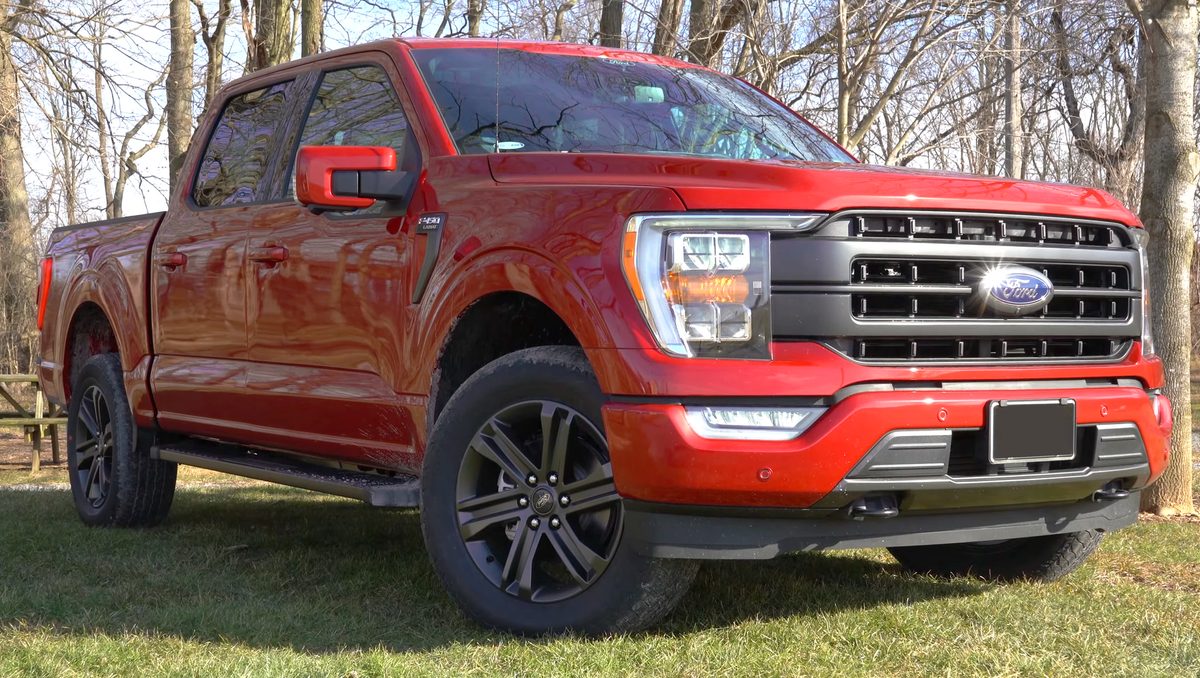
Every January, Ford announces the same thing, and every January it still sounds slightly unreal: the F-Series was America's best-selling truck again. For 2025 it was the 49th straight year, with 828,832 trucks sold. Rivals have spent decades and tens of billions of dollars trying to end the streak, and none has. This guide explains what the number actually counts, where the streak comes from, why buyers keep choosing the truck, and the one piece of fine print that matters if you are shopping rather than keeping score.
What the 828,832 actually counts
The headline number is for the whole F-Series family, not only the F-150. Ford's own 2025 sales release counts the F-150, the heavy-duty Super Duty trucks and the electric F-150 Lightning together. That is why you will see different figures quoted for the same year. Ford reported 828,832 F-Series trucks for 2025, up 8.3% from 765,649 in 2024. A separate tracking table from TFLtruck, built on the same Ford totals, shows a combustion-only figure of 801,525 (hybrids and diesels included, electrics excluded), and that smaller number is the one some outlets print. Neither is wrong; they just draw the line in different places.
Two sub-numbers in Ford's release show where the growth came from. The F-150 Hybrid set a record at 84,934 trucks, up 15.0%, and Super Duty sales rose 9.5% for its best year since 2004. In other words, the streak is being extended by the most expensive and most specialized parts of the lineup, not just the base work truck.
How big the gap really is
Ford says the F-Series outsold its nearest competitor by almost 250,000 trucks in 2025. The arithmetic checks out against the TFLtruck full-year table, which lists the Chevrolet Silverado at 580,368 (a gap of 248,464), the GMC Sierra at 356,218, Ram Trucks at 374,059 and the Toyota Tundra at 147,610. Ford leads by about 43% over the Silverado, and the Tundra sells less than a fifth of the F-Series volume.
The 2026 numbers point the same way. Ford reported 561,508 F-Series trucks through September 2026, more than 140,000 ahead of the Silverado, and the company says it increased F-Series production 4.5% in the third quarter to 266,777 trucks. Super Duty production in that quarter, 110,275 trucks, was the best quarterly figure in 19 years.
The fine print: two badges, one truck
Here is the caveat every honest version of this story has to include. Chevrolet and GMC build essentially the same full-size pickup under two names. Add the Silverado and the Sierra together and General Motors sold 936,586 trucks in 2025, more than the F-Series' 828,832. Carscoops made the same point before the year ended, noting that GM's volume is split across two nameplates, so Ford still holds the title as the best-selling single truck line. Both statements are true, and which one matters depends on whether you care about a trophy or about the size of the whole market.
For a buyer, the split changes little. What it tells you is that the full-size pickup is the center of the American market: TFLtruck's table puts the whole full-size and heavy-duty pickup market at 2,304,918 trucks in 2025, up 4.7% from 2,201,661 a year earlier.
Where the streak comes from
Ford counts the F-Series as America's best-selling truck every year since the 1977 model year, when it sold 818,580 trucks, according to a January 2017 Automotive Fleet report that also noted more than 26 million F-Series sold since January 1977. By Ford's own count the F-Series has also been the best-selling vehicle of any kind in America for 44 years, which dates that run to about 1982. Sources differ on that start date; the truck streak is the more consistently cited one.
The hardest test of the streak came in 2015. Ford rebuilt the F-150 with an aluminum cab and cargo box, a change IEEE Spectrum described that year as one of the company's biggest product gambles, made on a truck that had been America's best-selling vehicle for 33 straight years. The aluminum body cut nearly 320 kg (about 700 lb) from the outgoing truck, and about 4,000 rivets plus structural adhesive replaced roughly 7,000 spot welds. The same truck introduced the 2.7-liter twin-turbo V6, rated at the time at 26 mpg highway, a record for a full-size gas pickup. Buyers did not leave. The F-150 kept selling, and the risky bet became the template that other trucks followed.
Why buyers keep choosing it
Ford does not publish a reason, so what follows is analysis, not a quote from Ford. Three things show up in the data we checked.
First, range of choice. The F-150 is sold as a bare-bones work truck, a ranch-and-towing truck, a luxury truck, an off-road truck, a full hybrid and an electric truck. Base pricing for the 2027 XL starts at $38,110 according to Cars.com, while the top trims run into the mid-$70,000s, so a single nameplate covers a price range of roughly double. A buyer upgrading from a base truck to a Platinum never has to leave the brand.
Second, engines that fit different jobs. For 2027 the base 2.7-liter EcoBoost V6 has been replaced by a new 3.0-liter EcoBoost V6 with the same 325 horsepower and 400 lb-ft rating, but with 10 to 11% more torque in the rpm range used in daily driving, per MotorWeek. The 3.5-liter EcoBoost tows up to 13,500 lb in a SuperCrew 4x4 with the right package. The 3.5-liter PowerBoost full hybrid makes 430 horsepower and 570 lb-ft and doubles as a generator, with 2.4 kW of onboard power standard and 7.2 kW optional. That last feature is why hybrids are growing: for many owners the truck is also a job-site power supply.
Third, familiarity. The current generation is mature. The next full redesign has reportedly slipped from a 2027 target to around 2028, according to TruckReportGeeks, so a 2027 F-150 is a well-understood platform with years of real-world data behind it. For a purchase that often runs past 60,000 dollars, that predictability is a selling point, not a footnote.
What the sales crown does not tell you
Being number one in sales does not make the F-150 the best truck for every buyer. Sales leadership measures what people bought, which reflects dealer networks, fleet orders, financing offers and brand habit as much as engineering. In our own head-to-head, the 2027 Silverado came out ahead on the single highest conventional towing number (13,700 lb versus the F-150's 13,500 lb) and on screen size, while the F-150 offered the hybrid's onboard power and a longer-established platform. If you are choosing between them, the comparison is worth reading rather than the sales chart.
A buyer's checklist if you are shopping the F-Series
Because the F-Series is a family, the first decision is which truck you are really shopping. A half-ton F-150 and a Super Duty are different vehicles with different price ladders; the sales total blends them. Decide on payload and towing first, using your real trailer or load, and only then pick a cab, bed and trim.
Next, price the powertrain, not just the trim. The 3.0-liter EcoBoost V6 is the new baseline for 2027; the 3.5-liter EcoBoost is the one rated to the 13,500-lb towing figure; and the PowerBoost hybrid brings 570 lb-ft and the onboard generator. The hybrid's record 84,934 sales in 2025 show buyers are paying for that last feature, but it only makes financial sense if you will actually use the outlets at a job site, a campsite or during a power cut.
Finally, remember the timing. If the next-generation F-150 does arrive around 2028 as reported, a 2027 truck is the end of a long production run, which usually means mature software, a known service history and good parts supply, but also a design that will look dated to the next generation. That trade is the real choice a best-seller asks you to make: the proven truck or the newest one.
Who should care about the number
If you are buying to tow, haul or work, the practical benefit of a best-seller is mundane: more dealers, more parts supply, a large used market and plenty of owner knowledge. If you are cross-shopping, treat the streak as a reason to put the F-150 on your list, not as a reason to skip the test drive. Compare the specific trim and powertrain you would actually buy, check towing and payload against your real load, and price a hybrid only if you will use the generator. If you would rather read a direct matchup, see our comparisons of the F-150 against the Silverado and the Ram 1500.
Related cars
Related articles
- 2026 Ford F-150 vs Ram 1500: Which Truck Is Better? America's Best-Selling Truck Against the One With the Smoother Ride
- 2027 Ford F-150 vs Chevy Silverado: Which Truck Is Better? A Freshly Redesigned Silverado Takes On an F-150 That Just Got a New Base Engine and Hands-Free Towing
- Towing Capacity, Payload and GVWR Explained (2026): Why the Trailer Rating in the Ad Is Rarely the Limit That Stops You
- Tundra vs F-150: Which Truck Should You Buy? (2027) — Toyota's Safety Pick and Hybrid Off-Roaders Against Ford's Lower Price, Higher Towing and 23-MPG Hybrid
Sources
- Ford — 2025 full-year US sales results
- Ford — 2026 third-quarter sales results
- TFLtruck — 2025 full-size truck sales redux
- Carscoops — Ford F-Series is America's best-selling truck, but GM could get the last laugh
- Automotive Fleet — Ford sells more than 26 million F-Series since 1977
- IEEE Spectrum — 2015's Top Ten Tech Cars: Ford F-Series