When to Buy: New Model Year vs. Leftover Prior Year — Some 2026s Are $12,500 Off Right Now, Others Barely Move at All
As 2027 models reach dealer lots this fall, the common advice to "wait for the leftover discount" only holds up for specific kinds of vehicles — and the data shows exactly which ones.
Every fall, the same advice circulates: wait until the new model year arrives, and the outgoing cars on the lot will get marked down. It's true often enough to be worth knowing, but it's not automatic, and treating it as a guarantee is how buyers end up disappointed. A vehicle does not lose a fixed percentage of its price simply because the calendar flips or a newer model year shows up next to it on the lot — the real discount, if there is one, depends entirely on how fast that specific vehicle has actually been selling.
Why the discount exists at all, when it exists
Dealers pay floor-plan financing costs on every vehicle sitting on their lot, and that cost compounds the longer a car goes unsold. Once a new model year starts arriving in volume, a leftover car gets harder to sell at full price and starts taking up space a newer, easier-to-sell vehicle could occupy — so dealers cut price and add incentives to clear it out and free up both capital and lot space. That's a real, consistent financial pressure. What it does not do is apply evenly: a vehicle that was already selling quickly carries very little of that pressure, because it isn't sitting around long enough to cost the dealer much in financing in the first place.
The real range, and the honest caveat
Manufacturer rebates on outgoing models typically run $3,000 to $7,000, with dealer discounts stacked on top pushing total savings to roughly $3,000-$8,000 compared to buying the same vehicle a few months earlier — industry-wide, incentives averaged 6.5% of the average transaction price in August 2026, down from 7.2% a year earlier. But as of the end of August, 2027-model-year vehicles made up only 12.4% of new-vehicle inventory nationally, and supply varies enormously by brand: Toyota was carrying just 33 days of supply against a market-wide average of 73 days. That gap matters directly for a buyer's leverage — a brand with lean inventory has far less incentive to discount anything, leftover or not, regardless of what the calendar says.
The clearest real example: Volkswagen's ID.4
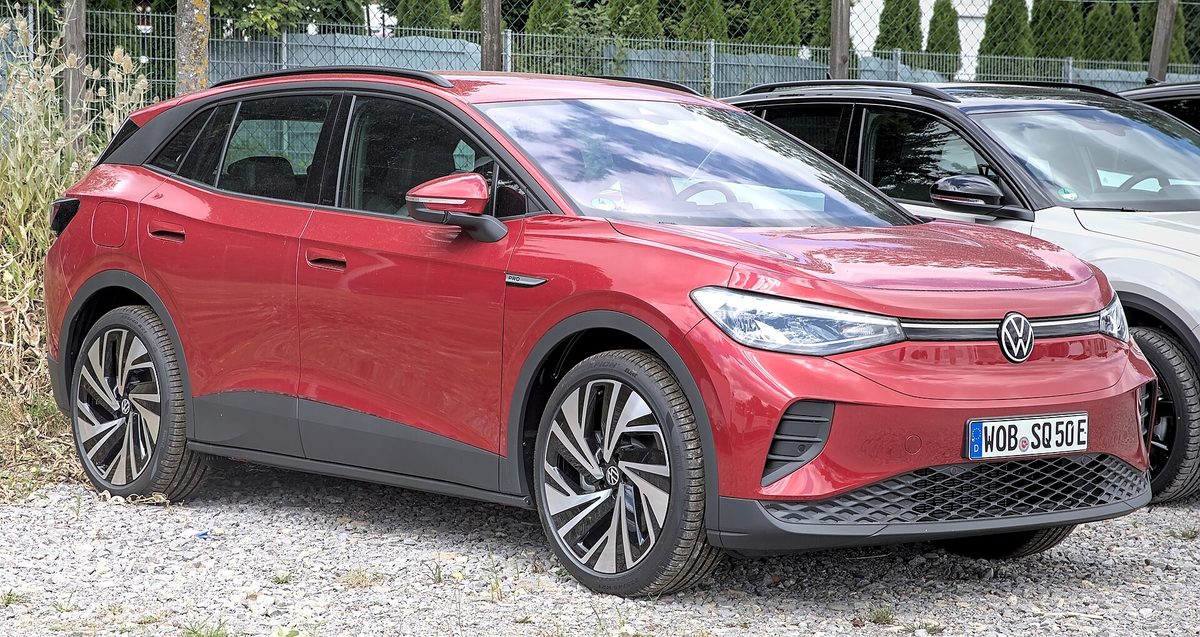
The most dramatic clearance deal on the market this October isn't a generic model-year changeover — it's Volkswagen actively discontinuing the ID.4 to make way for the incoming ID.Tiguan in early 2027, and the numbers show what a genuine sales emergency looks like next to routine clearance. VW is offering a $12,500 cash bonus on leftover 2025 ID.4s and $6,000 on 2026 models, cutting a 2026 ID.4 Pro from $45,095 to $39,095 and a 2025 ID.4 Limited from $39,995 down to $27,495. ID.4 production actually stopped back in April 2026, and the model sold just 248 units in Q4 2025 against roughly 4,800 Hyundai Ioniq 5s in the same stretch — weak enough that some dealer lots reported individual ID.4s sitting unsold for 318 days. That combination of discontinuation, a severe sales gap against its direct rival, and inventory that's been aging for nearly a year is exactly the scenario that produces a five-figure discount; an ordinary model-year refresh on a healthy seller does not.
Where the real savings concentrate
The segments actually carrying deep leftover discounts this fall are EVs broadly, where some models are averaging over $10,000 off sticker, and full-size trucks, plus specific slow-moving nameplates getting their own aggressive push — Dodge has been running what it calls "Power Dollars" incentives to clear 2026 Charger Sixpack inventory, for instance, and the incoming 2027 Chevrolet Equinox, which began ramping production in June 2026, has been pushing 2026 Equinox pricing down ahead of it. These are all genuinely slow-selling or actively-being-replaced vehicles, which is precisely the pattern that produces a real discount.
Where it doesn't: the cars everyone already wants
Popular hybrids from Toyota, Honda, and Hyundai barely discount at all, because dealers sell them close to as fast as they can get them on the lot — there's no floor-plan pressure to relieve. The same holds for fast-moving compact SUVs and sedans like the RAV4, CR-V, Civic, and Corolla, which rarely sit long enough to build a buyer any real negotiating leverage. The Camry is the clean case study: even with Toyota now selling it exclusively as a hybrid, demand has stayed strong enough, and Toyota's own inventory lean enough (that 33-days-of-supply figure), that waiting for a leftover-year discount on a Camry is a much weaker bet than waiting on an EV or a model being actively phased out. If the vehicle on your shortlist is one of the segment's best sellers, the honest expectation should be a small or nonexistent discount, not a guaranteed markdown just because a new model year exists.
When the window actually opens, and what it costs you
Model-year clearance activity typically runs from August through October as dealers make room for incoming inventory, with the deepest cuts historically landing late August through Labor Day, when the next model year's stock starts arriving in real volume. Waiting into this window can genuinely improve your negotiating position on the right vehicle, but it comes with a real trade-off: it can also mean the specific trim, color, drivetrain, or options package you actually want is already gone from the lot, sold to someone who didn't wait. A deep discount on a configuration you don't want isn't actually a deal.
The other lever: financing, not just price
A leftover-year deal isn't only a cash discount — manufacturers also push special financing on exactly the inventory they most want gone, and that can be worth more than a rebate depending on how you're paying. As of October 14, 2026, Kia was offering an average $3,500 cash-back rebate alongside 0% APR financing for up to 72 months across its lineup, and Nissan had 0% APR available for up to 60 months on the Pathfinder, according to RealCarTips' own incentive tracking. The math matters here: on a $35,000 loan, the difference between a typical ~7% APR and 0% over 60 months is thousands of dollars in interest avoided, which can add up to more than a modest cash rebate on the same vehicle. Buyers who plan to finance rather than pay cash should compare the total cost of a cash-rebate offer against a 0%-APR offer on the same car side by side, since dealers rarely let you combine the two and the better deal isn't always the one with the bigger headline number.
How to tell if the car you want is a real clearance candidate
Before assuming a discount is coming, check how the specific vehicle you want has actually been selling — a dealer's own inventory-days figure (ask directly, or check a site that tracks days-on-lot by model) tells you more than the calendar does. A car with low regional supply and strong demand, the Camry or RAV4's situation right now, is a weak bet for a big markdown no matter how late in the model year you wait. A vehicle with a known sales problem, a discontinued nameplate, or a replacement already announced — the ID.4's exact situation this fall — is where the real five-figure discounts actually show up. The practical move is to match your expectation to the specific car, not to a general rule about the time of year.
Related cars
Related articles
- 2025 Honda Accord vs Toyota Camry: Which Is Better? One Only Comes as a Hybrid Now, and It Shows
- Is Certified Pre-Owned Worth It? The Real Math in 2026 — What You Actually Get for a 2-8% Premium Over a Regular Used Car
- Is an Extended Car Warranty Worth It in 2026? Consumer Reports Says 55% of Buyers Never Use Theirs, and the Average Buyer Recoups Only 70 Cents for Every Dollar Spent
- Winter Tires vs. All-Season: Do You Actually Need Them? A 30-Foot Difference in Stopping Distance Says Yes, If You Live Where It Actually Gets Cold