Winter Tires vs. All-Season: Do You Actually Need Them? A 30-Foot Difference in Stopping Distance Says Yes, If You Live Where It Actually Gets Cold
The honest answer depends entirely on your winter low temperatures, not on how much snow actually falls — and most drivers are making this call based on the wrong variable.
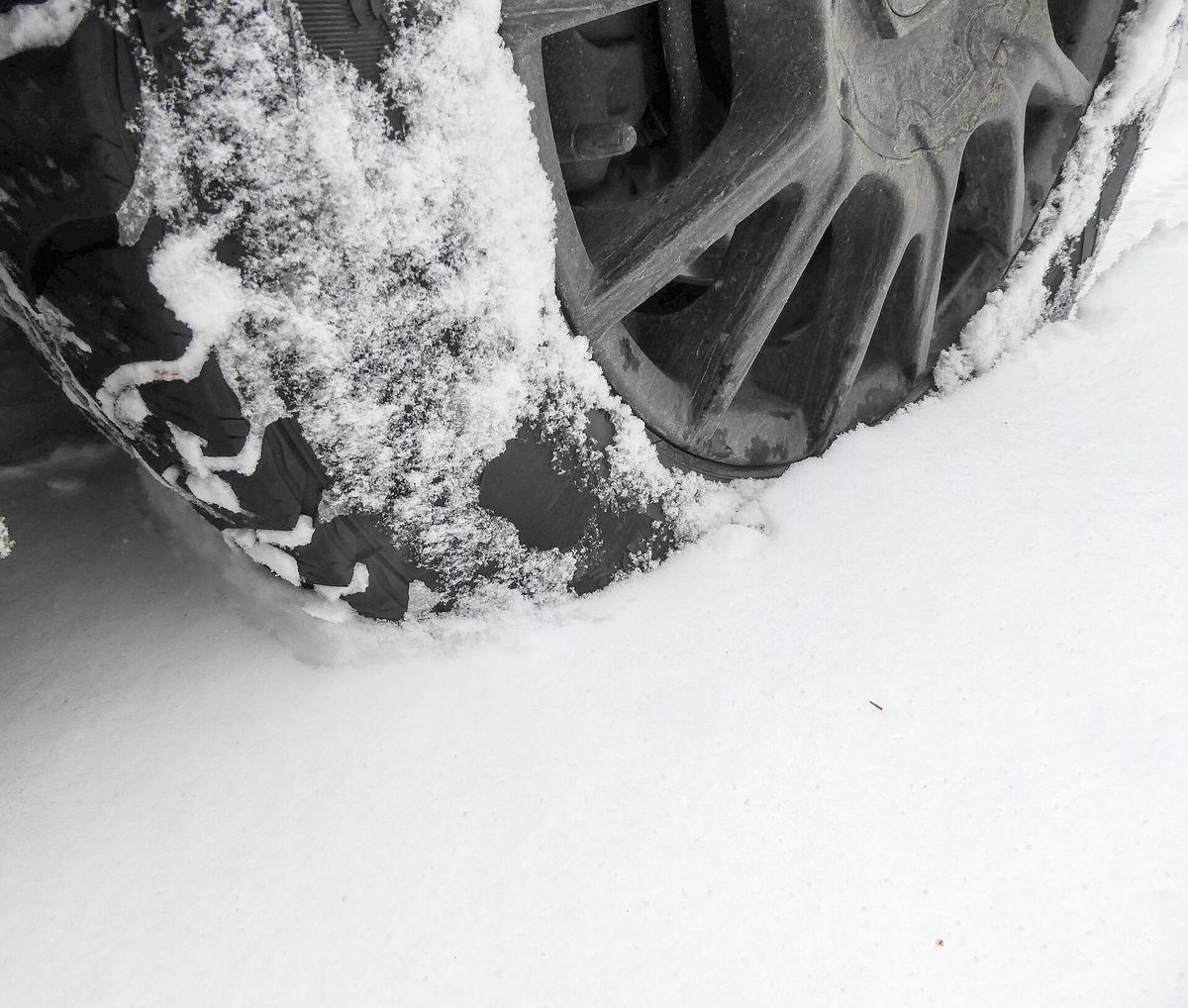
Most drivers decide whether they need winter tires by thinking about snow. That's the wrong variable. The real trigger is temperature: all-season tire rubber is formulated to stay pliable across a wide range of conditions, but it starts stiffening below 45°F, and a stiffer tire grips worse even on cold, dry, perfectly clear pavement — before a single snowflake falls. Winter tires use a softer compound engineered to stay flexible well below freezing, which is why the swap matters even for drivers in places that get cold without getting much snow.
The actual performance gap
On packed snow at 30 mph, winter tires stop in roughly 59 feet; all-season tires on the same surface need about 89 feet — a 30-foot gap, or close to two car lengths, at a speed most people drive through a neighborhood or parking lot. On ice, the gap is proportionally even larger: braking from 10 mph, winter tires stop in about 21 feet against roughly 40 feet for all-seasons. Manufacturer testing puts the overall snow stopping-distance advantage at up to 30% versus all-season tires. That's not a marginal difference — in a real emergency stop, it's the difference between stopping short of an intersection and not.
What the ratings actually mean
Tires rated for winter use carry a 3PMSF symbol (Three-Peak Mountain Snowflake), which certifies the tire meets an industry standard for severe snow traction. All-season tires typically carry an M+S (Mud and Snow) marking instead, which sounds similar but means something much weaker — it's a tread-pattern designation, not a performance certification, and it says nothing about how the rubber behaves in cold. Worth knowing before you shop: even the 3PMSF test itself doesn't measure stopping distance, cornering grip, or ice performance directly — it's a snow-traction baseline, not a comprehensive winter-performance guarantee, so published lab data (like the stopping-distance numbers above) still matters more than the symbol alone.
The middle option: all-weather tires
A newer category, all-weather tires, is built to carry the 3PMSF snow certification while staying mounted year-round, splitting the difference between true winter tires and all-seasons. They're a reasonable compromise for drivers who get real but not extreme winters and don't want to deal with a seasonal swap — but they're a compromise in both directions: they won't match a dedicated winter tire's cold-weather grip, and they typically wear faster and ride slightly less efficiently than a true all-season tire during the warmer months. The honest way to think about all-weather tires is as a year-round tire that passed a snow test, not as a winter tire substitute — they close most of the performance gap in a moderate climate with occasional snow, but in a place that regularly sees sustained sub-freezing weeks or real ice, a dedicated winter set mounted seasonally still outperforms them, which is exactly the tradeoff the convenience is buying you out of.
What the swap actually costs
A full set of winter tires runs roughly $300 to $400 for decent mid-range tires, with budget options starting around $80 to $100 per tire and premium brands running $200 or more each. If you mount winter tires on their own set of wheels (the common approach), a seasonal swap between existing wheel-and-tire sets runs $10 to $20 per wheel, or $40 to $80 for a full set — meaningfully cheaper than the $15 to $30 per tire it costs to mount and balance tires onto a single shared set of wheels twice a year. Off-season storage, if you don't have space at home, adds another $40 to $100 for the season at most shops, with some charging up to $250 depending on location. Budget for a few smaller add-ons too: tire pressure monitoring sensor adjustments run $10 to $50 per wheel if your car has TPMS, and some shops charge $3 to $5 per tire for responsible disposal of the set coming off.
Buying used winter tires: what actually matters
Used winter tires, sold seasonally or as take-offs from a dealership, are a real way to cut that $300-$400 cost, but two things matter more than price when shopping used: tread depth and age, and they aren't the same question. For real snow and ice performance, winter traction starts dropping off noticeably once tread depth falls below about 6/32 of an inch — well above the 4/32-inch mark that's the general legal minimum for any tire, winter or not. A used set already worn down near that number isn't a bargain, it's a tire that's already lost a meaningful chunk of the grip advantage you're buying winter tires for in the first place. Age matters independently of tread: rubber compound stiffens and loses flexibility over time even on a tire that's barely been driven, which is exactly the property that makes a tire a winter tire in the first place. A good rule of thumb is to look for used winter tires no more than 2-3 years old, and to treat any tire past 6 years of actual use (or 10 years from its manufacture date, stamped on the sidewall) as due for replacement regardless of remaining tread.
The decision, by climate
If your area regularly sits below 45°F for weeks at a stretch and sees real snow or ice multiple times a winter, dedicated winter tires are worth the cost and the twice-yearly hassle — the stopping-distance numbers above are the kind of safety margin that's hard to justify skipping once you've seen them. If you're in a climate where it dips cold occasionally but snow is rare and brief, an all-weather tire with the 3PMSF rating is a reasonable middle ground that avoids the seasonal swap entirely. And if your winters genuinely stay above 45°F most days with little to no snow, a good all-season tire is doing its job as designed, and winter tires would mostly just be an added expense without a matching safety benefit. One thing not to do regardless of climate: never mix tire types across axles — running winter tires on one axle and all-seasons on the other creates genuinely unpredictable handling, since the two ends of the car will grip differently under braking and in corners.
Related cars
Related articles
- How Long Does a Hybrid Battery Really Last? Real Data Says the 100,000-Mile Number Everyone Quotes Is a Warranty Limit, Not a Lifespan
- Towing Capacity, Payload and GVWR Explained (2026): Why the Trailer Rating in the Ad Is Rarely the Limit That Stops You
- Buying vs. Leasing in 2026: A $10,000 Tax Break Changes Math — A New Federal Deduction Favors Buyers, While EVs Just Lost the Lease Loophole That Used to Tilt the Other Way
- Is an Extended Car Warranty Worth It in 2026? Consumer Reports Says 55% of Buyers Never Use Theirs, and the Average Buyer Recoups Only 70 Cents for Every Dollar Spent
Sources
- Michelin USA — Summer vs. Winter vs. All-Season Tires
- VEHQ — Winter Tires vs. All-Season: Is the Seasonal Swap Worth It?
- Tires-Easy — All Weather Tires: Do They Replace Winter Tires?
- Burt Brothers — Winter Tire Costs: What To Expect And Money Saving Tips
- AutoNation Mobile Service — Winter Tire Change Cost: What You'll Actually Pay in 2026
- UTires.com — What to Look for in a Used Winter Tire