BMW 3 Series vs Mercedes C-Class: Which Is Better? 2026 — Identical Power, a Safety Gap, and a New 3 Series Waiting in the Wings
The same 255-horsepower engine in two sedans, split by crash-test results, price and a replacement generation arriving early next year.
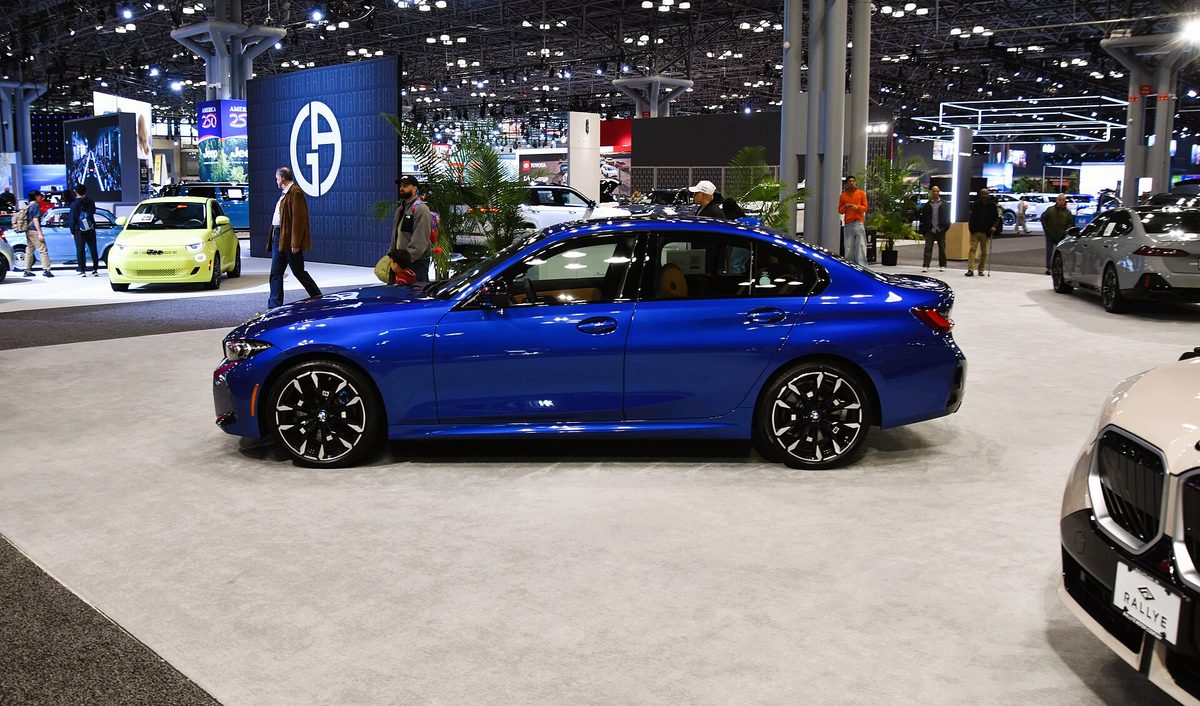
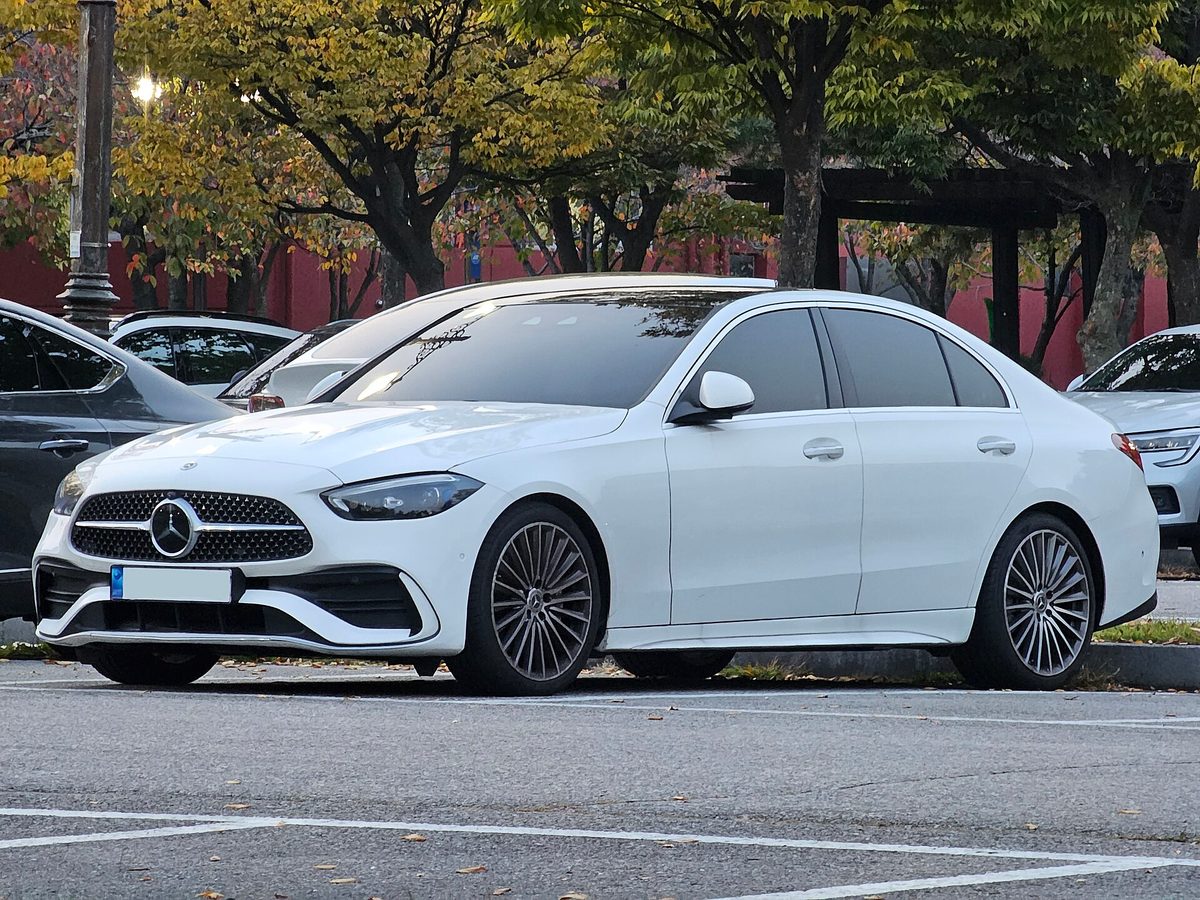
Two cars, one engine rating. The 2026 BMW 330i and the 2026 Mercedes-Benz C 300 both use a turbocharged 2.0-liter four-cylinder rated at 255 horsepower and 295 lb-ft of torque, both send it through an automatic, and both have been the default answer to "which compact luxury sedan?" for as long as either badge has existed. On paper there is almost nothing to separate them. The differences are in the price tag, the fuel bill, the crash-test file and, this year, a fact that changes the shopping calculus: BMW has already revealed the next 3 Series, and the car you can buy today is the one on its way out.
The short version
The Mercedes is the safer-looking choice on the independent crash data: the IIHS gave the 2026 C-Class a Top Safety Pick, while the 3 Series earned no award under the Institute's tougher 2026 criteria. The BMW is the cheaper, more efficient and lighter car, with a far longer corrosion warranty and a replacement generation arriving in early 2027. If you want the best-protected sedan today, buy the Mercedes. If you want the lowest cost of ownership, or you are happy to wait for new hardware, the BMW has the stronger case.
Price: the BMW starts about $1,650 lower
Mercedes-Benz lists the C 300 sedan at $49,650 and the all-wheel-drive C 300 4MATIC at $51,650, both before destination. The 2026 BMW 330i starts at roughly $48,000 before destination in the listings we checked (one aggregator shows $48,000, Cars.com shows $47,500), which puts the gap at about $1,650 for the base cars. That is the sticker; it is not what most people pay. Both brands lean heavily on option packages, and a well-equipped car of either kind will climb well past $55,000, so compare the exact build you want rather than the starting numbers.
The BMW's lower starting price comes with a quieter running cost too. The EPA rates the 330i at 28 mpg city, 35 highway and 31 combined; the C 300 comes in at 25/35/29 in the same data set. Two combined mpg sounds trivial, but over 12,000 miles a year it is roughly 25 gallons of gasoline, around $90 at typical pump prices. Small, but it points the same way as the sticker.
Performance: the same output, a different weight
Mercedes quotes 6.0 seconds to 60 mph for both the C 300 and the C 300 4MATIC. BMW's figure for the outgoing 330i was not listed in the sources we used, but with identical output these are equally fast cars in everyday terms. What separates them physically is mass and size. The 330i weighs about 3,644 pounds against 3,825 for the C 300, a gap of around 180 pounds, and the BMW is also shorter (185.9 inches against 187.0) and narrower (71.9 against 74.4 in the listing we used). A lighter car tends to feel more eager in corners and sip less fuel, and the BMW's lower weight is consistent with its efficiency lead. The Mercedes, with its longer wheelbase (112.8 inches against 112.2), is the one that is likelier to feel settled over long distances, and Germany's Auto Bild gave the C 300 4MATIC a very narrow win over the 330i xDrive in a head-to-head test, praising its refinement, steering and comfort.
Neither engine is the exciting version of its brand. If you want more power, the step up is the six-cylinder M340i on the BMW side or the AMG C 43 on the Mercedes side, and both belong in a different price conversation.
Interior and space
Cars.com lists the trunk of both sedans at 17 cubic feet, so luggage is a draw. The 330i's rear legroom is listed at 35 inches; we could not find a matching figure for the Mercedes, and the Mercedes' longer wheelbase and extra width suggest rear-seat room is at least comparable. A Polish comparison from Auto Swiat scored the BMW slightly higher for rear space, with front seats tied, so treat this as roughly equal and sit in both before you decide.
On equipment, Mercedes highlights a wireless charging pad and wireless smartphone integration as standard on the C-Class, along with Parktronic with Active Parking Assist, a wide-angle rearview camera and its PRE-SAFE system. BMW counters with its curved display, a 12.3-inch digital instrument cluster paired with a 14.9-inch touchscreen running iDrive 8.5 with wireless Apple CarPlay and Android Auto. Both cabins are technology-heavy; the choice between them is a matter of whether you prefer BMW's physical-feeling iDrive menus or Mercedes' more screen-led approach, and that is a test-drive decision, not a spreadsheet one.
Safety: the clearest difference
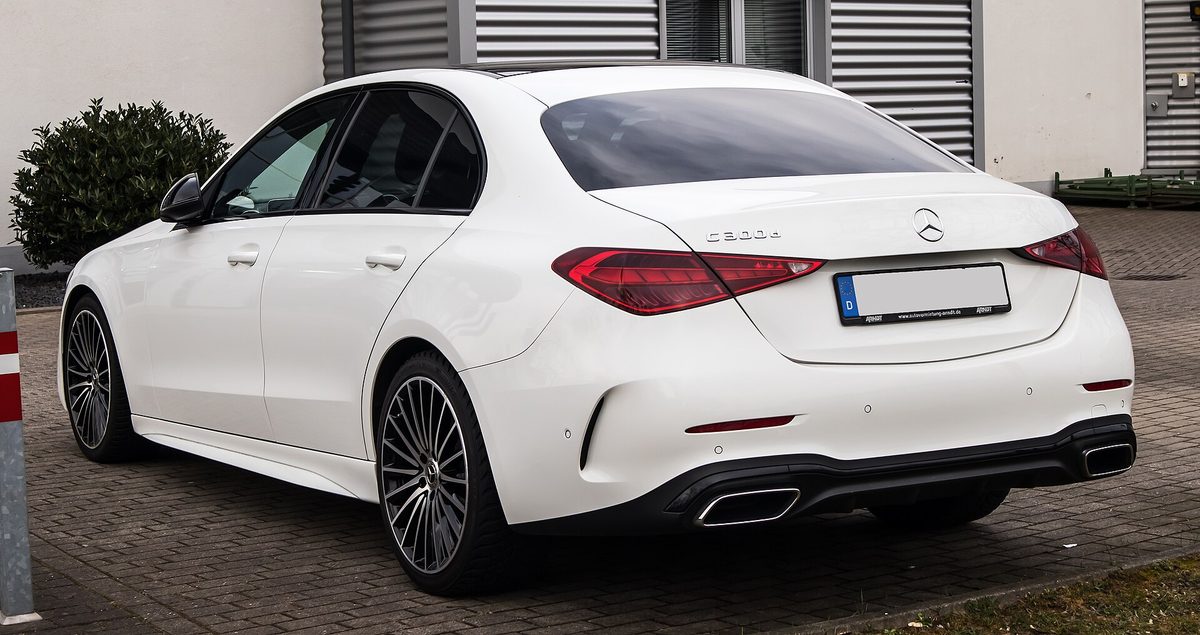
This is where the two cars actually diverge. Under the Insurance Institute for Highway Safety's 2026 criteria, which require a Good rating in the updated moderate-overlap front test for any award, the C-Class earns a Top Safety Pick. It scores Good in the small-overlap, moderate-overlap and side tests. Its standard front crash prevention system is rated Acceptable for pedestrians, and an optional system that comes with the Driver Assistance package is rated Good. Headlights are rated Good or Acceptable depending on trim, with the higher rating going to the Digital Light package and the Pinnacle trim.
The 3 Series earns no award. Its small-overlap and side results are Good, and its pedestrian detection is Good, but the moderate-overlap test produced an Acceptable rating after the IIHS saw modest intrusion in the structure of a 330i xDrive and, in the rear seat, a lap belt that slid up across the dummy's pelvis. Rear-seat restraint and dummy movement were rated Marginal, headlights were Acceptable on every trim because of low-beam glare and weak high beams, and vehicle-to-vehicle front crash prevention topped out at Marginal because of late warnings and insufficient automatic braking in several scenarios. Seat-belt reminders were Marginal too, because the chimes begin late. None of this means the BMW is unsafe, and the 5-star NHTSA overall rating shown in one data set is a separate test, but on the independent evidence the Mercedes is the stronger car, particularly if you carry people in the back seat.
Warranty and ownership
The basic and powertrain warranties are identical at four years or 50,000 miles. The differences are at the edges: BMW's corrosion warranty runs 12 years with no mileage limit against four years or 50,000 miles for the Mercedes, and BMW's roadside assistance is four years with unlimited mileage while the Mercedes' matches the 4-year/50,000-mile limit. Neither brand is known for cheap out-of-warranty repairs, and after year four a German luxury sedan is expensive to keep running. If you plan to keep either one past that point, read our look at whether an extended warranty is worth it before you sign anything in the finance office.
The wrinkle: a new 3 Series is coming
BMW has revealed the next 3 Series. The US lineup starts with the 330 at $51,250 including destination, with the 330 xDrive $2,000 higher, and the M350 xDrive at $67,250, all arriving in early 2027. The four-cylinder 330 keeps the same 255 horsepower and 295 lb-ft, now with a standard 48-volt mild-hybrid system and a claimed 5.9 seconds to 60 mph; the six-cylinder M350 makes 437 horsepower. An electric i3 built on BMW's Neue Klasse platform starts at $62,850.
That matters in two directions. If you buy the current car, you are buying the last of a generation, and dealers have strong reasons to clear them: expect room to negotiate, which is worth testing before the new car arrives. If you wait, you get fresh technology but a sticker a couple of thousand dollars above today's 330i, and you take on first-year-of-a-generation risk. The Mercedes has no equivalent cliff right now, which makes it the calmer purchase.
Who should buy which
Buy the Mercedes-Benz C 300 if crash-test results matter most to you, if rear-seat passengers are regular, or if you value a calmer, more cosseting ride over a lighter feel. Take the Driver Assistance package, which carries the better crash-prevention rating, and look at the Digital Light headlights if you drive at night.
Buy the BMW 330i if you want the lower price, the better fuel economy and the longer corrosion cover, and if you are shopping on discount: a run-out car can undercut the Mercedes by more than the $1,650 sticker gap. Choose it with the understanding that its IIHS file is weaker, particularly in the back seat.
Wait for the new 3 Series if you are not in a hurry, you want the mild-hybrid hardware, and you can accept paying more for it. If an SUV suits you better, our Audi Q5 against BMW X3 comparison shows how the same rivalry plays out among crossovers.
| 2026 BMW 330i | 2026 Mercedes-Benz C 300 | |
|---|---|---|
| Starting price (before destination) | about $48,000 | $49,650 (4MATIC $51,650) |
| Engine | 2.0L turbo 4-cyl, 255 hp, 295 lb-ft | 2.0L turbo 4-cyl mild hybrid, 255 hp, 295 lb-ft |
| 0-60 mph (maker/listing) | not listed | 6.0 sec |
| MPG city/hwy/combined | 28 / 35 / 31 | 25 / 35 / 29 |
| Trunk | 17 cu ft | 17 cu ft |
| Length / width | 185.9 in / 71.9 in | 187.0 in / 74.4 in |
| Curb weight | 3,644 lb | 3,825 lb |
| IIHS 2026 award | None (moderate overlap: Acceptable) | Top Safety Pick |
| Basic warranty | 4 yr / 50,000 mi | 4 yr / 50,000 mi |
| Corrosion warranty | 12 yr / unlimited | 4 yr / 50,000 mi |
Related cars
Related articles
- Buying vs. Leasing in 2026: A $10,000 Tax Break Changes Math — A New Federal Deduction Favors Buyers, While EVs Just Lost the Lease Loophole That Used to Tilt the Other Way
- Is an Extended Car Warranty Worth It in 2026? Consumer Reports Says 55% of Buyers Never Use Theirs, and the Average Buyer Recoups Only 70 Cents for Every Dollar Spent
- Audi Q5 vs BMW X3: Which Should You Buy? (2026) — A Better-Equipped Audi Against a Cheaper-to-Run BMW, Both Top Safety Picks
- Honda Pilot vs Toyota Grand Highlander: Which Is Better? One Engine Option Against Three, and a Reliability Record That Isn't a Fair Fight Yet
Sources
- Mercedes-Benz USA — C-Class Sedan
- IIHS — 2026 Mercedes-Benz C-Class ratings
- IIHS — Midsize luxury cars class summary
- autoevolution — 2026 BMW 3 Series IIHS crash test results (Sept. 14, 2026)
- Trim Atlas — 2026 BMW 330i vs Mercedes C 300 specs
- Cars.com — BMW 330 vs Mercedes-Benz C-Class
- MotorWeek — 2027 BMW 3 Series and i3 US specs and pricing (Sept. 29, 2026)