How Your Car's Odometer Really Works, and Why a Different Tire Size Changes the Number
There is no tiny wheel rolling on the pavement under your car. The figure on the dash is a calculation, and a few common changes can nudge it.
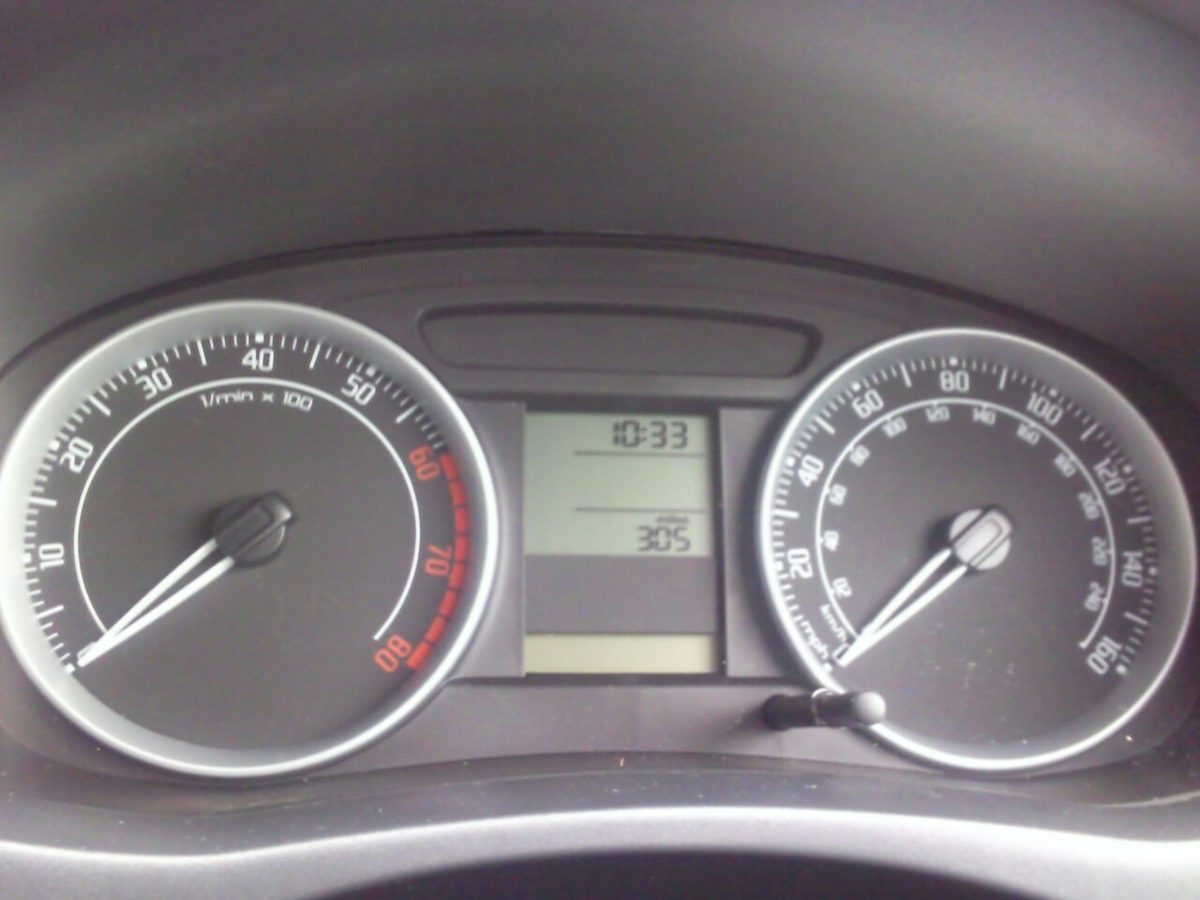
It is natural to assume the odometer somehow knows how far your car has physically traveled. It does not, and it was never built to. A modern odometer works out distance from how the vehicle is moving, using wheel-speed sensors or a vehicle-speed sensor, rather than from anything it senses about the road itself.
The principle is simple even if the electronics are not. If the car's computer knows roughly how far the car rolls with each turn of a wheel, it can keep adding those small distances together. A sensor counts each rotation, often by reading the teeth of a toothed tone ring, the electronics apply a calibration specific to that vehicle, and the running total goes to the instrument cluster. Older mechanical odometers did the same job with gears and a spinning cable. Counting rotations instead of measuring pavement is how the device has always worked.
That is also why an odometer keeps counting with no satellite signal at all. It never uses location data, so a car in a tunnel or an underground garage racks up mileage exactly as it would in the open. The calculation depends only on how the wheels or drivetrain turn.
Tire size is the variable that matters most, and the one most owners never consider. A larger tire covers more ground in each revolution than a smaller one. The car is calibrated for a specific rolling circumference, so fitting tires with a noticeably different circumference changes the relationship between one revolution and real distance. Both the odometer and the speedometer rely on the same rotational data, so both drift together.
Smaller factors act in the same direction. According to service documentation that manufacturers file with NHTSA, tire wear matters because a worn tire has a slightly smaller effective circumference than a new one, tire pressure matters because inflation changes the loaded rolling radius, and the calibration itself has to match the tire and axle setup the car is actually running. GM's service documentation tells dealers to check odometer accuracy against a handheld GPS over a known route, and specifically warns against comparing one car's odometer with another's, since no two vehicles are guaranteed to share a calibration.
None of this means the reading is wildly wrong in normal use. With stock tires at the specified size and pressure, the calibration holds up, which is why dealers and regulators only treat accuracy as a concern after a tire change or when someone has a specific reason to doubt the number.
The practical takeaway is that the figure on your dash rests on assumptions about your tires. If you move up a wheel size, expect the odometer, the speedometer and the trip computer's fuel economy readout to shift slightly together, and check them against GPS if the exact value matters, for example for a lease mileage cap.